Understanding Threaded Steel: Definition and Key Characteristics
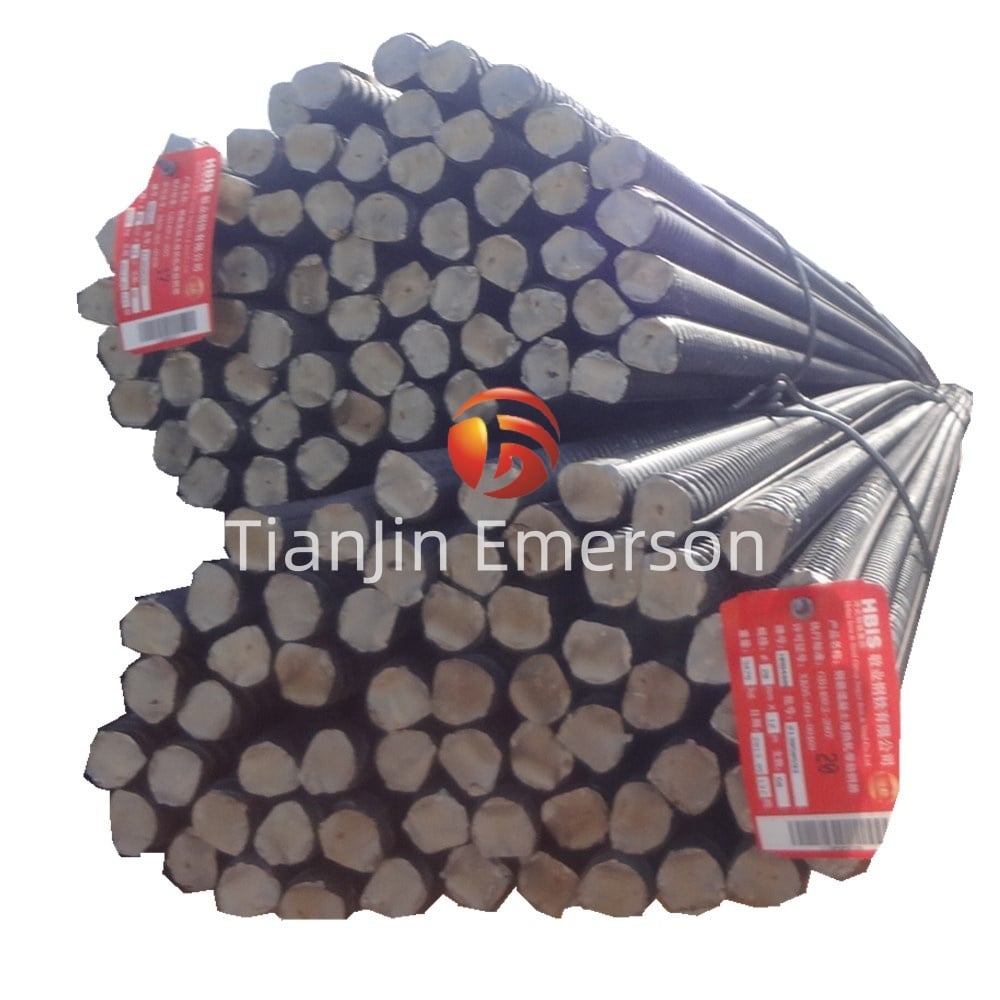
Threaded steel, commonly known as rebar (short for reinforcing bar), is the common name for hot-rolled ribbed steel bars. Its defining feature is the presence of longitudinal ribs and evenly spaced transverse ribs on the surface, which may take spiral, herringbone, or crescent shapes. These ribs serve a critical engineering function: they significantly enhance the bond between the steel and concrete, preventing slippage and ensuring that the two materials work together to bear tensile and compressive loads. The designation “HRB” stands for Hot-rolled, Ribbed, Bar, followed by a number indicating the minimum yield strength in megapascals (MPa). Common grades include HRB335 (yield strength ≥335 MPa), HRB400 (≥400 MPa), and HRB500 (≥500 MPa). Standard diameters range from 6mm to 50mm, with commonly used sizes including 8mm, 10mm, 12mm, 16mm, 20mm, 25mm, 32mm, and 40mm.
The Complete Production Workflow: From Raw Material to Finished Product
The production of threaded steel is a highly integrated process that transforms raw materials into precision-engineered construction materials through a sequence of tightly controlled operations. The journey begins in the ironmaking section, where iron ore, coke, and limestone are smelted in a blast furnace to produce molten iron. This iron is transferred to the primary steelmaking section, where it is combined with scrap steel in a converter or electric arc furnace. Oxygen is blown through the molten metal to remove impurities, and the steel is refined in a ladle furnace (LF) using argon stirring and graphite electrode heating to adjust temperature, chemical composition, and inclusion content. The refined steel is then continuously cast into small square billets, typically 130–160mm in cross-section and 6–12 meters in length.
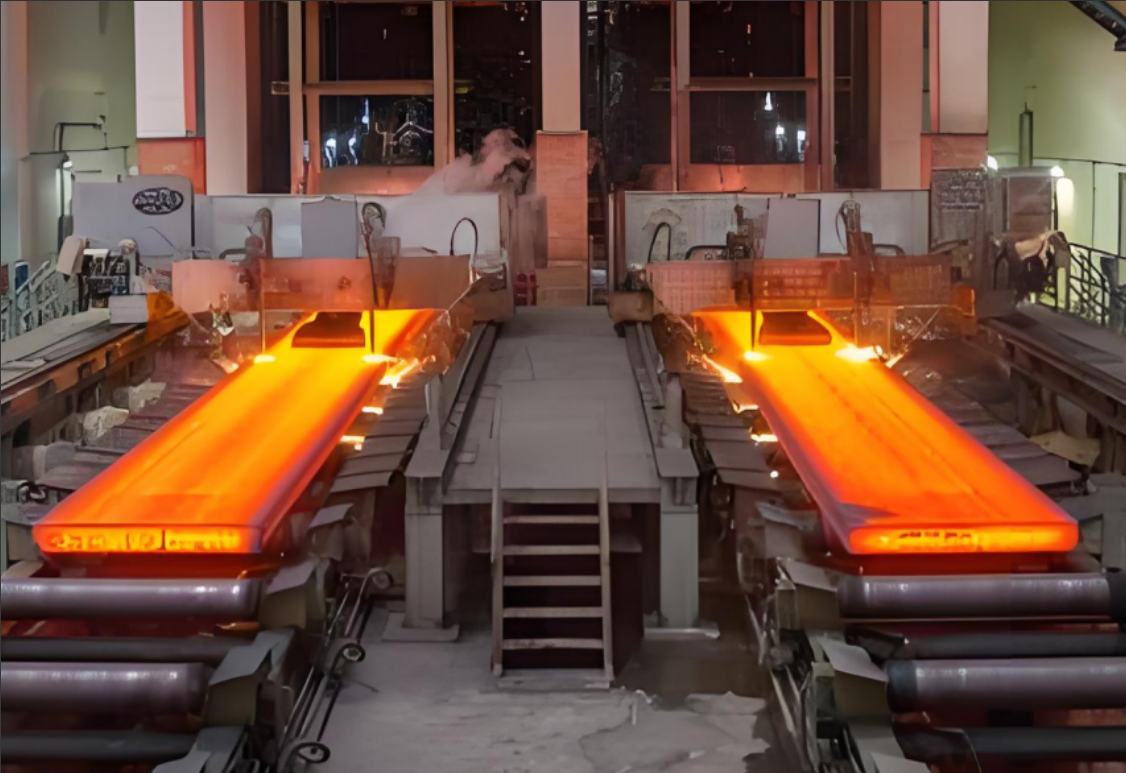
In the finishing section, these billets are reheated in a walking-beam or pusher-type reheating furnace to approximately 1,100–1,200°C. The heated billet then passes through a series of rolling mills: the roughing mill performs initial compression and elongation; the intermediate mill further reduces the cross-section; and the finishing mill executes the final shaping, including the formation of the characteristic ribs. Modern high-speed finishing mills can achieve rolling speeds up to 18 meters per second. After rolling, the bars pass through a water cooling system that rapidly reduces temperature to enhance hardness and strength. The bars then move to a walking-beam cooling bed, where they are straightened, further cooled to below 350°C, and cut to standard lengths (typically 9m or 12m for domestic use). Finally, automatic counting and bundling machines package the finished bars for shipment. Advanced techniques such as high-pressure water descaling, low-temperature rolling, and endless rolling are increasingly employed to improve product quality and production efficiency.
Material Properties and Quality Control Standards
The performance of threaded steel is determined by its chemical composition and mechanical properties, which are strictly regulated by national standards such as GB/T 1499.2. The primary chemical elements include carbon (C), silicon (Si), manganese (Mn), phosphorus (P), and sulfur (S). HRB335 contains approximately 0.25% carbon and 1.6% manganese; HRB400 adds microalloying elements such as vanadium (V), niobium (Nb), or titanium (Ti) to enhance strength; and HRB500 further increases tensile and yield strength through refined alloy design. The carbon equivalent (Ceq) for HRB335, HRB400, and HRB500 is maintained at 0.52, 0.54, and 0.55 respectively, ensuring good weldability. Mechanical property requirements include minimum yield strength (335 MPa, 400 MPa, and 500 MPa respectively), minimum tensile strength (490 MPa, 470 MPa, and 630 MPa respectively), and minimum elongation (16%, 14%, and 12% respectively). Quality control also mandates bend tests, with specified bend diameters for each grade, and surface quality requirements that prohibit cracks, scarring, or folding defects.
Critical Application Areas Across Construction and Infrastructure
Threaded steel is indispensable across virtually all areas of construction and civil engineering. In building construction, it serves as the primary skeleton of concrete structures, used in foundations, columns, beams, floor slabs, and shear walls. High-rise buildings typically require 40–80 kilograms of rebar per square meter of floor area. In bridge and road engineering, rebar reinforces bridge piers, decks, and abutments to withstand vehicle loads, water flow, and climatic variations. It also enhances the crack resistance and durability of concrete pavements. Hydraulic and flood control projects—including dams, culverts, and pumping stations—rely on rebar to reinforce structures against water pressure and seismic forces. For these applications, special corrosion-resistant or coated rebar may be specified due to constant water exposure. Beyond these core areas, threaded steel is essential in tunnels, railway bases, ports, and airports. The industry is also evolving toward higher-performance grades such as HRB600E, which offer superior strength and seismic resistance while reducing material consumption. Simultaneously, manufacturers are adopting greener production technologies to lower carbon emissions and energy consumption, aligning with broader sustainability goals in the construction sector.