Introduction: The Precision Backbone of Sheet Metal Forming
CNC bending has become a defining capability in modern sheet metal fabrication, converting flat laser-cut blanks into accurate three-dimensional components for industries ranging from electrical equipment and machinery to automotive, HVAC, and architecture. Unlike manual press brake operation, which depends heavily on operator skill and trial-and-error adjustment, CNC bending uses computer numerical control to position the backgauge, control ram depth, and execute programmed bend sequences. This digital control delivers repeatability, reduces scrap, and shortens setup time, making it essential for both prototype development and volume production. In a fabrication environment where tolerances, fit-up, and delivery schedules are increasingly demanding, CNC bending provides the precision backbone that supports efficient downstream welding, assembly, and finishing.
How CNC Bending Works in a Modern Fabrication Workflow
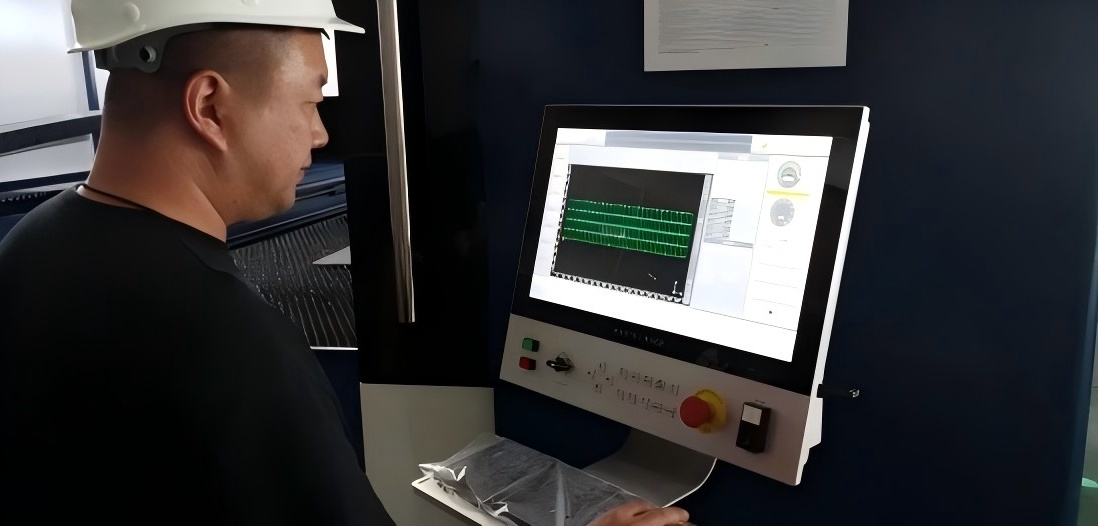
A CNC press brake forms sheet metal by clamping the workpiece between a punch and a die and applying controlled force along a bend line. The CNC controller manages the backgauge position, bend depth, and sequence according to a program generated from CAD data. Modern systems often include real-time angle measurement, automatic crowning, and offline programming software that simulates the bend sequence before production. In an integrated sheet metal fabrication workflow, CNC bending follows laser cutting and precedes welding or assembly. Because the flat pattern is developed with correct bend allowances and K-factors, the cut blank fits the forming program precisely. This integration reduces manual calculation, prevents tooling collisions, and ensures that the first article and subsequent production parts are dimensionally consistent.
Precision, Repeatability, and Dimensional Control
The most important advantage of CNC bending is its ability to maintain tight tolerances across production runs. While manual bending may vary by several degrees from part to part, CNC press brakes can hold bend angles within ±0.5 degrees, and advanced systems can achieve even tighter tolerances for critical components. Flange lengths, hole positions relative to bend lines, and inside radii are equally repeatable. This precision is vital for enclosures with removable panels, chassis with mounting interfaces, and brackets that must align with bearings, shafts, or mating structures. Repeatability also reduces rework and assembly time, lowering total fabrication cost. For buyers of custom metal parts, specifying CNC bending is a practical way to ensure that components fit together as designed and perform reliably in service.
Springback Compensation: Solving a Fundamental Forming Challenge
Springback—the elastic recovery of metal after the bending force is released—is one of the most persistent challenges in sheet metal forming. Mild steel may spring back by 0.5 to 2 degrees, while stainless steel and high-strength alloys can exceed 3 degrees. Without compensation, a programmed 90-degree bend may produce a finished angle of 88 degrees or less. CNC bending systems address this by calculating the required over-bend and adjusting ram depth in real time. Some machines use angle measurement sensors that detect the actual bend angle during forming and automatically correct the stroke. Others rely on material-specific springback databases and adaptive algorithms. This capability is especially important when processing stainless steel, aluminum, and advanced high-strength steels, where springback is significant and variable. Effective springback compensation ensures that every bend meets the design specification regardless of material batch differences.
CAD/CAM Integration and Automated Bending Cells
CNC bending is most effective when integrated into a digital fabrication workflow. Offline programming software imports 3D models, unfolds them into flat patterns, and generates optimized bending programs. This digital thread ensures that bend allowances, K-factors, and tooling selections are consistent with the laser cutting program. When connected to automated storage and retrieval systems, robotic handling, and production tracking, CNC bending becomes part of an automated bending cell capable of quick changeover and high-mix production. This integration reduces manual data entry errors, shortens setup time, and enables fabricators to respond rapidly to design changes. For modern sheet metal fabrication, CAD/CAM integration transforms CNC bending from a standalone operation into a strategic link between design and finished assembly.
Tooling Flexibility and Complex Part Production
CNC press brakes accommodate a wide range of tooling, including standard punches and V-dies, radius tools, hemming dies, and sectional punches for complex geometries. Quick-change tooling and automatic tool changers reduce setup time from hours to minutes, allowing efficient switching between jobs. The CNC controller stores tooling libraries and bend programs, so recurring jobs can be recalled instantly. For parts with multiple bends in different directions, rotating and tilting tools can access difficult areas. This flexibility enables the production of complex enclosures, channels, boxes, and custom profiles without dedicated hard tooling, making CNC bending suitable for both prototyping and production. Tooling selection also affects bend quality: correct V-die openings, minimum bend radii, and surface protection prevent cracking and scratching.
Applications Across Industries and Quality Assurance
CNC bending supports a wide range of industries. In electrical and electronics, it forms enclosures, chassis, and mounting plates. In HVAC, it produces ductwork and transition pieces. Automotive and transportation rely on CNC-bent brackets, frames, and structural components. Industrial machinery uses bent guards, covers, and machine bases. Architectural metalwork benefits from precisely formed facade panels, flashings, and trim. Food processing and pharmaceutical equipment require hygienic stainless steel enclosures formed with tight tolerances. Quality assurance is integrated throughout: first-article inspection validates the bending program, in-process checks monitor angles and dimensions, and final inspection confirms compliance with drawings. When combined with laser cutting, welding, and surface treatment, CNC bending ensures that custom sheet metal components meet specifications for fit, strength, and appearance.
Conclusion: A Strategic Capability for Modern Fabrication
CNC bending has evolved from a basic forming operation into a strategic capability that defines the quality, efficiency, and competitiveness of modern sheet metal fabrication. Its precision, repeatability, springback compensation, CAD/CAM integration, and tooling flexibility enable fabricators to produce complex parts with minimal scrap and short lead times. For buyers of custom metal components, specifying CNC bending ensures that parts fit, function, and perform as designed. For fabricators, investing in advanced CNC press brakes and skilled programming is essential to meet the demanding tolerances and delivery schedules of today’s market. As manufacturing continues to advance, CNC bending will remain at the heart of precision sheet metal fabrication, enabling innovation across every industrial sector.