Global Harmonization of Steel Standards for Cross-Border Trade
For international buyers sourcing steel materials across different regions, understanding the relationship between major global steel standards is essential to ensure product compliance, safety, and performance. China’s GB standards, Japan’s JIS, Europe’s EN, and the United States’ ASTM represent the primary systems governing steel specifications worldwide. Fortunately, many common steel grades have close equivalences across these systems, facilitating international trade. For example, China’s Q235 approximately corresponds to S235JR (EN), SS400 (JIS), and ASTM A36 (USA). ISO 630 serves as a global standard for structural steel, harmonizing key requirements across regional specifications by referencing yield strength classes such as Fe 235 and Fe 355 that match Europe’s EN 10025 (S235, S355) and America’s ASTM A36 (Fe 250). For stainless steel flat products, ISO 15510 mirrors ASTM A240 (USA) and EN 10088 (Europe) in chromium and nickel requirements, providing a common baseline that reduces trade barriers for exporting countries. However, regional standards often add application-specific clauses—EN 10025 requires impact testing at temperatures as low as -50°C, while ASTM standards emphasize Charpy V-notch testing for specific grades and thicknesses. Buyers should always consult material test reports and verify critical mechanical properties such as yield strength (minimum 250–450 MPa), tensile strength (minimum 400–550 MPa), ductility, and weldability when substituting equivalent grades from different standard systems.
Dimensional Tolerances and Inspection Certificates
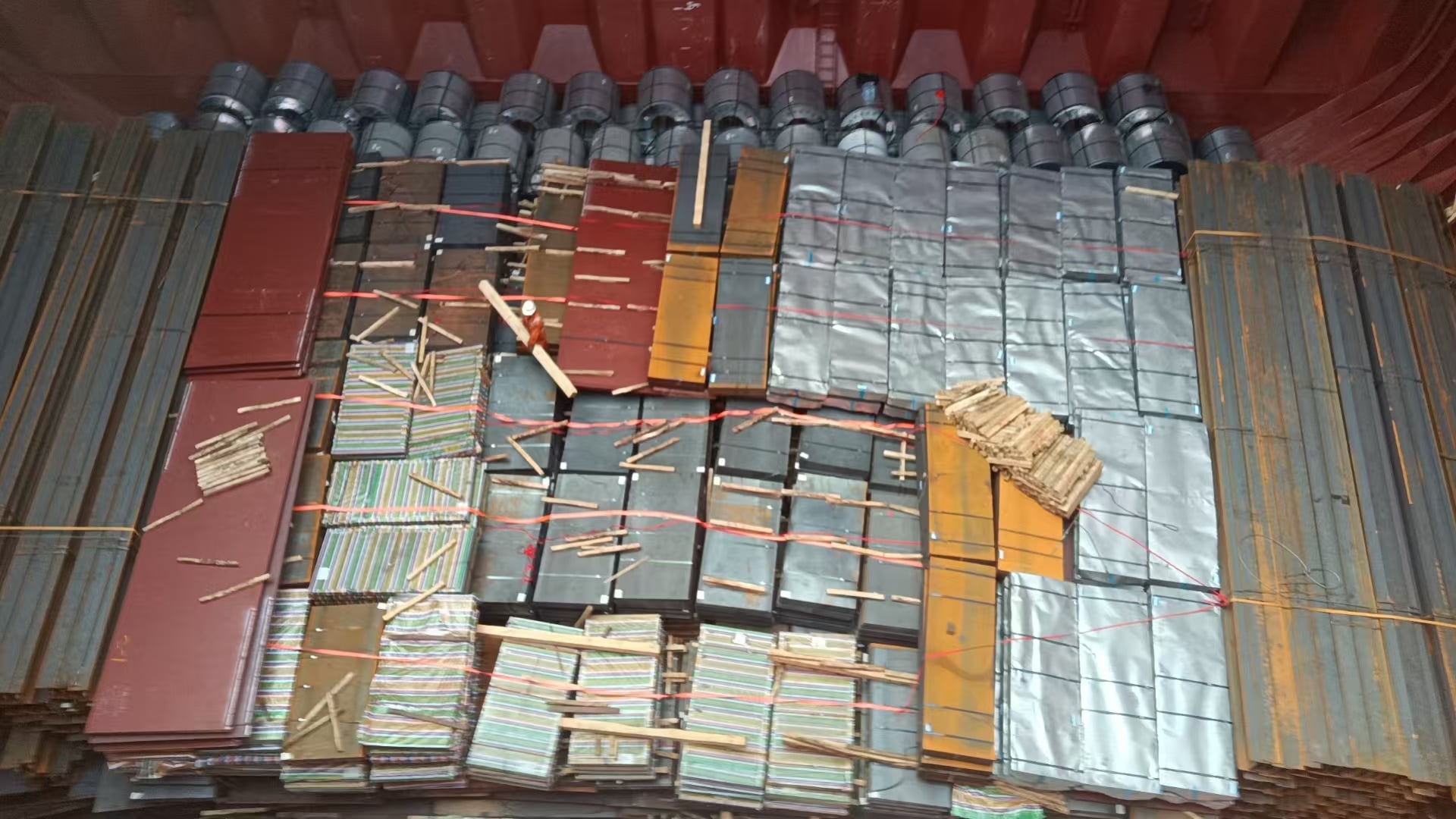
Dimensional accuracy is a fundamental quality parameter that international buyers must verify through applicable tolerance standards and supported by appropriate inspection documentation. For steel plates, ASTM A6 (USA) and EN 10029 (Europe) specify tolerances for thickness, width, length, and flatness, ensuring that plates maintain consistent dimensions for structural applications and machining processes. EN 10029 further classifies flatness tolerances as Normal (Class N) or Special (Class S), with the tolerance also depending on the minimum yield strength of the steel. For steel coils, standards such as EN 10131 and ASTM A568 govern thickness and width tolerances, with even minor deviations potentially affecting performance in high-precision stamping and forming operations. For structural sections including beams, channels, and angles, standards like ASTM A992 and EN 10034 establish tolerances for depth, flange width, web thickness, and straightness, ensuring proper fit-up in construction projects. To validate dimensional compliance, buyers must require and verify appropriate inspection certificates defined under EN 10204—the European standard for inspection documents for metallic products. The key certificate types are: Type 3.1 (Inspection Certificate 3.1), issued by the manufacturer’s authorized quality representative with specific test results for the actual delivered product including chemical composition, mechanical properties, and heat number traceability; and Type 3.2 (Inspection Certificate 3.2), which includes the same information as Type 3.1 but is additionally counter-signed and validated by an independent third-party inspection body such as SGS, BV, or Lloyd’s. Type 3.2 is typically mandatory for high-risk applications—nuclear piping, offshore structures, subsea pipelines, and pressure equipment—while Type 3.1 is the industry standard for most commercial structural steel and piping applications.
Evolving Trade Regulations: Carbon Border Adjustment and Safeguard Measures
International buyers must be aware of rapidly evolving trade policies affecting steel imports, particularly the European Union’s Carbon Border Adjustment Mechanism (CBAM), which entered its definitive phase on January 1, 2026, covering steel, aluminum, cement, fertilizer, hydrogen, and electricity sectors. Under the definitive regime, EU importers are required to purchase and surrender CBAM certificates reflecting the embedded carbon emissions in imported goods, with the obligation to report on actual production emissions. Crucially, the calculation of embedded emissions is not the responsibility of the importer alone—the carbon data corresponding to the CBAM obligations must be provided by the exporting manufacturer. If exporters cannot provide verified actual emissions data, EU importers are forced to use default values that typically exceed actual emission levels by 30–50%, directly inflating tariff costs. Simultaneously, the EU has proposed reducing tariff-free import quotas to 18.3 million tons per year (a 47% reduction from 2024 levels), raising out-of-quota tariffs from 25% to 50%, and introducing “melt and pour” traceability requirements to prevent circumvention and rerouting. These new rules also require verification that the country where molten steel was originally cast matches declared conditions, adding another layer of documentation for buyers sourcing from complex supply chains. For international buyers, understanding CBAM’s calculation standards, carbon data verification protocols, and quota management rules has become essential for cost prediction and supply chain risk management.