Form Factor and Processing Efficiency: Coil for Continuous Production, Plate for Discrete Fabrication
The primary distinction between steel coil and steel plate lies in their physical form and the resulting processing efficiency. Steel coil is a continuous strip wound into a cylindrical shape, ideal for high-volume, automated operations such as roll forming, high-speed stamping, and slitting. When your project demands long production runs of identical parts—like automotive brackets, roll-up door slats, or HVAC ductwork—coil enables uninterrupted feeding and reduces material handling time by up to 40% compared to plate. Conversely, steel plate is a flat, discrete sheet cut to specific dimensions, offering greater flexibility for low-volume, custom fabrications such as one-off machine bases, structural gussets, and prototyped components. Plate allows easy access for manual marking, cutting, and welding without specialized uncoiling equipment. For job shops handling diverse orders with frequent changeovers, plate provides the simplicity of direct loading onto laser cutters or press brakes, whereas coil requires decoilers and straighteners that add capital cost and setup time. Therefore, choose coil for continuous, high-volume production and plate for flexible, mixed-batch manufacturing.
Material Utilization and Inventory Management: Coil Minimizes Waste, Plate Simplifies Storage
From a material economy perspective, steel coil delivers superior yield because fabricators can slit the coil to the exact width required for a part, eliminating edge scrap that typically accounts for 10–15% of waste when nesting on standard 48-inch or 60-inch plates. Additionally, cut-to-length lines convert coil into custom-sized blanks, allowing nested part layouts that achieve over 90% material utilization. For projects with high material cost sensitivity—such as large-scale appliance manufacturing—coil’s waste reduction directly improves profitability. However, coil requires careful inventory management: coils must be stored on specialized racks with weather protection to prevent rust, and moisture trapped between wraps can degrade surface quality over time. Steel plate offers simpler storage: sheets can be stacked flat on pallets in standard warehouses, with each sheet easily accessible for inspection or partial retrieval. For facilities with limited space or handling equipment, plate may be more practical. If your project demands prime surface condition (e.g., pre-painted or polished finishes), plate allows easy surface inspection before cutting, while coil may hide defects until the outer wraps are unrolled. Consider coil for high-volume, waste-sensitive runs; consider plate for storage convenience and surface-critical applications.
Customization and Lead Time: Coil Supports Just-in-Time Shearing, Plate Enables Immediate Processing
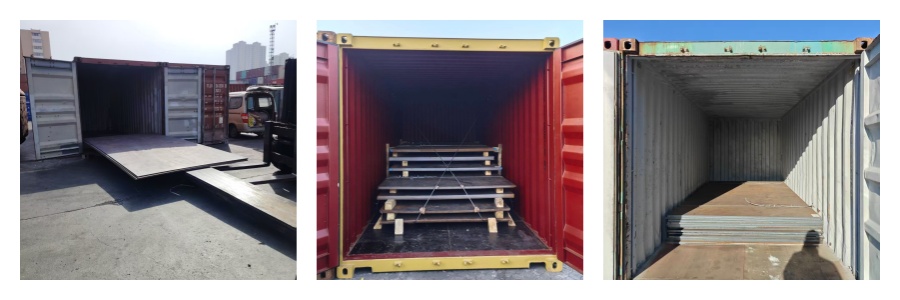
When your project requires custom sizes or rapid turnaround, both coil and plate offer distinct advantages. With in-house cut-to-length and slitting capabilities, a coil supplier can shear exact lengths and widths on demand, producing ready-to-fabricate blanks with lead times often shorter than waiting for mill-produced plate in non-standard dimensions. This just-in-time shearing reduces on-site scrap and inventory holding costs. For structural steel plates thicker than 12mm, however, plate is typically the only available form, as heavy-gauge coils are less common and require specialized leveling. Moreover, for projects involving large, one-piece components such as bridge gussets or pressure vessel heads, plate in standard sizes (e.g., 2.5m x 6m) allows immediate processing without uncoiling and flattening. To decide: if your project involves repeated custom sizes, high volume, and thin to medium gauges (up to 12mm), specify steel coil with slitting and cut-to-length services. If your project demands thick plates (>12mm), very large single pieces, or low-volume custom shapes, order steel plate directly. Many fabricators, including Tianjin Emerson, combine both forms—stocking coil for efficient blanking and plate for heavy structural work—offering the best of both worlds based on your specific application.