Chemical Composition and Material Fundamentals
The most fundamental distinction between stainless steel square tube and carbon steel square tube lies in their chemical composition, which ultimately determines virtually every other property of these materials. Carbon steel square tube is primarily an alloy of iron and carbon, with carbon content typically ranging from 0.05% to 0.25% for low-carbon grades commonly used in structural applications. The material contains little to no chromium, making it inherently susceptible to oxidation and corrosion when exposed to moisture or harsh chemicals. In contrast, stainless steel square tube contains iron, carbon, and a minimum of 10.5% chromium. This chromium addition is the key differentiator: it forms a thin, invisible, self-repairing chromium oxide layer on the steel's surface, providing exceptional protection against corrosion and staining. Austenitic stainless steels such as 304 also contain 8–10.5% nickel, which further stabilizes the austenitic structure and enhances corrosion resistance. The density of stainless steel is approximately 7.93 g/cm³, slightly higher than carbon steel at 7.85 g/cm³, a marginal difference that has minimal practical impact on most structural applications.
Mechanical Properties and Strength Comparison
Both stainless steel and carbon steel square tubes offer excellent mechanical properties, though their strength characteristics differ in meaningful ways. Carbon steel square tube, particularly ASTM A500 Grade C, provides a minimum yield strength of 50 ksi (345 MPa) and tensile strength of 62 ksi (427 MPa). Lower grades such as ASTM A500 Grade B offer yield strength of 46,000 psi and tensile strength of 58,000 psi. Stainless steel square tube Type 304 typically exhibits yield strength ranging from 30,000 to 46,000 psi and tensile strength from 73,200 to 89,000 psi, depending on the specific temper and manufacturing process. While carbon steel generally offers higher yield strength in equivalent sections, research has demonstrated that stainless steel square hollow section columns exhibit superior strength and plastic deformation compared to carbon steel counterparts. Stainless steel also demonstrates superior elongation and ductility, making it more capable of absorbing energy under cyclic loading conditions. The elastic limit of stainless steel is approximately 50% of its yield stress—a behavior distinct from carbon steel—which provides additional design flexibility in certain applications.
Corrosion Resistance: The Defining Differentiator
Corrosion resistance represents the most significant practical difference between these two square tube materials. Carbon steel square tube is highly susceptible to rust and corrosion, particularly when exposed to wet or harsh conditions without proper protective coating or treatment. The absence of chromium means carbon steel lacks the passive oxide layer that provides inherent corrosion protection. In humid, coastal, or chemical environments, carbon steel rapidly oxidizes and requires protective measures such as painting, galvanizing, or powder coating to prevent degradation. Stainless steel square tube, by contrast, offers outstanding corrosion resistance due to its chromium content. The chromium forms a stable, self-repairing passive film that prevents rusting even in humid, chemical, or marine environments. The passive layer, if scratched, re-forms almost instantly in oxidizing environments where carbon steel would pit or scale. This inherent corrosion resistance eliminates the need for protective coatings in most applications, significantly reducing maintenance requirements and extending service life. In acid and alkali environments, carbon steel tubes exhibit extremely poor corrosion resistance, while stainless steel tubes demonstrate much better tolerance.
Welding Characteristics and Fabrication Considerations
Welding stainless steel square tube and carbon steel square tube requires fundamentally different approaches due to their distinct physical and metallurgical properties. Carbon steel is generally more forgiving when it comes to heat input, allowing for higher heat during welding compared to stainless steel. Its higher thermal conductivity and lower thermal expansion coefficient make it less prone to distortion during welding. Stainless steel, in contrast, effectively retains heat, causing it to warp when exposed to the high temperatures that welding creates. Its lower thermal conductivity—approximately one-third that of carbon steel—and superior thermal expansion require careful heat control and often lower heat input to prevent distortion. Additionally, stainless steel is susceptible to "sensitization," where high temperatures cause chromium to combine with carbon to form chromium carbides, depleting the weld zone of chromium and reducing corrosion resistance. This necessitates the use of low-carbon grades such as 304L for welded applications or post-weld heat treatment to restore corrosion resistance. Carbon steel welding is more straightforward and tolerant of varied techniques, while stainless steel welding typically requires TIG or specialized MIG processes with strict parameter control. Tools used on carbon steel must never be used on stainless steel, as carbon contamination can compromise corrosion resistance.
Cost Comparison and Lifecycle Economics
The economic considerations between stainless steel and carbon steel square tubes are substantial and often decisive in material selection. Carbon steel square tube offers significantly lower initial material cost, typically serving as the baseline economy option. Carbon steel pricing averages $700–900 per ton, with moderate volatility driven by energy and raw material costs. Stainless steel, containing costly elements such as chromium (18%), nickel (8–10%), and sometimes molybdenum (2–3%), typically carries 2–3 times the cost of carbon steel, with some estimates indicating 3–4 times cost premiums. In the Indian market, carbon steel pipes range from ₹50–100 per kg, while stainless steel pipes range from ₹250–600 per kg.
However, initial material cost tells only part of the story. The $1,000-per-ton price difference between carbon steel and stainless steel creates significant procurement pressure, yet material selection based primarily on initial cost often generates unexpected lifecycle expenses that eliminate upfront savings. Carbon steel requires protective coatings such as painting, galvanizing, or powder coating, which add upfront costs and require periodic maintenance and recoating over the structure's service life. Stainless steel, by eliminating coating and maintenance expenses in corrosive environments, often delivers superior long-term value. Break-even analysis favors stainless steel when the total cost of ownership—including initial material, fabrication, coating, maintenance, and replacement—is considered over the design life of the structure. For applications in humid, coastal, or chemically aggressive environments, stainless steel is frequently the economically conservative choice.
Applications and Selection Guidelines
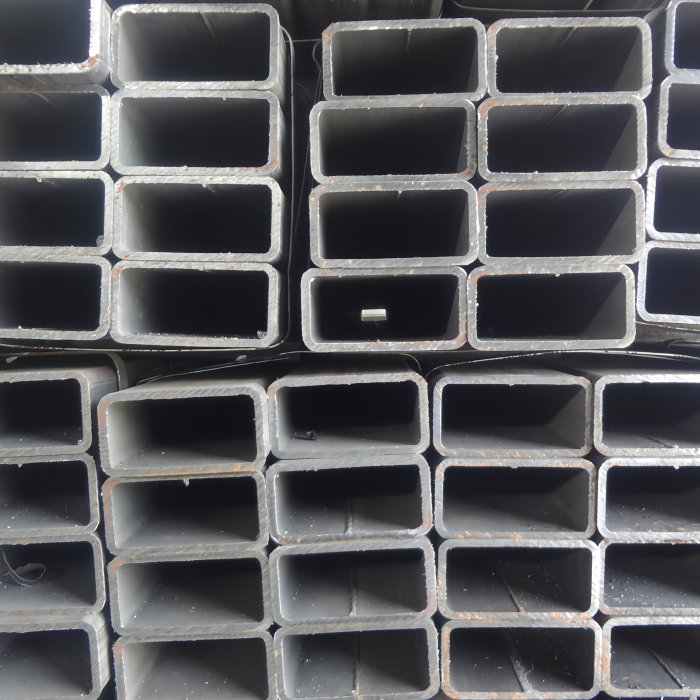
The distinct properties of each material direct them toward different applications. Carbon steel square tube is the workhorse of general construction and fabrication, widely used for structural framing, support beams, columns, braces, handrails, and machinery frameworks. Its cost-effectiveness, excellent weldability, and uniform shape make it ideal for building frameworks, machinery bases, industrial trusses, and general structural applications. It is also suitable for scaffolding, hydraulic systems, and boiler components.
Stainless steel square tube is specified wherever corrosion resistance, hygiene, or aesthetics become the dominant concern. It is extensively used in architectural applications including curtain walls, handrails, posts, frames, staircases, and architecturally exposed steel structures. In mechanical engineering, stainless steel square tubes are used in the production of frames, racks, and other load-bearing elements. The material's corrosion resistance and high load-bearing capacity make it ideal for building and bridge construction, facade cladding, and applications in humid or chemically aggressive environments. Stainless steel is also preferred in food processing, pharmaceutical, marine, and chemical industries where contamination from corrosion products is unacceptable. The choice between carbon steel and stainless steel square tube ultimately depends on the specific combination of load requirements, environmental exposure, expected service life, and lifecycle cost considerations.