Raw Material Selection and Melting: The Foundation of Quality
The production of stainless steel round bars begins with the careful selection and precise balancing of raw materials. The process starts by melting raw materials like iron ore, chromium, nickel, and various alloying elements in an electric arc furnace (EAF) or induction furnace. These components must be meticulously balanced to produce the intended grade of stainless steel, whether it is 304, 316, 410, or duplex grades. Following melting, the molten steel undergoes refining processes such as Argon Oxygen Decarburization (AOD) or Vacuum Oxygen Decarburization (VOD) to remove unwanted elements and impurities, ensuring a clean and durable chemical composition. A critical precaution at this stage is that inconsistencies in composition cannot be corrected downstream. A bar drawn to tight tolerances from poorly controlled melt chemistry will carry those inconsistencies through to the finished product. Therefore, controlling the raw material composition from the very beginning is essential for achieving consistent quality across production batches.
Casting and Hot Rolling: Shaping the Billet into Round Form
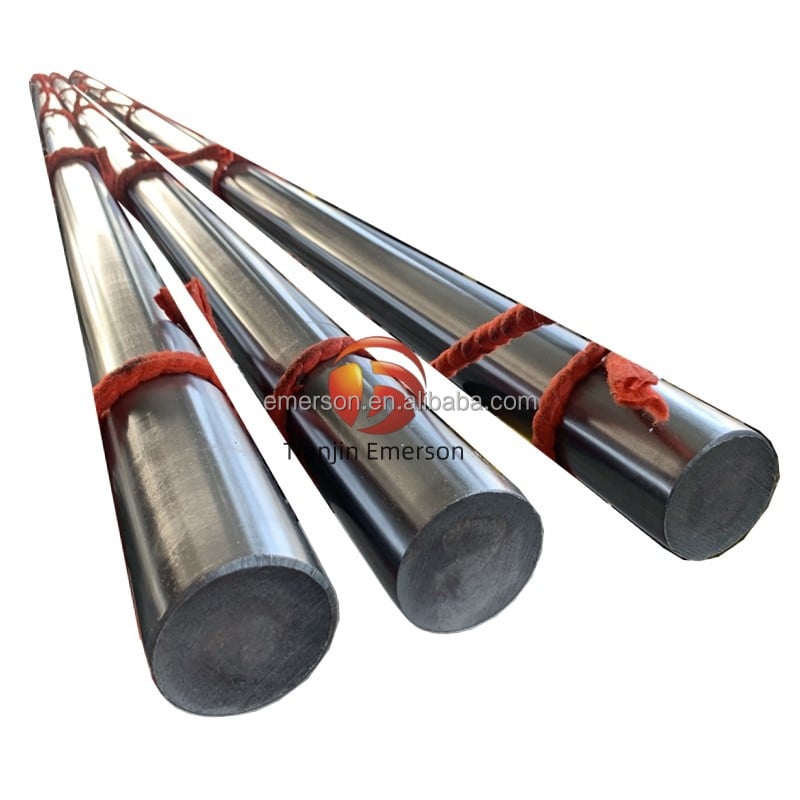
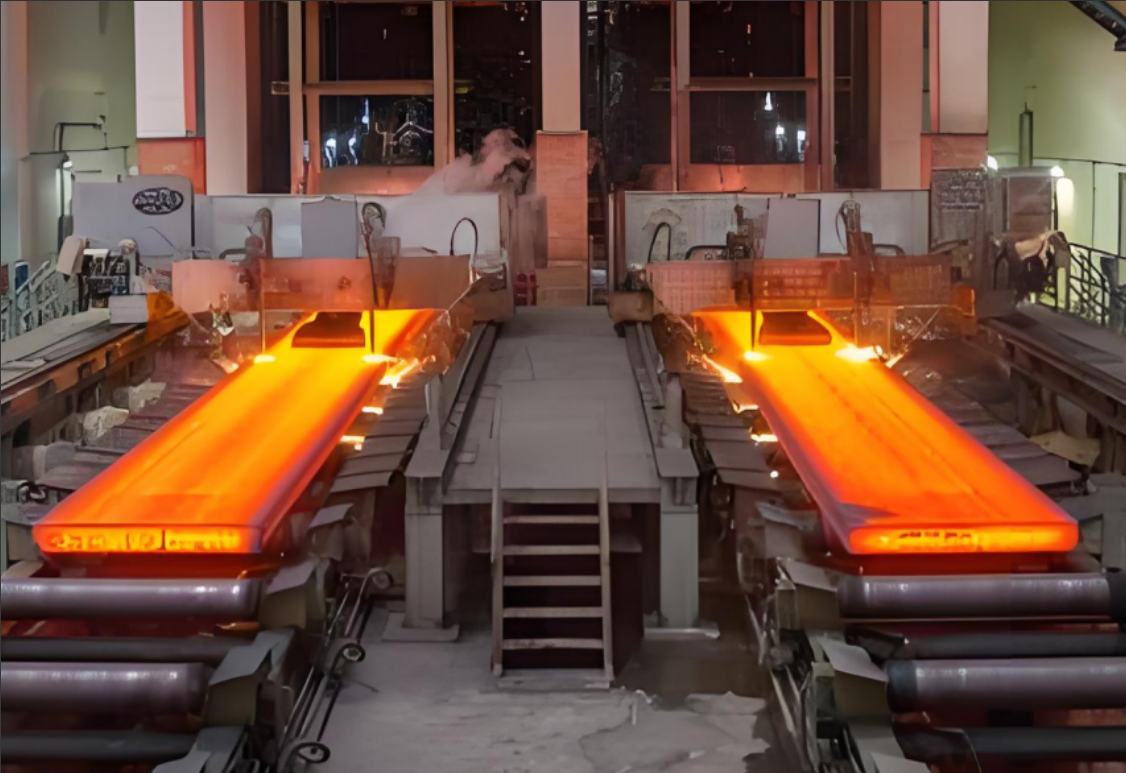
After refining, the molten steel is cast into billets using molds or continuous casting machines. These semi-finished products serve as the foundational material for round bar manufacturing. The billets are then reheated and passed through a series of hot rolling mills, where they are shaped into long, cylindrical forms. This hot rolling process reduces the size of the billets and refines the grain structure, giving them the structure needed to become round bars. Controlled cooling follows, which ensures the bars retain their strength and toughness. A key precaution during hot rolling is the precise control of temperature and rolling parameters to achieve the desired diameter and surface quality. For bars above 20mm in diameter, production is typically direct by hot rolling. Bars between 20mm and 5mm are usually obtained by straightening of hot rolled, annealed and pickled wire rod, while bars below 5mm require a further cold-drawing operation.
Heat Treatment: Enhancing Mechanical Properties and Corrosion Resistance
To improve mechanical properties, hot-rolled bars are subjected to heat treatment processes such as annealing, solution annealing, normalizing, or stress relieving. These techniques enhance toughness, minimize internal stresses, boost corrosion resistance, and improve durability for heavy-duty industrial applications. For grades like 316L used in pharmaceutical applications, or duplex grades used in chemical processing, heat treatment is critical to achieving the corrosion resistance and mechanical behavior the application demands. A crucial precaution is that heat treatment must be carried out in-house to ensure full control over the process. Reducing the temperature of the steel coming out of the heat treatment furnace from 1190°C to 1160°C, for example, can help prevent surface defects such as "water ripples". Additionally, proper control of pre-straightening pressure and the use of high toughness rollers are essential to maintain bar quality.
Cold Finishing: Achieving Precision Dimensions and Superior Surface Quality
For applications needing tight tolerances and smooth surface finishes, cold finishing methods such as cold drawing, peeling, or centreless grinding are applied. Cold drawing involves pulling the bar through a die under controlled conditions to reduce its diameter and improve dimensional accuracy. This process also refines the grain structure and enhances mechanical properties such as tensile strength and hardness. Peeling or turning removes the outer surface layer to eliminate surface imperfections, scale, and minor defects that may have developed during hot rolling. Centreless grinding takes dimensional accuracy further, producing bars with tight tolerances across the full length. A critical precaution is that the choice of cold finishing process depends on the grade, the dimension, and the application the bar is going into. For precision machining, the bar enters the process already close to its final dimension, and even small deviations in diameter, straightness, or ovality affect the finished component.
Surface Finishing and Passivation: Functional Requirements for Specific Applications
Different industries require different surface conditions. Bars may be polished or ground for a smooth look, and passivation is also performed to remove surface impurities and boost corrosion resistance. Surface finish is a functional specification, not a cosmetic one. In hygiene-critical industries, a consistent surface condition directly affects cleanability and corrosion performance. In precision machining, it affects tool life and the quality of the finished component. The finish standard has to be specified alongside the grade, and it has to be maintained consistently across the full batch. For ASTM A276, a smooth surface finish with a roughness (Ra) typically ≤16 μinches is required. Hardness testing is an integral part of the production process, with bars needing to meet specified hardness ranges—for 304 stainless steel, this is around 201 HBW maximum in the annealed condition.
Quality Inspection and Traceability: Ensuring Compliance with International Standards
Each bar produced undergoes thorough testing to verify dimensional accuracy, surface quality, chemical composition, and mechanical properties. Non-destructive tests like Ultrasonic or Eddy Current testing are used to find hidden flaws and ensure the bars are free from any internal defects. Final products are checked to match ASTM, ASME, DIN, or other global standards. A critical precaution is that every batch of round bars must be accompanied by material test certificates covering chemical and mechanical properties. This provides buyers in regulated industries with the traceability they need from melt to finished product. Proper packaging is also essential—using protective cribbing, strapping, and avoidance of chain binding helps prevent damage during transport. By controlling every stage of the process from melting through to finishing, manufacturers can ensure that stainless steel round bars meet the demanding requirements of precision industries.