Introduction to Shipbuilding Steel Plates
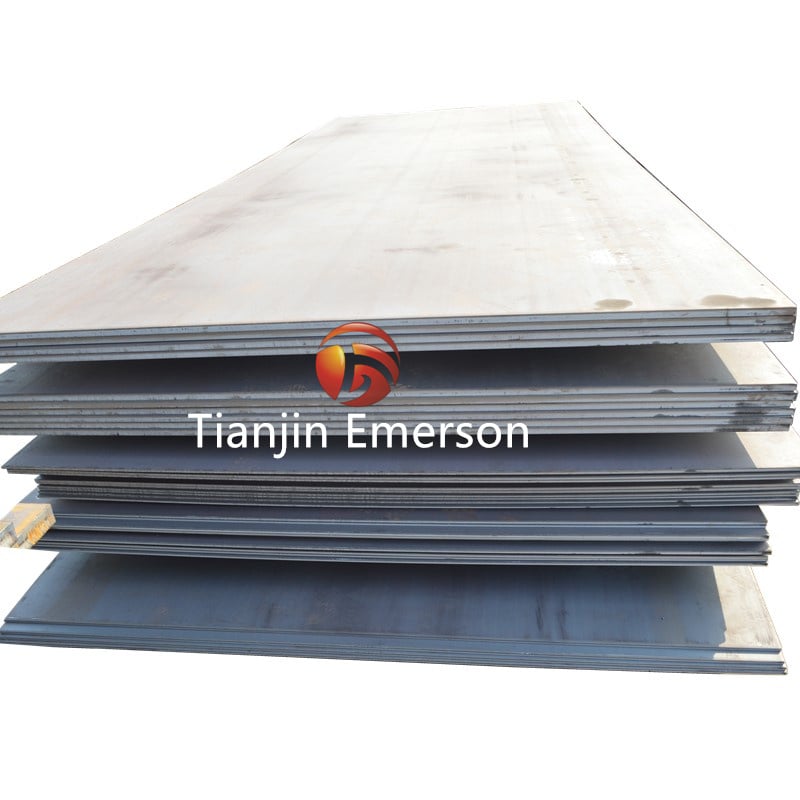
Shipbuilding steel plates, commonly referred to as marine steel plates, are specialized hot-rolled steel products manufactured in strict accordance with the construction rules and specifications of international classification societies for use in ship hull structures. These plates are typically made from high-quality carbon steel and low-alloy steel, designed to withstand the harsh marine environment characterized by chemical corrosion, electrochemical corrosion, and biological attack from sea life and microorganisms. Ship plates must possess a combination of critical properties: adequate strength and toughness, good low-temperature performance, excellent corrosion resistance, and superior weldability. They are produced by major steel mills worldwide and are essential materials for constructing virtually every part of a vessel, from the hull and deck to bulkheads and keels.
General Strength and High-Strength Classification Systems
Shipbuilding structural steels are divided into two primary categories based on their minimum yield strength: general strength structural steel and high-strength structural steel. General strength structural steel is divided into four quality grades: A, B, D, and E—all four grades share identical yield strength (minimum 235 N/mm²) and tensile strength (400–520 N/mm²). The distinction between grades lies in their impact toughness at different temperatures: Grade A requires no impact testing (tested at room temperature); Grade B is tested at 0°C; Grade D is tested at -20°C; and Grade E is tested at -40°C. High-strength structural steel is further divided by strength levels and quality grades. The strength levels are designated by numbers: 32 (minimum yield 315 N/mm²), 36 (minimum yield 355 N/mm²), and 40 (minimum yield 390 N/mm²). Each strength level is available in four quality grades—A, D, E, and F—representing impact test temperatures of 0°C, -20°C, -40°C, and -60°C, respectively. Common high-strength grades include AH32, DH32, EH32, AH36, DH36, EH36, AH40, DH40, and EH40. The letter prefixes indicate the toughness level: "A" for 0°C, "D" for -20°C, "E" for -40°C, and "F" for -60°C, with Grade F offering the highest toughness.
International Standards and Classification Society Approvals
Shipbuilding steel plates must be certified by internationally recognized classification societies to ensure compliance with rigorous safety and quality standards. Major classification societies include ABS (American Bureau of Shipping), LR (Lloyd's Register), DNV (Det Norske Veritas), BV (Bureau Veritas), CCS (China Classification Society), GL (Germanischer Lloyd), NK (Nippon Kaiji Kyokai), KR (Korean Register), and RINA (Registro Italiano Navale). The primary international standards governing ship plates include ASTM A131 (the predominant American standard for structural steel for ships), GB/T 712 (the Chinese standard for shipbuilding steel), and EN 10225 (the European standard for offshore structural steels). ASTM A131 covers grades A, B, D, E, AH32, DH32, EH32, AH36, DH36, EH36, AH40, DH40, and EH40. China's GB/T 712 standard specifies general strength grades CCSA, CCSB, CCSC, and CCSD, as well as high-strength grades CCS-A32 and CCS-A36. Plates may be delivered in various conditions depending on the grade: control-rolled, normalized, or thermomechanical controlled processed (TMCP).
Dimensional Specifications and Thickness Ranges
Shipbuilding steel plates are manufactured in a broad range of dimensions to accommodate diverse vessel sizes and structural requirements. Typical thickness ranges from 4mm to 260mm, with widths from 1200mm to 4000mm and lengths from 3000mm to 18000mm. For specialized applications, plates can be produced up to 300mm or even 450mm in thickness. General strength grades A, B, D, and E are typically available in thicknesses up to 22mm. High-strength grades AH32 and AH36 are commonly supplied in various thickness ranges, with plates exceeding 30mm readily available. The mechanical properties of ship plates vary with thickness, and classification society rules specify maximum thickness limits for each grade. For thicknesses exceeding 30mm, preheating to 120-150°C is typically required before welding.
Applications Across Vessel Types and Structural Components
Shipbuilding steel plates are fundamental materials used in constructing virtually every part of a vessel. General strength grades A and B are predominantly used for less critical structural components, accounting for approximately 90% of total ship plate production. These grades are commonly applied in the construction of upper decks, bulkheads, hatch covers, and non-critical hull sections. Grade D and E plates, with their superior low-temperature toughness, are specified for more demanding applications such as outer hull shells, strength decks, and critical structural elements operating in colder environments.
High-strength grades AH32, DH32, EH32, AH36, DH36, and EH36 are employed for core structural components including the hull, decks, longitudinal bulkheads, and hatch covers of tankers, bulk carriers, container ships, and LNG carriers. These high-strength plates are prized for their excellent weldability and are frequently used to fabricate the most critical load-bearing elements of ships. For example, AH36 steel (yield strength ≥355 MPa) allows thinner hull plating, reducing steel weight by 15–20% in large container ships. Specific applications include longitudinal bulkhead plates, upper strakes adjoining strength decks, and other heavily stressed areas. In the offshore sector, ship plates are used for offshore oil drilling platforms, platform pipe joints, and other marine structures. For LNG carriers, which demand materials for -162°C containment, 9% nickel steel is used for membrane tanks, while ASTM A131 grades are specified for secondary structures requiring -40°C impact tests. Ship plates are also essential for container ships, bulk cargo vessels, cruise ships, ferries, and yachts. The selection of appropriate steel grades depends on the structural location, anticipated loads, and operational environment of the vessel, ensuring safe and reliable performance throughout the ship's service life.