Introduction: Definition and Classification of Special-Shaped Steel Pipes
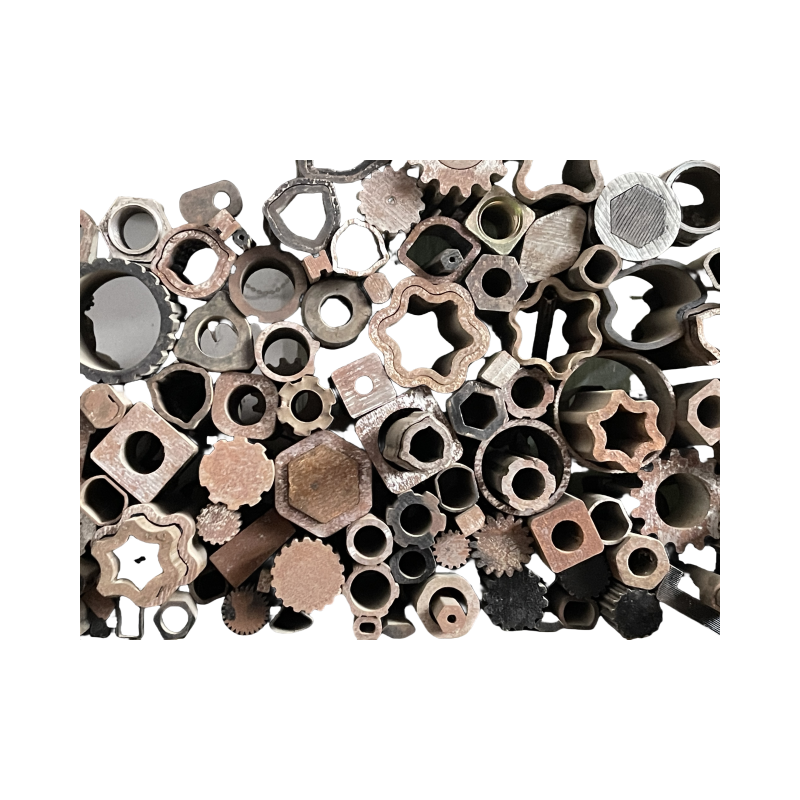
Special-shaped steel pipes, also known as shaped steel tubes or non-circular steel pipes, are a broad category of steel tubes with cross-sectional profiles that deviate from the standard circular shape. These profiles include square, rectangular, elliptical, flat, semicircular, hexagonal, octagonal, triangular, pentagonal, diamond, star, convex, concave, and various other custom geometries. Based on cross-sectional characteristics, special-shaped pipes are systematically classified into three primary categories: equal-wall-thickness special-shaped pipes, unequal-wall-thickness special-shaped pipes, and variable-diameter special-shaped pipes. The dimensional range of these pipes is extensive, with outer diameters typically spanning from 6mm to 530mm and wall thicknesses ranging from 0.6mm to 200mm, accommodating everything from precision instrumentation components to heavy-duty structural members. The governing standards for these products include GB/T 3094-2012 for cold-drawn shaped steel tubes and YB/T 4674-2018 for welded special-shaped steel pipes, providing comprehensive specifications for classification, dimensions, technical requirements, and quality assurance.
Seamless Special-Shaped Pipe Production: Hot Working and Cold Drawing
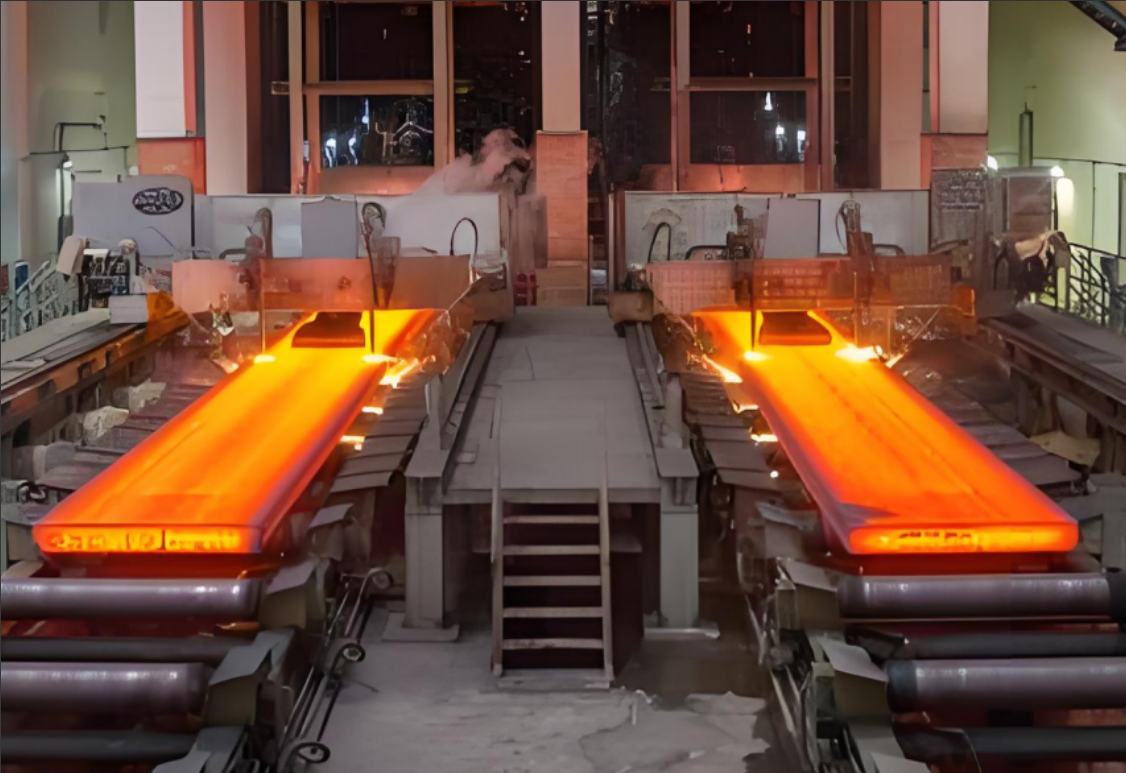
The manufacturing of seamless special-shaped steel pipes follows a systematic process that transforms solid round billets into precision hollow sections with non-circular profiles. The production journey begins with the selection and inspection of high-quality round steel billets, which are first heated to approximately 1,200°C in a rotary furnace. The heated billet is then fed into a piercing mill, where a pointed mandrel forces its way through the center, creating a hollow shell. This hot-working stage—encompassing piercing, three-roll cross-rolling, continuous rolling, or extrusion—is followed by tube-reducing and sizing operations to achieve the initial round hollow section. The hot-formed round pipe is then subjected to cold drawing or cold rolling, the core technologies for producing special-shaped profiles. In cold drawing, the round pipe is pulled through a precisely machined die at room temperature, progressively reshaping its cross-section into the desired non-circular profile. For high-precision requirements, the cold drawing process may involve multiple passes with intermediate heat treatment and pickling to restore ductility and remove surface oxides. The comprehensive cold working workflow for seamless special-shaped pipes follows: round pipe preparation → pointing → annealing → pickling → lubrication (oiling or copper plating) → multi-pass cold drawing (or cold rolling) → heat treatment → straightening → inspection → marking → warehousing. For ultra-high precision applications, cold rolling may be employed, where the pipe passes through a cold rolling mill that reduces diameter and wall thickness while achieving superior dimensional accuracy and surface finish.
Welded Special-Shaped Pipe Production: Forming and High-Frequency Welding
Welded special-shaped steel pipes are manufactured through a distinct production route that begins with steel coil or strip rather than solid billets. The process starts with the selection of high-quality cold-rolled or hot-rolled strip steel, which undergoes rigorous inspection for surface defects and dimensional compliance. The strip is then uncoiled and fed through a series of forming rollers that progressively bend the flat strip into a tubular shape. For special-shaped profiles, the forming process is more complex than for standard round pipes, requiring carefully designed roller sequences to achieve the desired cross-sectional geometry. The edges of the formed tube are joined using high-frequency electric resistance welding (ERW) , which applies high-frequency current to heat the edges to welding temperature, followed by squeeze rolls that forge them together without filler metal. The weld seam is subsequently scarfed (internal and external flash removed) to ensure smooth surfaces. For larger diameters or heavier wall thicknesses, submerged arc welding (SAW) may be employed, using single-wire or double-wire techniques with automatic flux feeding. The manufacturing process for welded special-shaped pipes includes: strip steel inspection → uncoiling → leveling → edge trimming → forming → high-frequency welding → scarfing → sizing → straightening → cutting → non-destructive testing → hydrostatic testing → inspection → packaging. The welded special-shaped pipe standard YB/T 4674-2018 specifies requirements for welded shaped steel tubes used in construction and other applications.
Cold Forming Technologies: Roll Forming and Stretch Forming
Beyond cold drawing and welding, several advanced cold forming technologies are employed in special-shaped pipe production. Roll forming (also known as cold roll forming is one of the most widely adopted methods, where an already-formed round or basic-shaped pipe is passed through a series of roller dies that progressively cold-form it into the final special-shaped profile. This process offers several advantages: simple operation, high production output, moderate tooling costs, and the ability to produce consistent quality across large production runs. The roll forming process involves multiple stages, with the pipe passing through successively shaped rollers that incrementally deform the material until the final cross-section is achieved. Stretch forming is employed for applications requiring exceptionally high dimensional accuracy and superior surface finish. This method includes techniques such as empty drawing (without internal support), mandrel drawing (with internal support), and roller-die stretching, with the roller-die method offering advantages over fixed-die stretching by converting sliding friction to rolling friction, reducing costs and improving production efficiency. For complex geometries requiring multiple deformation stages, a combination of these cold forming techniques may be applied sequentially.
Heat Treatment, Surface Finishing, and Quality Control
Heat treatment is a critical step in special-shaped pipe production that adjusts mechanical properties and eliminates internal stresses induced by cold working. Through processes such as annealing, normalizing, quenching, and tempering, manufacturers can optimize the pipe's strength, toughness, and corrosion resistance. Annealing is particularly important for cold-drawn and cold-rolled pipes, restoring ductility and relieving work hardening accumulated during deformation. For stainless steel special-shaped pipes, solution annealing followed by rapid cooling may be employed to dissolve precipitates and restore corrosion resistance. Following heat treatment, pipes undergo surface finishing to enhance appearance and durability. This may include pickling to remove oxide scale, passivation for stainless steel grades, or the application of protective coatings such as painting, electroplating, or powder coating. For welded pipes, the weld seam undergoes online continuous ultrasonic inspection to verify integrity, followed by hydrostatic pressure testing to confirm leak-tight performance. Final quality control encompasses dimensional verification (outer diameter, wall thickness, length, straightness), mechanical property testing (tensile, hardness, flattening), and surface quality assessment. The comprehensive quality assurance system ensures that every special-shaped steel pipe meets the stringent requirements of its intended application—from precision machinery and automotive components to structural frameworks and architectural features.