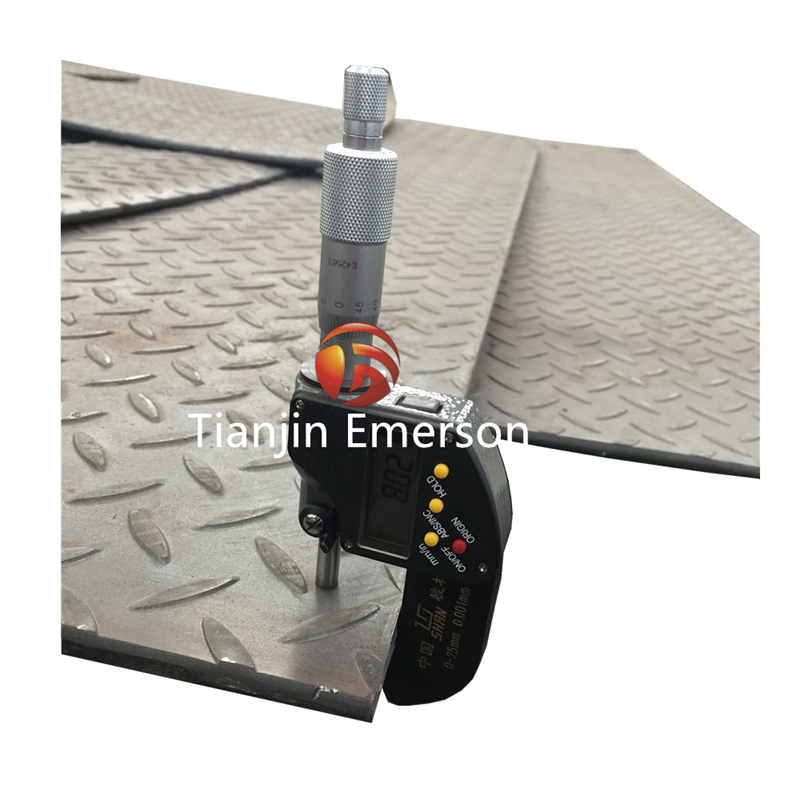
Patterned steel plates, commonly known as anti-slip plates or tread plates, constitute a specialized category within flat-rolled steel products. They are characterized by a raised pattern embossed on one side. This design not only offers aesthetic value but also serves a core engineering function by enhancing slip resistance, making them indispensable safety materials in industrial, commercial, and architectural applications. The texture is formed by embossing hot-rolled or cold-rolled steel plate surfaces using patterned rollers, creating a series of raised dots or ribs. These protrusions significantly increase the friction coefficient underfoot, effectively reducing slip hazards in environments with moisture, oil, grease, or other lubricants. Beyond functional advantages, embossing also imparts inherent rigidity and bending resistance to the steel plate. This allows for the use of thinner gauges than standard flat plates in specific structural applications while maintaining comparable deformation resistance.
Textured flooring panels are categorized based on the specific geometry of their raised patterns, each offering subtle variations in slip resistance, cleanability, and aesthetics. The most common is the diamond pattern, characterized by uniformly arranged raised diamonds or pyramids. This classic design provides multidirectional slip resistance and is standard for industrial flooring, stair treads, and vehicle floor mats. Lens-shaped or elliptical patterns consist of flat, raised ovals, offering a slightly less robust yet still effective slip-resistant surface. Easier to clean and featuring a distinctive visual effect, they are frequently used in architectural components. Teardrop or pebble textures employ small, rounded raised dots, suitable for decorative settings or environments requiring a softer underfoot feel. Less common variants include linear stripe patterns or custom designs to meet specific branding or functional requirements. These tread plates are manufactured from multiple substrates to accommodate varying environments and strength demands. The most common substrate is hot-rolled low-carbon steel (such as ASTM A36 or Q235B), which provides a cost-effective and robust option for general industrial use. For applications requiring corrosion resistance, we offer patterned sheets in stainless steel (most commonly 304 and 316) and aluminum alloy (such as 5052 or 6061). Aluminum alloy sheets not only offer lightweight properties but also possess inherent corrosion resistance, meeting usage requirements without the need for painting.
Patterned steel plates have extensive applications and are critical to operational safety and infrastructure integrity. In industrial and manufacturing facilities, they are the preferred material for mezzanine floors, work platforms, walkways, machinery access stairs, and areas surrounding equipment prone to leaks. The transportation sector extensively utilizes patterned steel plates for truck and trailer floors, locomotive walkways, cargo hold linings, and loading ramps, owing to their exceptional durability and slip resistance across all weather conditions. In construction, applications include fire escape routes, outdoor stair treads, balcony flooring, and decorative-functional cladding for building facades or interior finishes. Furthermore, within the energy and utilities sectors, it is indispensable in constructing walkways for oil drilling platforms, gantries for power plants, and service platforms. Additionally, our factory's laser cutting machines, bending machines, and welding machines can process patterned plates into structural components or steel products.