Definition, Classification, and Dimensional Specifications
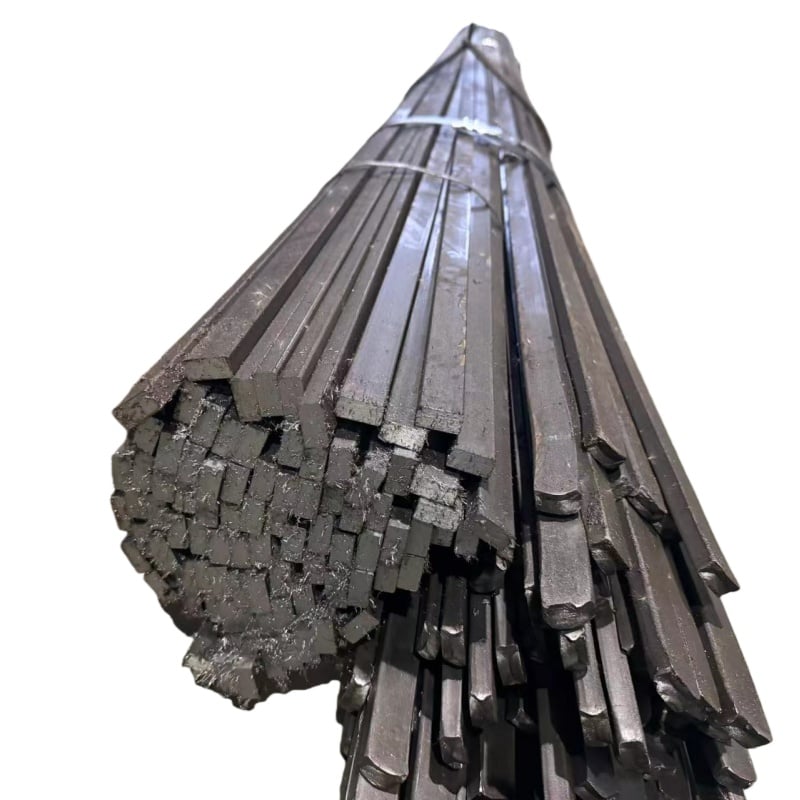
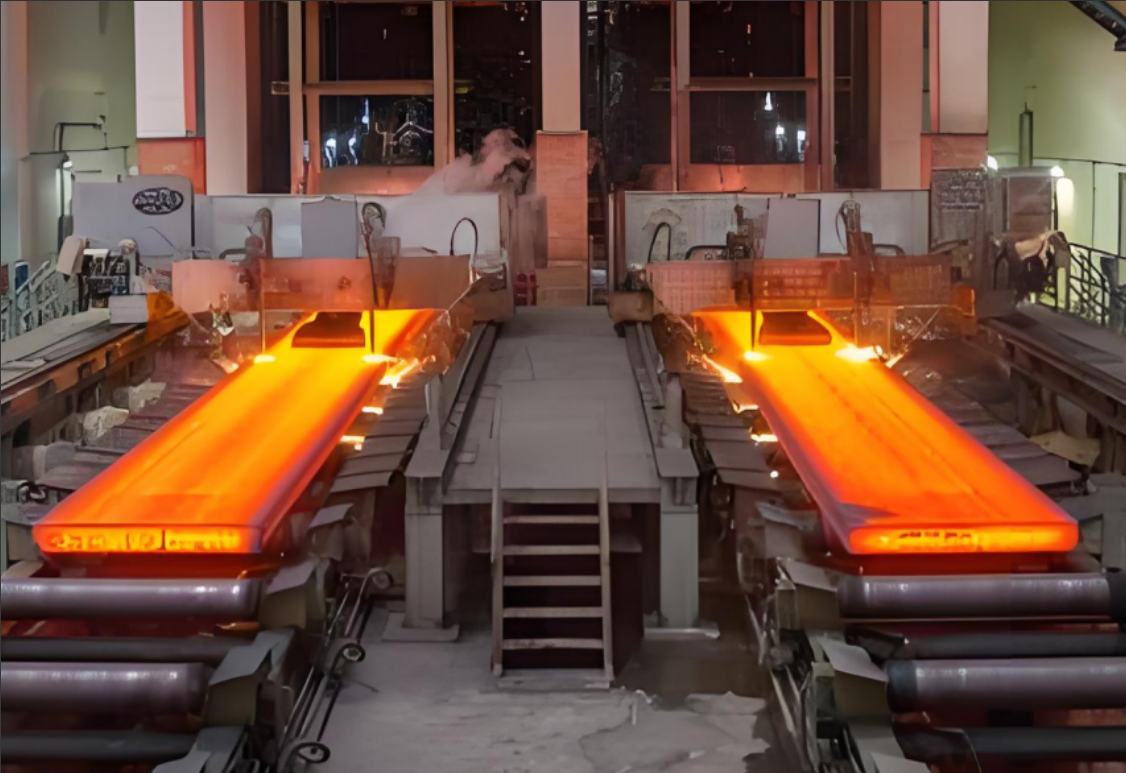
Stainless steel flat bar is a rectangular semi-finished steel product with slightly blunt edges. It is classified into two primary categories based on production method: cold-drawn polished and hot-rolled pickled and sandblasted. Structurally, it is divided into equal-sided and unequal-sided types. Domestically produced specifications typically range from 3mm × 20mm to 150mm, with delivery lengths available in fixed lengths (3–12m) and multiple lengths (6–15m). The material is manufactured from low-carbon square steel billets through cold rolling or hot rolling processes. The weight calculation formula is: weight per meter (kg) = 0.00793 × width (mm) × thickness (mm). Surface quality must be free from defects such as delamination and scarring, and geometric deviations must comply with bending and width tolerance requirements.
Common Grades: Chemical Composition and Mechanical Properties
Stainless steel flat bars are available in a variety of grades, each engineered for specific performance requirements. Grade 304 is the most widely used austenitic stainless steel flat bar, containing approximately 18–20% chromium and 8–10.5% nickel. Its surface forms a passive oxide film through chromium, providing excellent corrosion resistance. The material achieves a tensile strength of 520 MPa, yield strength of 205–210 MPa, and elongation of 40%. It exhibits excellent weldability, formability, and machinability. In chloride-containing environments, the breakdown potential of the passive film is elevated by 400–600mV compared to ordinary stainless steel.
Grade 316/316L incorporates 2–3% molybdenum, which significantly enhances resistance to pitting and crevice corrosion in chloride-containing environments. Its tensile strength reaches 620 MPa minimum, with yield strength of 310 MPa minimum and elongation of 30% minimum. Grade 316L, with carbon content ≤0.03%, provides superior resistance to intergranular corrosion after welding. Grade 430 is a ferritic stainless steel offering moderate corrosion resistance with tensile strength of 450 MPa minimum and yield strength of 205 MPa minimum. Grade 201 provides a cost-effective solution for dry indoor applications, with tensile strength of 520 MPa minimum. Grade 321 (1Cr18Ni9Ti) offers enhanced high-temperature stability through titanium stabilization.
Key Advantages: Corrosion Resistance, Strength, and Fabricability
Stainless steel flat bars offer a combination of advantages that make them indispensable across diverse industries. The defining characteristic is exceptional corrosion resistance derived from chromium content, which forms a passive, self-repairing oxide layer that protects against atmospheric corrosion, moisture, and a wide range of chemical environments. This property eliminates the need for protective coatings in most applications, reducing maintenance costs and extending service life. High strength-to-weight ratio enables efficient structural design, while excellent formability supports complex fabrication operations including bending, stamping, and welding. Good weldability allows seamless integration into assemblies, and low-temperature toughness ensures reliable performance in cryogenic applications. The material also exhibits good heat resistance and work hardening characteristics that can be advantageous for certain applications. Surface finishes can be customized through processes such as wire drawing (matte texture with anti-fingerprint properties), polishing (mirror effect), and sandblasting to meet specific aesthetic and functional requirements.
Processing and Fabrication Considerations
Stainless steel flat bars support a full spectrum of precision fabrication processes. Laser cutting provides exceptional accuracy for complex profiles and tight tolerances. CNC bending transforms flat bars into three-dimensional components, though careful consideration must be given to material springback—particularly for austenitic grades—and minimum bend radii to prevent cracking. Welding can be performed using TIG (GTAW) or MIG (GMAW) processes. For austenitic grades, low-carbon variants (304L, 316L) are recommended for welded applications to prevent sensitization and intergranular corrosion. Post-weld treatments such as pickling and passivation restore the passive oxide layer and remove heat tint. Surface finishing options include wire drawing for matte, anti-fingerprint finishes, polishing for mirror effects, and sandblasting for textured surfaces. Quality control must verify dimensional accuracy, with tolerances typically within ±0.1mm for precision applications, and adherence to relevant standards including GB/T 12770 (welded stainless steel sections for mechanical structures), GB/T 18705 (welded stainless steel sections for decoration), and GB/T 14975 (structural stainless steel flat bars).
Diverse Applications Across Major Industries
The versatility of stainless steel flat bars has established them as essential materials across a remarkably broad spectrum of industries. In construction and architecture, they serve as curtain wall framing,stair tread edging,seismic support structures,handrail posts, and decorative structural components. They are also used for curtain wall embedded parts,steel structure reinforcement,floor edge trimming, and decorative trim strips.
In industrial and mechanical engineering, stainless steel flat bars are used for equipment bases, conveyor brackets, machine frames,mold reinforcement ribs, and chemical processing equipment. The food and beverage industry relies on them for processing equipment, storage tanks, and sanitary fittings. Marine and offshore applications specify grade 316/316L for coastal facilities, marine hardware, and offshore structures due to their superior resistance to salt spray corrosion.
Transportation and infrastructure applications include subway handrail brackets,rail track fasteners,carriage connectors, and automotive components. The medical and pharmaceutical sectors utilize stainless steel flat bars for medical instruments, surgical equipment, and cleanroom components. Additional applications span aerospace, chemical processing, textile machinery, water treatment, and consumer goods. By matching the appropriate grade to the specific service environment—304 for general use, 316L for corrosive conditions, 201 for dry indoor applications, and 321/310S for high-temperature environments—engineers and fabricators can ensure optimal performance, longevity, and cost-effectiveness.