Material Classification and International Standards
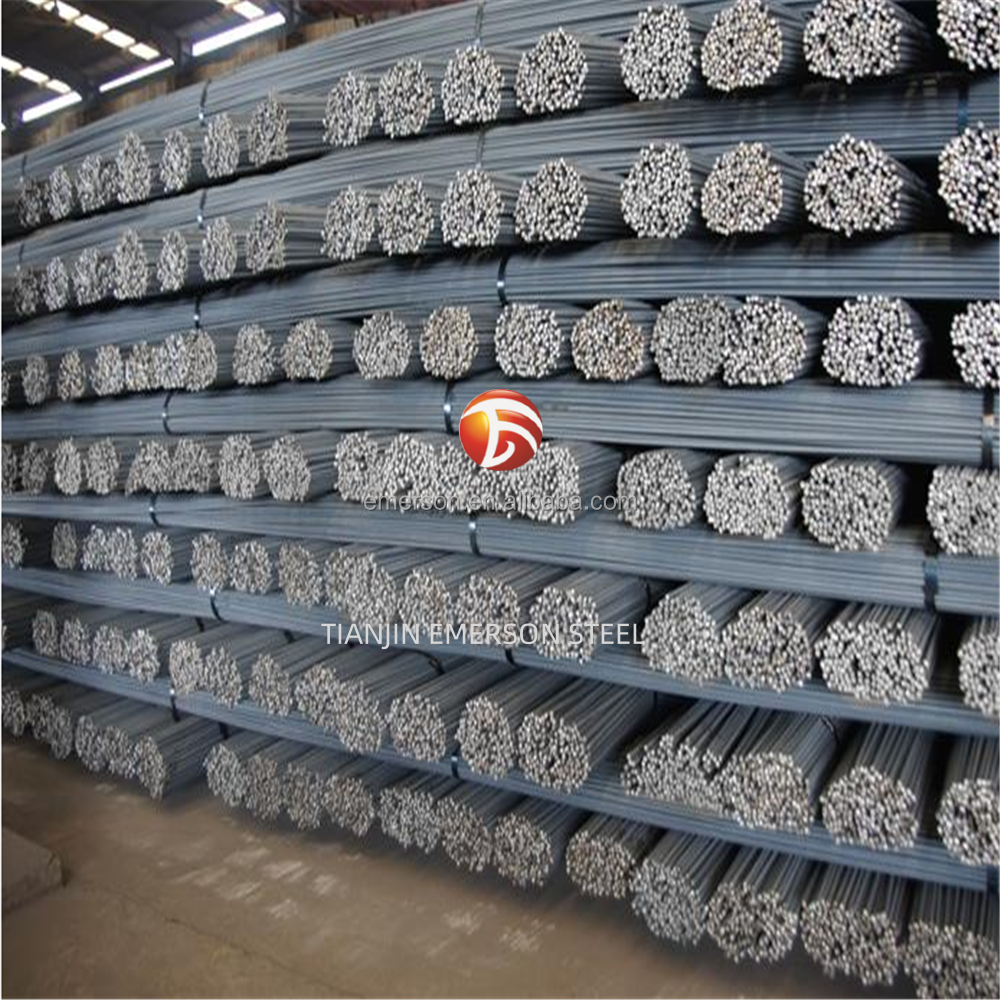
Deformed steel bars, commonly known as reinforcing bars or rebar, are manufactured to rigorous international standards that define their mechanical properties, chemical composition, and dimensional characteristics. The most widely recognized specification is ASTM A615/A615M, which covers deformed and plain carbon-steel bars for concrete reinforcement in cut lengths and coils. Under this standard, bars are classified into four minimum yield strength levels: Grade 40 [280 MPa], Grade 60 [420 MPa], Grade 80 [550 MPa], and Grade 100 [690 MPa] . Grade 60 (420 MPa) is the most commonly used grade for general construction applications worldwide.
In the Chinese standard system (GB/T 1499.2), deformed bars are designated as HRB335, HRB400, HRB500, and HRB600, where the number indicates the minimum yield strength in megapascals. The European standard BS 4449 specifies three grades—B500A, B500B, and B500C—all with a characteristic yield strength of 500 MPa but with different ductility characteristics. For applications requiring enhanced weldability and ductility, ASTM A706/A706M covers low-alloy steel deformed bars specifically intended for controlled tensile property applications and improved weldability. This specification is particularly important for seismic-resistant structures where reliable welded connections are critical. The grade comparison across major standards reveals a clear hierarchy: HRB400 (GB/T) corresponds to Grade 60 (ASTM) and Grade 400 (BS/EN), while HRB500 aligns with Grade 80 (ASTM) and Grade 500 (BS/EN).
Chemical Composition and Mechanical Properties
The performance of deformed steel bars is governed by their chemical composition, which must be precisely controlled to achieve the required mechanical properties while maintaining weldability. For HRB400 grade steel, the chemical composition limits are: carbon ≤0.25%, silicon ≤0.80%, manganese ≤1.60%, phosphorus ≤0.045%, and sulfur ≤0.045%, with a carbon equivalent (Ceq) of ≤0.54. HRB500 grade maintains similar limits but with a slightly higher Ceq of ≤0.55. These controlled compositions ensure consistent mechanical performance while minimizing the risk of hydrogen-induced cracking during welding.
The mechanical properties of deformed bars are strictly defined by yield strength, tensile strength, and elongation requirements. For HRB400, the minimum yield strength is 400 MPa with a tensile strength of at least 570 MPa and minimum elongation of 14% for bars 6–25mm in diameter. HRB500 achieves a minimum yield strength of 500 MPa with tensile strength of 630 MPa and elongation of 12%. HRB600, representing the latest generation of high-strength reinforcement, delivers a yield strength of at least 600 MPa with tensile strength exceeding 730 MPa, with some variants achieving yield strengths of 630–640 MPa and tensile strengths of 800–830 MPa. For ASTM A615 grades, the tensile strength must not be less than 1.25 times the actual yield strength for Grades 40, 60, and 80. However, Grade 100 [690] bars have a ratio of specified tensile strength to specified yield strength of only 1.15, providing a lower margin of safety and reduced warning of failure following yielding. This important distinction must be considered when specifying Grade 100 bars for structural members where strength is governed by tensile capacity.
Welding Requirements and Procedures
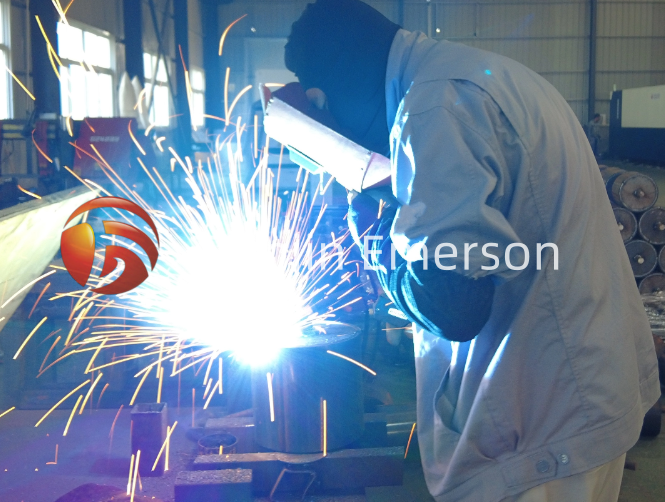
Welding deformed steel bars requires specialized procedures and strict adherence to established codes to ensure joint integrity and structural safety. The primary governing document is AWS D1.4/D1.4M (Structural Welding Code–Reinforcing Steel) , which covers the requirements for welding steel reinforcing bars in most reinforced concrete applications. This code applies to welding of steel reinforcing bar to steel reinforcing bar, as well as to carbon or low-alloy structural steel.
Weldability is directly influenced by carbon equivalent (CE) values. According to AWS D1.4, for #7 (22mm) bars and larger, the CE should be less than 0.45%, and for #6 (19mm) and smaller bars, less than 0.55% to enable welding. ASTM A706 bars are specifically formulated with controlled chemical composition to enhance weldability, with a carbon equivalent not exceeding 0.55%. Welder qualification requires certification to AWS D1.1 for the structural steel component and D1.4 for the rebar. Preheat and interpass temperatures must be strictly controlled, with minimum temperatures of 200°C for Grade 280 bars and 300°C for Grade 420 bars specified for certain applications. Butt welded splices of reinforcing bars shall be complete joint penetration butt welds conforming to AWS D1.4 requirements. When welding ASTM A615 material, caution is advised as no specific provisions have been included to enhance its weldability; a welding procedure suitable for the chemical composition and intended service should be used. The latest edition of AWS D1.4 describes the proper selection of filler metals, preheat/interpass temperatures, and performance and procedure qualification requirements.
Construction Applications and Structural Uses
Deformed steel bars are indispensable in modern construction, serving as the primary tensile reinforcement in concrete structures worldwide. The surface deformations (ribs and lugs) provide superior bond strength with concrete, preventing longitudinal movement of the bar and ensuring composite action between steel and concrete. In building construction, deformed bars are used in foundations, columns, beams, slabs, and shear walls, with typical consumption ranging from 40 to 80 kilograms per square meter of floor area for high-rise structures. The bridge and infrastructure sector relies on deformed bars for bridge decks, piers, abutments, and seismic retrofitting applications. High-strength grades such as HRB500 and HRB600 enable significant material savings; using HRB500 can reduce the total steel weight required by up to 20% compared to HRB400. For seismic-resistant structures, bars with an "E" suffix (e.g., HRB400E) are specified to provide enhanced ductility and energy dissipation capacity. Additional applications include tunnels, dams, retaining walls, industrial floors, and precast concrete elements. Grade 100 [690] bars are increasingly used for high-load applications where reduced reinforcement congestion and simplified detailing are desired, though designers must account for the lower tensile-to-yield ratio (1.15) compared to lower grades.
Selection Considerations and Best Practices
Selecting the appropriate deformed steel bar grade requires careful consideration of structural requirements, environmental conditions, and fabrication constraints. The primary selection factors include: required yield strength based on design loads; ductility requirements for seismic zones; weldability specifications (ASTM A706 is preferred when welding is anticipated); corrosion protection needs (epoxy-coated or galvanized bars for aggressive environments); and availability of specified grades and sizes. Standard sizes range from #3 (9.5mm) to #18 (57mm) diameter in ASTM specifications. The nominal dimensions and number designations of deformed bars are specified in Table 1 of ASTM A615. For applications requiring high-strength reinforcement (Grade 100), designers must be aware that ACI 318 Type 1 mechanical and welded splice requirements (125% of specified yield strength) are not applicable; mechanical and welded splices should meet a minimum specified tensile strength of 115,000 psi [790 MPa]. When using No. 20 [64] bars, the largest bar included in ASTM A615, approval of the building official may be required. For international projects, understanding the equivalence between standards—HRB400 equals Grade 60 (ASTM) and Grade 400 (BS/EN)—is essential for specification accuracy. By integrating proper material selection, adherence to welding codes, and quality assurance practices, engineers and fabricators can ensure that deformed steel bars deliver reliable, long-lasting performance in reinforced concrete structures.