Comprehensive Material Preparation: The Foundation of Weld Quality
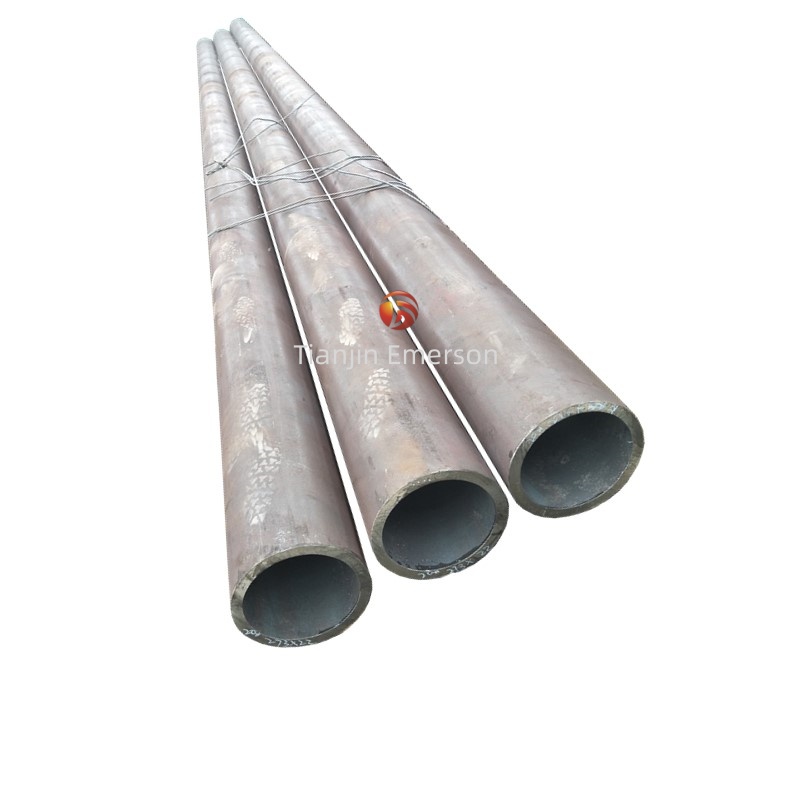
The success of any steel pipe welding operation begins with thorough and meticulous material preparation. Before any welding arc is struck, the surfaces to be joined must be cleaned of all contaminants that could compromise weld integrity. Oil, grease, paint, water, rust, and other impurities must be completely removed from both sides of the weld area using grinding wheels, wire brushes, or chemical cleaners. This cleaning is particularly critical for high-strength alloy steels, where even minor surface contamination can lead to cracking or porosity. The groove shape and size must be inspected to ensure they meet process requirements, with gap, blunt edge, angle, and misalignment verified against specifications. For multi-layer welding, each pass must be cleaned of slag before the next layer is deposited. Additionally, welding materials—including electrodes, welding wire, and flux—must be checked for correct specifications and proper storage conditions. Electrodes should be baked as required before use to eliminate moisture that could introduce hydrogen into the weld.
Welding Parameter Control: Balancing Heat Input and Stability
Precise control of welding parameters is essential for producing sound, defect-free steel pipe welds. The welding current must be adjusted according to the material type, thickness, and external conditions to ensure proper fusion without excessive penetration or burn-through. Excessive current can cause excessive flow of molten metal and reduce weld quality, while insufficient current may result in lack of fusion. Welding voltage and speed must also be carefully selected to maintain arc stability and proper heat input. For high-frequency welding of steel pipes, the weld gap should be controlled within 1-3 mm; if the gap is too large, the proximity effect is reduced, resulting in insufficient eddy current heat and poor intergranular bonding, while a gap that is too small increases the proximity effect and may cause weld burnout. The high-frequency induction coil should be positioned as close as possible to the extrusion rollers; if positioned too far, the heat-affected zone widens and weld strength decreases. Extrusion pressure must also be balanced: insufficient pressure results in weak welds prone to cracking, while excessive pressure squeezes out molten metal and creates internal and external burrs. The welding heat input should be kept as low as practical to minimize distortion and wobbling during welding.
Preheating, Interpass Temperature, and Post-Weld Treatment
Temperature management throughout the welding cycle is critical for preventing cracking and ensuring optimal mechanical properties. For high-carbon steels, alloy steels, and thick-walled pipes, preheating the base material before welding reduces thermal stress and prevents cold cracking. The minimum-required preheat temperature should be maintained throughout the welding operation; once welding begins, this temperature is referred to as the interpass temperature. Interpass temperature shall be measured in the weld area immediately before the application of the next pass. For carbon steels with thickness up to 38mm, standard welding procedure specifications provide guidance on essential welding variables. In environments where temperature falls below 0°C or relative humidity exceeds 90%, special measures must be taken before welding to prevent hydrogen-induced cracking. Post-weld treatment includes controlled cooling, removal of welding slag, and, for certain alloy steels, post-weld heat treatment (PWHT) to relieve residual stress and enhance weld integrity. For high-strength alloy steels, post-weld slow cooling and covering with asbestos cloth help prevent the formation of martensitic structures and cracking. The final weld pass should be arranged to anneal the heat-affected zone, further improving the microstructure.
Common Welding Methods and Process Controls
Different steel pipe applications require different welding methods, each with specific control measures. Submerged arc welding (SAW) , widely used for large-diameter oil and gas pipelines, requires careful control of welding wire and flux specifications, groove dimensions, and process parameters including current, voltage, and welding speed. The use of an arc starter plate at the pipe end improves weld quality by allowing proper arc initiation before the main weld begins. Gas metal arc welding (GMAW/MIG) and gas tungsten arc welding (GTAW/TIG) are commonly used for thin-walled pipes and applications requiring precise control. For thin materials, gas-shielded welding provides clean, spatter-free results. For pipes with wall thickness exceeding 2mm, manual arc welding (shielded metal arc welding) is often employed. For single-sided welding of small-diameter pipes, skilled welders must achieve two-sided weld formation, requiring steel ball tests to ensure cross-sectional area and weld formation meet design requirements. In electric resistance welding (ERW) , quality control includes online non-destructive testing, metallographic inspection, flattening tests, and hydraulic pressure testing to verify weld integrity.
Prevention of Common Welding Defects
Understanding and preventing common welding defects is essential for producing reliable steel pipe welds. Thermal cracks occur when the weld and heat-affected zone cool to high temperatures near the solidus, caused by the combined effect of low-melting eutectics in the molten pool and tensile stress during solidification. Prevention requires controlling harmful impurities (carbon, sulfur, phosphorus), using basic welding rods or flux, controlling weld shape coefficient, and employing multi-layer welding. Cold cracks occur at lower temperatures (200-300°C) primarily in medium-carbon, low-alloy, and medium-alloy high-strength steels, caused by hardenability of the material, dissolved hydrogen, and restraint stress. Prevention requires strict drying of welding materials, cleaning of grooves, selection of low-hydrogen welding consumables, proper preheating, and slow cooling. Reheat cracks occur during post-weld heat treatment or multi-layer welding in the 580-650°C range, particularly in steels containing chromium, molybdenum, and tungsten. Prevention requires controlling chemical composition and adjusting alloying elements. Additionally, welding undercut, porosity, slag inclusions, incomplete fusion, incomplete penetration, and burn-through must be monitored and controlled through proper parameter selection and technique. For high-strength steel pipes, MIG and TIG welding present challenges due to high heat input and rapid cooling rates, requiring careful process control to minimize deformation.
Quality Inspection and Safety Procedures
After welding, comprehensive quality inspection verifies the integrity of the steel pipe weld. Visual inspection checks weld penetration and fusion quality. Sound inspection involves tapping the weld joint to judge the size and quality of the weld pool by the resulting sound. Current density inspection uses specialized instruments to verify electrical properties of the weld. Non-destructive testing methods—including ultrasonic testing, radiographic inspection, and magnetic particle inspection—are essential for detecting internal defects. Throughout the welding process, strict adherence to safety procedures is mandatory. Welders must wear protective equipment including welding helmets, goggles, gloves, and protective clothing. The welding area must be free of flammable or explosive materials to prevent fire or explosion accidents. Workplaces should be well-ventilated to prevent the buildup of toxic gases, and welding equipment must be regularly inspected and maintained to ensure normal operation. By following these comprehensive precautions—from material preparation and parameter control through temperature management, defect prevention, quality inspection, and safety procedures—fabricators can produce steel pipe welds that meet the highest standards of strength, reliability, and durability.