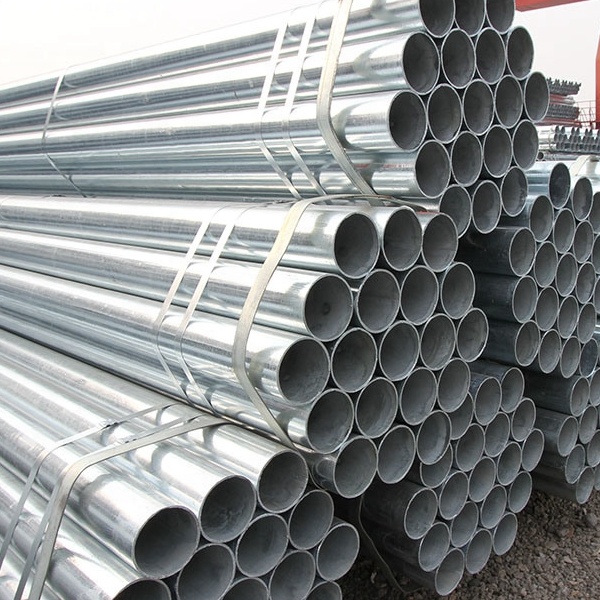
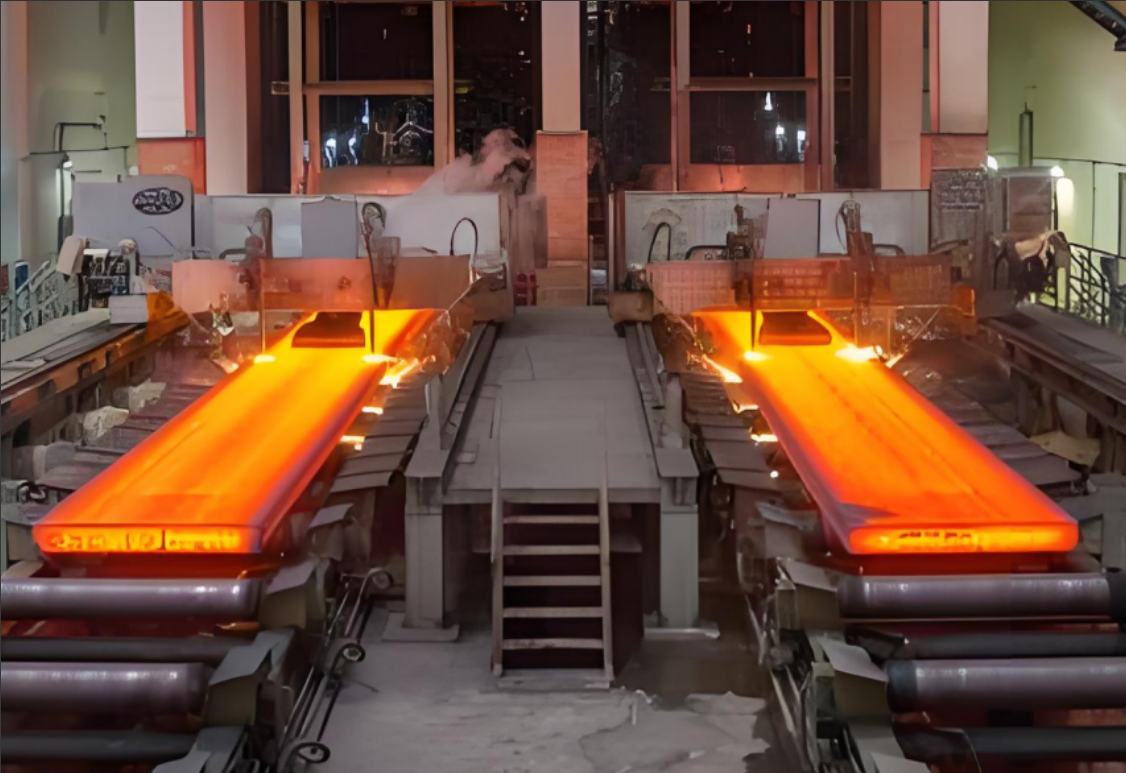
The hot-dip galvanizing process involves immersing standard carbon steel pipes into molten zinc at 440°C to 460°C. Through metallurgical conversion, the protective zinc layer bonds firmly to both the inner and outer surfaces of the pipe, forming a composite material that combines durability with extended service life. Unlike electroplating, which deposits thin zinc layers electrochemically, hot-dip galvanizing immerses pretreated steel pipes into molten zinc at 440°C to 460°C, coating them with a pure zinc protective layer. Typically ranging from 45 to 200 microns in standard applications and up to 650 microns for heavy-duty service, this coating provides dual protection: acting as a physical barrier against corrosive elements while offering sacrificial cathodic protection through the zinc layer's preferential corrosion, effectively shielding exposed steel at cut edges or scratches.
Hot-dip galvanized pipes offer a comprehensive range of dimensions to meet diverse application needs, from small-diameter fluid conveyance to large-scale structural installations. Outer diameters typically span from a minimum of 10.2 millimeters for instrumentation and precision applications to a maximum of 609.6 millimeters for major infrastructure projects. Wall thickness varies according to pressure requirements and structural demands, ranging from a minimum of 0.5 mm for lightweight applications to over 20 mm for heavy-duty structures and pressure-bearing services. Common specifications like Sch40 and Sch80 are widely used in standard scenarios. Dimension standardization follows established systems such as NPS (Nominal Pipe Size): the outer diameter remains constant for a given specification, while the inner diameter varies inversely with wall thickness. For specialized applications, manufacturers offer circular sections ranging from 21.3 mm to 609.6 mm OD, alongside square and rectangular hollow sections from 20×20 mm to 200×200 mm and 25×50 mm to 150×200 mm, extending galvanized products' utility into structural framing and construction. Galvanized coating weight is precisely controlled in grams per square meter, typically ranging from 120 g/m² to 500 g/m² (corresponding to approximately 30μm to 70μm coating thickness). Higher coating weight specifications are required for more corrosive environments.
The performance advantages of hot-dip galvanized pipes extend far beyond simple corrosion protection. The metallurgical bond formed during the immersion process ensures coating adhesion far surpasses that of organic coatings. The hardness of the zinc-iron alloy layer even exceeds that of the base steel itself, granting the pipes exceptional resistance to mechanical damage during transportation, handling, and installation. The comprehensive coverage achieved by the immersion process ensures uniform protection across all surfaces—including internal bores, external walls, threaded ports, welded fittings, and other complex geometries—areas that are extremely difficult to protect using alternative methods. From an economic perspective, considering the total cost over decades of service life, hot-dip galvanizing offers the lowest lifecycle cost among all corrosion protection systems. This is because the process requires no coating maintenance, recoating, or cathodic protection systems.The processing flow for hot-dip galvanized pipes involves a precisely engineered sequence of chemical and thermal treatments, beginning with surface pretreatment—undoubtedly the pivotal step determining coating quality and durability. Steel pipes first undergo degreasing to remove oils, lubricants, and workshop contaminants accumulated during manufacturing and handling. Following degreasing, the pipes enter the pickling stage, where they are immersed in heated acid solution (typically hydrochloric or sulfuric acid). This dissolves mill scale, iron oxide, and rust from the steel surface, exposing a chemically clean and active base metal. Pickling requires precise control: insufficient pickling leaves residual scale, reducing zinc coating adhesion, while excessive pickling may cause hydrogen embrittlement or overly roughen the surface. Following acid pickling, pipes undergo thorough rinsing to remove residual acid and acid salts, preventing contamination of subsequent process baths.After cleaning, the pipes enter the pre-treatment stage for galvanizing, where they are immersed in an ammonium chloride-zinc solution or a mixed aqueous solution of ammonium chloride and zinc chloride. This galvanizing agent serves two critical functions: removing residual oxides formed during rinsing, and more importantly, creating a protective layer before galvanizing to prevent further oxidation while promoting the reaction between iron and molten zinc during hot-dip coating. For optimal results, the pipe blank is preheated to drive off moisture and activate its coating before being immersed in the zinc bath. After preheating, treated pipes must be dried in a hot-air oven to thoroughly remove residual moisture—which could cause splatter or coating defects during hot-dip galvanizing.
The applications of hot-dip galvanized pipes span virtually every sector of industrial infrastructure and commercial construction. Within municipal and utility systems, these pipes are extensively used for potable water conveyance, fire sprinkler systems, natural gas transmission, and compressed air networks. Their internal corrosion resistance safeguards water quality and system longevity, while the external coating withstands the harsh conditions of buried or exposed environments. In construction and engineering, galvanized pipes serve as scaffolding, structural supports, handrails, fencing, greenhouse frameworks, and curtain wall frames. Their maintenance-free longevity and clean appearance deliver enduring value to projects. In industrial facilities, galvanized pipes serve HVAC systems, process piping, and equipment supports, effectively preventing condensation or humid environments from accelerating corrosion on unprotected steel. Transportation and infrastructure sectors utilize them for highway sign supports, streetlight poles, bridge guardrails, sound barrier frames, and protective barriers.The energy sector utilizes galvanized pipes in petrochemical facilities and oilfield installations—particularly for less corrosive well casings and oil pipelines—and increasingly employs them in photovoltaic support structures for solar power generation facilities. Agricultural applications encompass irrigation systems, livestock fencing, and greenhouse structures. Marine and coastal engineering benefit from its exceptional corrosion resistance, with hot-dip galvanized components commonly used in docks, piers, and waterfront buildings. In specialized applications like electrical conduits, galvanized pipes compliant with UL 6 and ANSI C80.1 standards provide mechanical protection for electrical conductors in both exposed and concealed installations. The zinc coating ensures long-term performance stability, effectively preventing internal corrosion that could damage wire insulation.