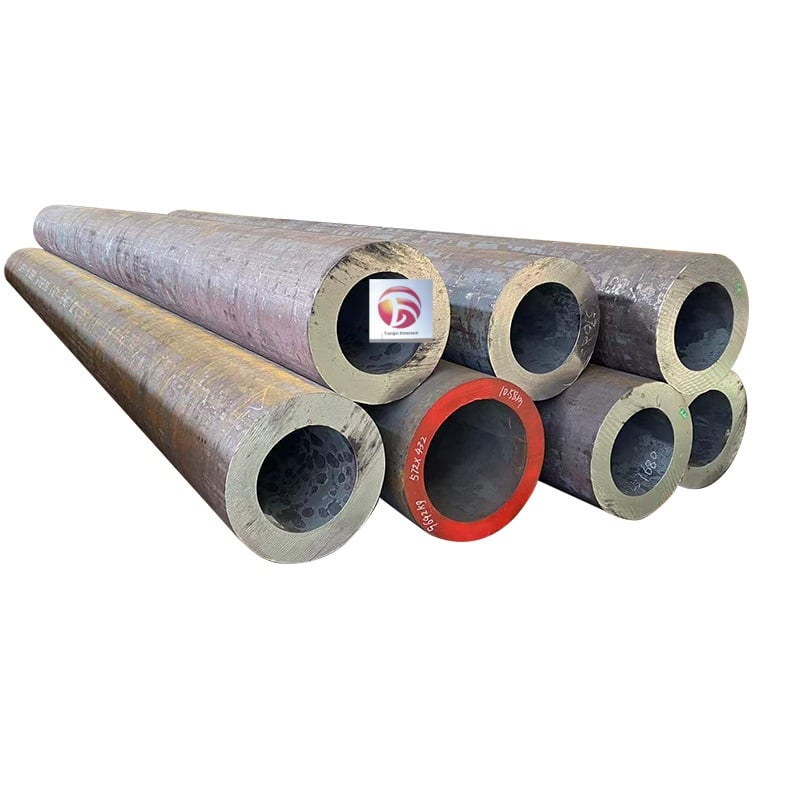
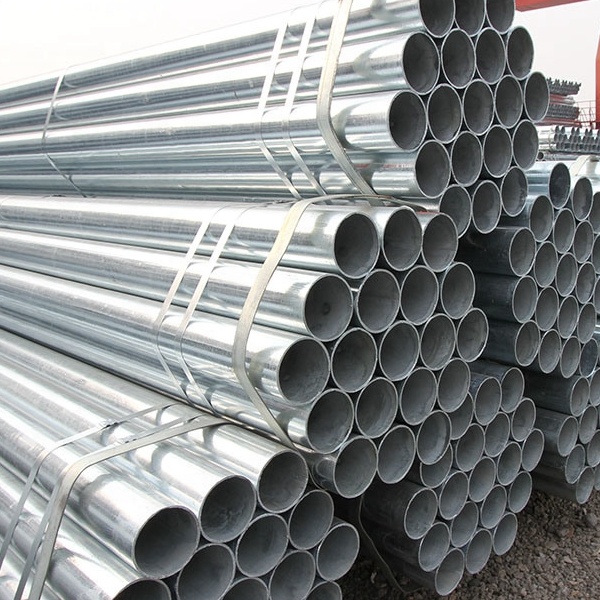
Carbon steel pipes, as fundamental components of global industrial infrastructure, are manufactured and specified according to stringent dimensional standards. These standards explicitly define the outside diameter (OD), wall thickness, and the resulting inside diameter (ID). The most widely recognized standardization system for carbon steel and alloy steel pipes is ASME B36.10. This standard provides comprehensive dimensional data for nominal pipe sizes (NPS) ranging from 1/8 inch to 48 inches and above. Within this system, the outer diameter for a specific nominal size remains constant regardless of wall thickness, while the inner diameter is inversely proportional to the specified schedule number—a classification originally developed to accommodate different pressure ratings. For example, a 6-inch NPS pipe always has an OD of 168.3 mm, but its ID varies with the selected wall thickness: ranging from approximately 162 mm for Grade 5S (thin wall) to a minimum of 124 mm for Grade 160 (extra heavy wall).The size range spans from the smallest diameters required for instrumentation and precision applications—with a minimum outer diameter of just 6.0 millimeters and wall thicknesses as thin as 0.8 millimeters—to giant pipes used for water conveyance, piling, and infrastructure projects, featuring outer diameters exceeding 3000 millimeters.
For small-diameter steel pipes with an outer diameter typically less than 114 millimeters, production commonly employs cold-drawn seamless pipes or electric resistance welded (ERW) pipes. Material grades emphasize precise mechanical properties, surface quality, and formability. Standards such as ASTM A179 cover seamless cold-drawn low-carbon steel pipes for heat exchangers and condensers, where carbon content is precisely controlled to optimize heat transfer characteristics and formability. For general service applications, ASTM A53 Grade B is the most widely applicable specification. It covers seamless and welded pipes with standard wall thicknesses and a minimum yield strength of 240 MPa, suitable for pressure and mechanical applications across various size ranges.Medium-diameter pipes (typically with outer diameters ranging from 60.3 mm to 323.9 mm) are commonly supplied to API 5L specifications for pipeline applications. Grades include X42, X52, X60, and X70, with progressively higher yield strengths to enhance the pressure resistance of oil and gas transmission systems. For the most demanding high-pressure, high-temperature conditions in power generation and petrochemical sectors, ASTM A106 Grade B and C seamless steel pipes are employed. Large-diameter pipes (typically exceeding 406 mm OD) are primarily manufactured using welding processes. In structural and pile foundation applications, ASTM A252 is specifically engineered to withstand pile driving stresses during installation. For large-diameter pressure pipelines, API 5L X80 and lower grades provide essential strength while ensuring weldability and toughness for cross-regional pipelines. Special applications like cryogenic conditions require grades such as ASTM A333.
The manufacturing processes for carbon steel pipes vary significantly based on dimensional classifications, with optimized production routes corresponding to different size ranges and performance requirements. Small-diameter pipes (typically with an outer diameter below 114 mm) are primarily produced as seamless tubes through hot-rolled piercing and cold drawing processes, or as welded pipes via electric resistance welding (ERW) using steel coils. Cold drawing, which passes the tube through dies at room temperature, achieves exceptional dimensional accuracy (OD tolerance ±0.1 mm) and superior surface finish compared to hot-rolled products. This makes it ideal for hydraulic cylinder tubes, precision mechanical components, and heat exchanger applications. The ERW manufacturing process for small-to-medium diameters involves continuously forming steel strip into a cylindrical shape, welding the seam using high-frequency current, followed by internal and external deburring, sizing, and cutting to length. Its high production efficiency makes it the most economical choice for standard piping applications under 24 inches.Medium-diameter pipes (typically with outer diameters ranging from 114 mm to 406 mm) can be manufactured as seamless pipes through rotary piercing and rolling processes, or as ERW/LSAW welded pipes based on wall thickness requirements and application criticality. Large-diameter steel pipes (exceeding 406 mm in outer diameter) are almost exclusively manufactured using welding techniques, with Longitudinal Submerged Arc Welding (LSAW) and Spiral Submerged Arc Welding (SSAW) being the two predominant technologies.