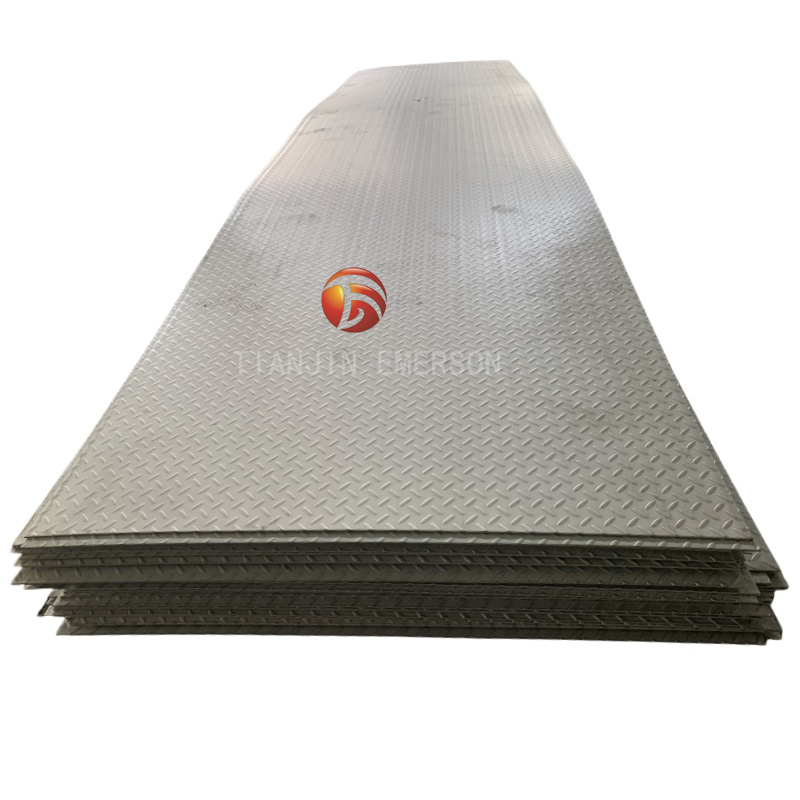
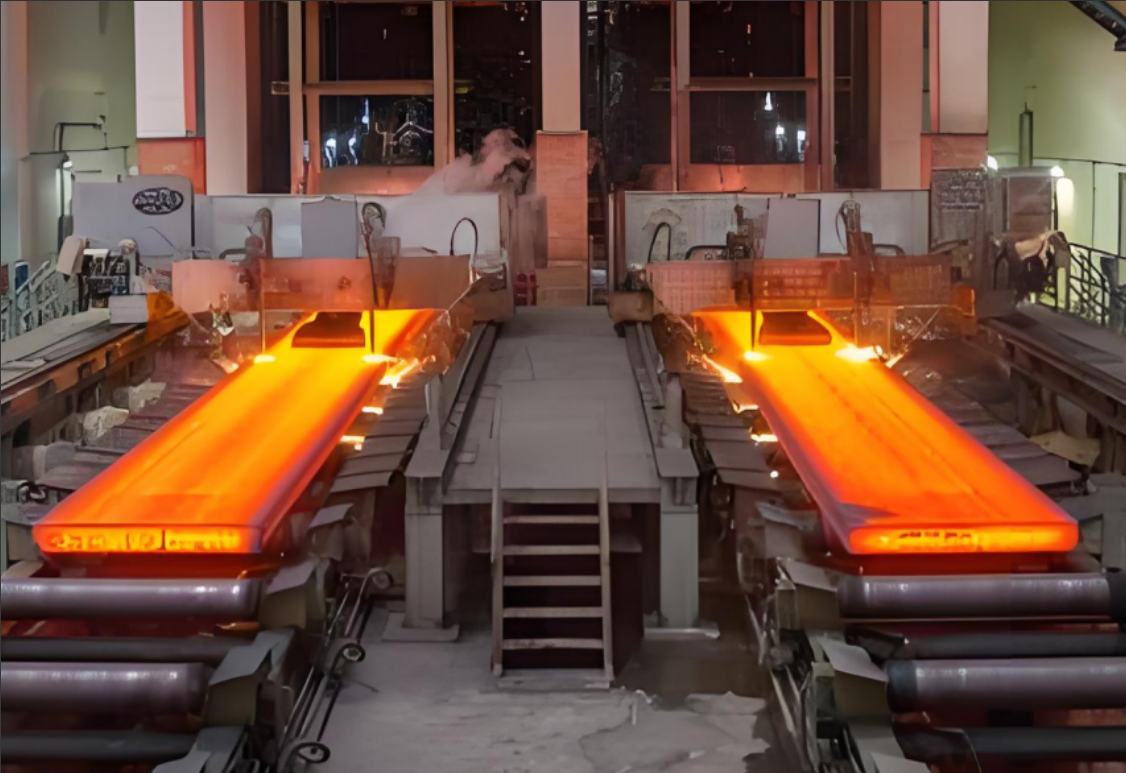
Diamond-pattern steel coils, also known as anti-slip plates or floor plate coils, constitute a specialized category within rolled steel products. Characterized by a raised texture embossed on one side, they combine the structural strength of flat steel plates with enhanced safety through anti-slip properties. Materials for diamond-patterned steel coils typically comply with international standards and mechanical property requirements, such as carbon steel grades Q235, SS400, S235JR, or ASTM A36. Production occurs on modern hot-rolling mills through a series of precisely controlled processes. The steel billet is first heated to over 1200°C, then progressively rolled through roughing and finishing stands to achieve the target thickness. At temperatures exceeding 800°C and under immense pressure, specialized rollers bearing negative-mold patterns emboss the predefined design onto the steel surface.This hot-rolling process is conducted above the material's recrystallization temperature, permanently forming distinctive raised patterns on the checkerboard product—such as rhombuses, lentils, teardrops, or five-pointed stars. After pattern formation, the strip is wound into master coils weighing several tons under controlled cooling, preparing it for subsequent processing and distribution.
Diamond-shaped steel coils offer a comprehensive range of dimensions, with standard thicknesses typically spanning from 1.1 mm to 16 mm. Common specifications include 1.5 mm, 2.0 mm, 3.0 mm, 4.5 mm, 5.5 mm, and 7.5 mm, suitable for routine applications. For specialized heavy-duty service scenarios, thicknesses can reach up to 20 mm. Width ranges from 600 mm to 2000 mm, with 1000 mm, 1250 mm, 1500 mm, and 2000 mm being the most commonly used standard widths, enabling optimized material utilization across various processing requirements. As a critical parameter, the height of the anti-slip texture typically ranges from 0.5 mm to 1.2 mm. The thickness of the raised elements is approximately 0.2 times the base plate thickness, ensuring optimal performance and durability. Roll weights generally range from 5 to 15 metric tons, supporting continuous processing operations and minimizing setup time on automated production lines.
The transformation process from master coil to finished product involves a series of specialized processing services. Precision slitting processes divide wide master coils into multiple narrow coils of specified widths. The fixed-length shearing production line, equipped with a precision leveling system, eliminates curling deformation by controlling bending stress. It unfolds patterned steel strips and precisely shears them into individual flat plates meeting length and width requirements, providing ready-to-use blanks with excellent flatness that lay the foundation for subsequent processing. These processing services enable customers to order material dimensions precisely according to laser cutting layout requirements, minimizing scrap and optimizing production efficiency. For fabricated components, patterned coils can undergo a full range of processing operations including bending, stamping, punching, welding, and laser or plasma cutting. Note that special die designs may be required at formed edges to ensure pattern integrity on the embossed surface.
Diamond steel grating is widely used across virtually all sectors of industrial and commercial construction, favored for its combination of slip resistance, structural strength, and aesthetic appeal. This product finds extensive application in industrial facilities, transportation infrastructure, the construction industry, and mechanical equipment. Our comprehensive capabilities span the entire value chain of anti-slip rolled products: from sourcing premium raw materials in standard carbon steel grades, to precision slitting and cut-to-length processing, through to advanced manufacturing services like laser cutting, bending, and welding. We deliver customized engineering solutions for diverse application scenarios, ensuring an optimized balance of performance, safety, and longevity in specific operational environments.