Introduction and Material Classification
Carbon steel checkered plate, also known as diamond plate, floor plate, or anti-slip steel plate, is a flat steel product with regular raised patterns on its surface, integrally rolled or pressed to provide enhanced friction and anti-slip functionality. The raised patterns not only increase the coefficient of friction but also retain the high strength and load-bearing characteristics of the steel plate itself. Compared to stainless steel checkered plate, carbon steel checkered plate offers lower cost and higher cost-performance, making it the most widely used type in the market. The base material classification primarily divides carbon steel checkered plates into two categories: ordinary carbon steel grades such as Q235B, and low-alloy high-strength grades like Q345B. Q235B is a standard carbon structural steel offering good strength, weldability, and cost-efficiency, while Q345B provides higher mechanical performance with yield strength reaching 345 MPa, making it suitable for heavy-duty structural applications. Internationally, equivalent grades include ASTM A36 or EN S235JR for Q235B, and ASTM A572 Gr.50 or EN S355JR for Q345B. Other commonly used carbon steel grades include SS400, A36, S235JR, S275JR, and Q195B. The steel grades are supplied according to standards such as GB/T700 (carbon structural steel), GB/T712 (hull structural steel), and GB/T4171 (high weathering structural steel).
Pattern Types and Dimensional Specifications
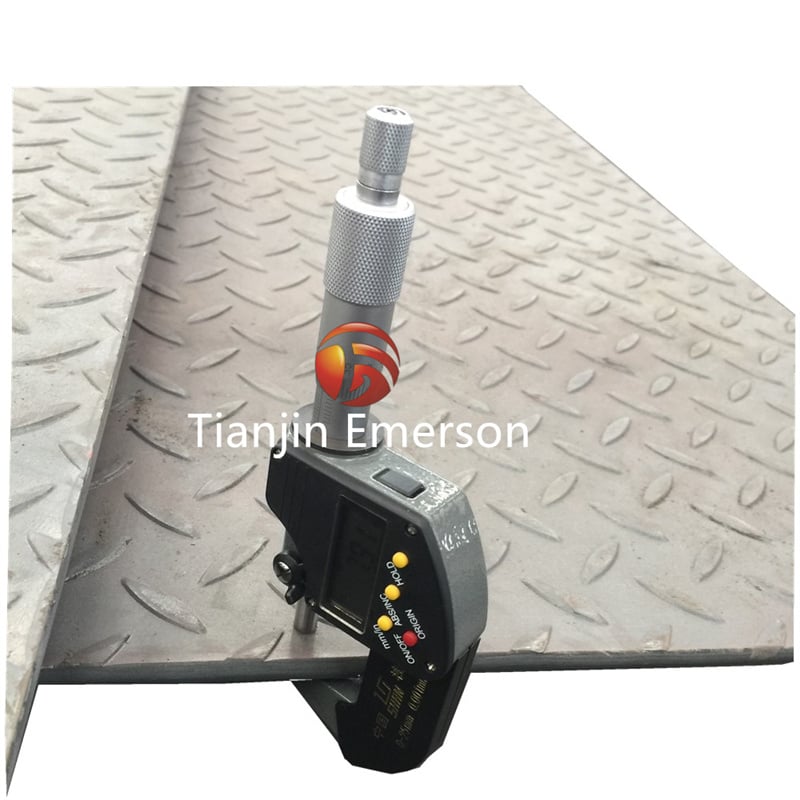
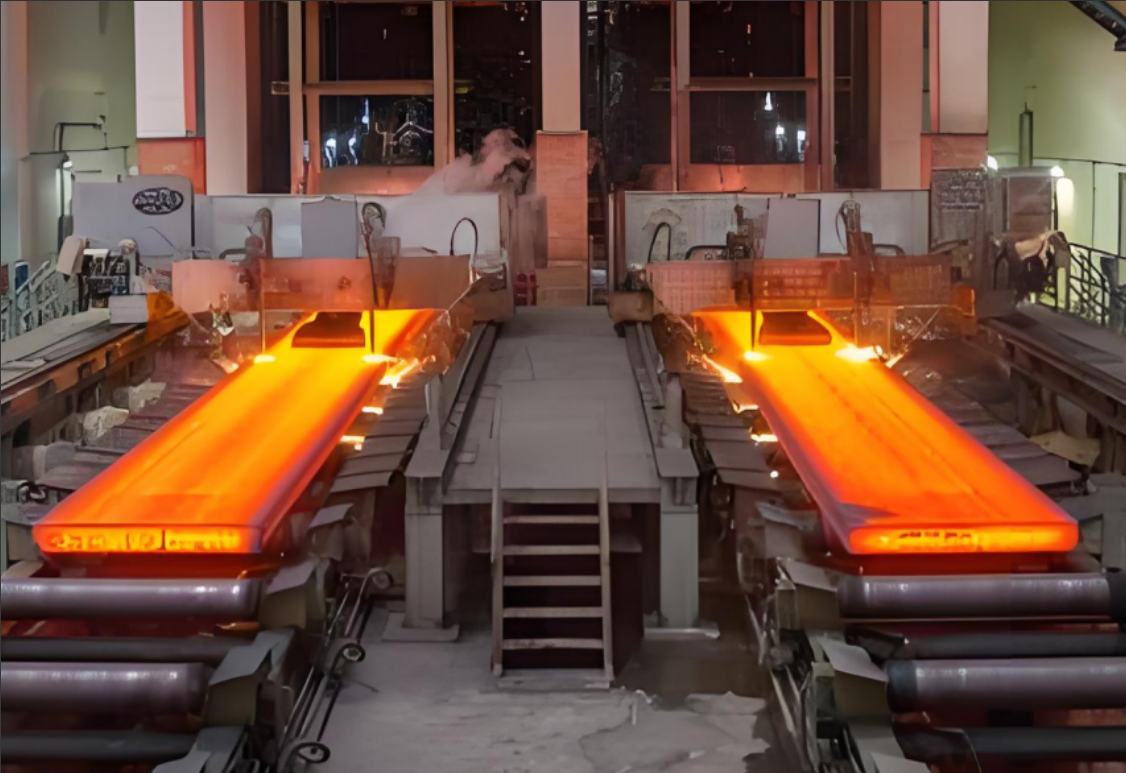
Carbon steel checkered plates are classified by pattern type, with four main patterns dominating the market: lentil shape, diamond shape, round bean shape, and mixed lentil-round shape. The lentil shape is the most commonly used pattern, featuring a moderate raised height of 0.8-1.5mm with uniform distribution, providing excellent anti-slip performance without sharp edges, making it easy to clean and comfortable for walking. The diamond shape has a slightly higher raised height of 1.2-2.0mm, offering outstanding wear resistance and strong impact resistance, suitable for heavy-duty applications such as workshop floors and truck beds. The round bean shape features a low raised height of 0.5-1.0mm with smooth, rounded particles, providing the highest walking comfort and easy cleaning, ideal for indoor scenarios like shopping mall walkways. The mixed lentil-round shape combines characteristics of both patterns for comprehensive anti-slip performance. The base plate thickness ranges from 1.5mm to 12.7mm, with common thicknesses including 2.0mm, 2.5mm, 3.0mm, 4.0mm, 5.0mm, 6.0mm, 8.0mm, and 10.0mm. The pattern height must be no less than 20% of the base plate thickness. Standard widths include 1000mm, 1250mm, 1500mm, and 2000mm, with lengths customizable from 2000mm to 12000mm. The plates are manufactured through hot rolling, with the base plate thickness ranging from 1.4mm to 16mm, featuring highly three-dimensional raised patterns suitable for thick plates under heavy load conditions.
Quality Standards and Global Equivalents
Carbon steel checkered plates are manufactured according to multiple international standards to ensure consistent quality and dimensional accuracy. The primary Chinese standard is GB/T 3277 (replaced by GB/T 33974-2017 for hot-rolled checkered steel plates and strips), which covers hot-rolled checkered steel plates of carbon structural steel, hull structural steel, and high weathering steel. ASTM standards include ASTM A786/A786M, which specifically covers hot-rolled carbon, low-alloy, high-strength low-alloy, and alloy steel floor plates for flooring, stairways, transportation equipment, and general structural purposes. ASTM A36 is widely used for carbon structural steel checkered plates, with typical mechanical properties including tensile strength of 58-80 ksi and yield strength of 36 ksi. ASTM A283 and A572 grades offer enhanced yield strength and better mechanical performance for demanding construction and industrial environments. Other applicable standards include EN 10025 (European), JIS G3101 (Japanese), and IS 3502:2009 (Indian). The surface quality is divided into two levels, and the plates can be delivered with mill finish, oiled, or hot-dip galvanized finishes. Inspection typically includes mill test certificates along with cargos, and third-party inspection (TPI) is also acceptable.
Industrial and Construction Applications
Carbon steel checkered plates are extensively used across various industries due to their anti-slip properties, high strength, and durability. In the construction industry, they serve as flooring for industrial plants, factory walkways, stair treads, and loading ramps. The plates are widely applied in shipbuilding for deck boards, in boiler manufacturing, in automobile and tractor production, and in railway carriage construction. Transportation applications include truck and trailer beds, container floors, lorry beds, and horse trailers. In industrial settings, they are used as equipment platforms, work rack pedals, and machine foot pedals. Other applications include building storage systems, oil and chemical industry platforms, and architectural steel flooring for decoration. The plates provide excellent skid resistance in wet, oily, or high-traffic areas, making them essential for safety-critical environments. For heavy-duty applications requiring superior load-bearing capacity, Q345B checkered plates offer higher yield and tensile strength compared to standard Q235B grades.