
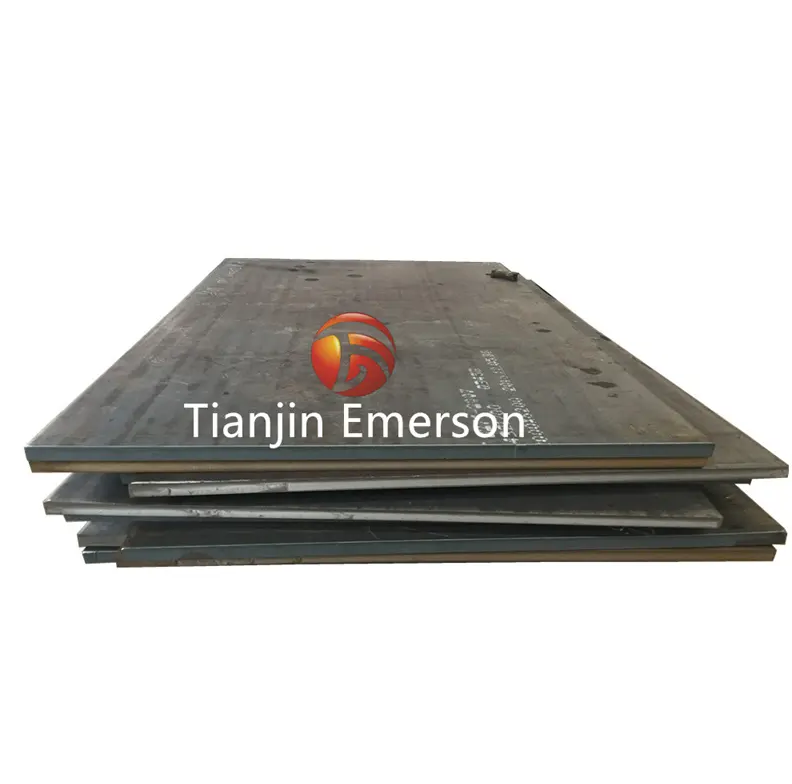
The Fundamental Relationship Between Steel Plate Thickness and Structural Strength
From plane-stress to plane-strain: How thickness alters stress state and fracture toughness
The thickness of steel plates really changes how materials act because it alters the main type of stress they experience. When we look at thin plates where the width to thickness ratio is greater than 10 (b/h > 10), these tend to work under what engineers call plane-stress conditions. This allows stresses to redistribute in two directions and actually makes them seem tougher before fracturing. On the flip side, thicker plates with ratios below 5 (b/h < 5) end up creating three-dimensional stress patterns known as plane-strain constraints. These constraints basically stop the material from stretching through its thickness, which means it breaks more easily. Research has found that when plate thickness goes from just 10mm up to 50mm, fracture toughness drops somewhere between 15% and 30%. That's why standard Charpy V-notch tests need specimens that match real world thicknesses. Testing on thin samples just doesn't give accurate predictions about how thick structural components will perform when subjected to stress.
Nonlinear strength scaling: Why doubling steel plate thickness doesn’t double load capacity
Many people think structural strength simply gets better as materials get thicker, but that's actually a misconception. Tensile strength goes up with cross-sectional area, sure enough. But when we look at things like bending stiffness and how resistant something is to buckling, those properties follow a different pattern altogether. They increase with the cube of thickness (t³). So if someone doubles the thickness, they might expect eight times more rigidity against bending forces. In reality though, this theoretical gain doesn't always materialize. According to Euler Plate theory, a 20mm thick plate should handle eight times more buckling force compared to a 10mm one. Tests tell another story though, showing only about four to five times improvement in compression tests. Why the difference? Thicker plates tend to concentrate stress right where there are changes in geometry. Think about welds, bolt holes, or corners where the shape changes abruptly. These spots become vulnerable points that can lead to failures such as sudden cracks or localized buckling issues. Practically speaking, engineers find that going from a 12.5mm plate to a 25mm one usually gives around 75% more load capacity, not the full theoretical benefit everyone expects.
Thickness-Driven Failure Modes: Buckling, Yielding, and Fracture Trade-offs
Buckling sensitivity: Cubic dependence of critical load on steel plate thickness (Euler-Plate theory)
The ability of materials to resist buckling depends heavily on their thickness according to principles from Euler's plate theory. When looking at how much force a plate can handle before buckling occurs, the relationship isn't linear but rather follows a cubic pattern relative to thickness. For example, doubling the thickness from 10mm to 20mm doesn't just double strength, it increases resistance by around eight times. This kind of nonlinear response means even small changes in thickness matter a lot for thin plates. Thin sections like column webs or flanges without reinforcement become especially risky when there's any deviation in thickness specifications. That's why structural engineers need to carefully check slenderness ratios during design phases. They also rely on established standards like AISC 360 and Eurocode 3 guidelines for calculating effective widths, which helps maintain adequate safety factors against unexpected failures under compression loads.
The thick-plate paradox: Enhanced yield resistance vs. increased local instability risk in slender sections
Using thicker plates definitely boosts resistance against overall yielding, but comes with its own set of problems, especially when dealing with long, thin structures or those that are tightly constrained. The bending strength goes up proportionally to the square of thickness (t²), same with plastic moment capacity. However, stress tends to concentrate at connection points, weld areas, and around any cutouts in the material. These concentration points make the structure more vulnerable to brittle fractures, particularly when temperatures drop or there are residual stresses left from welding processes. There's a balancing act here that requires looking at the whole picture: thicker sections can handle global yielding and buckling better than thinner ones, but they might actually start failing locally sooner. Thinner plates won't suffer from localized overstressing as much, though they tend to buckle more easily when compressed. This is why safety factors need to account for these different failure modes separately rather than treating them all the same way.
| Failure Mechanism | Typical Safety Factor | Critical Influencer |
|---|---|---|
| Yielding | 1.5-2.5 | Material ductility |
| Buckling | 2.5-4.0 | Boundary conditions |
| Fracture | 3.0-5.0 | Notch sensitivity |
Optimal design balances these competing influences—leveraging thickness where it enhances stability while mitigating its downsides through detailing, material selection, and redundancy.
Design Implications: Minimum Thickness Requirements for Stability and Code Compliance
The strength and stability of structures really hinges on getting those steel plate thicknesses right according to what the current design codes require. When plates aren't thick enough, they become much more prone to buckling problems, particularly in those long, thin parts under compression stress such as bridges, tall buildings, and cranes. According to elastic stability calculations, cutting down plate thickness by just 20 percent can actually halve the load at which buckling occurs, showing how sensitive these safety factors really are to small changes. That's why standards like AISC 360 and Eurocode 3 have specific rules about minimum thickness values and maximum slenderness ratios. These regulations help avoid situations where structures might fail unexpectedly, deflect too much, or lose their ability to carry loads properly over time. Following these guidelines ensures buildings and infrastructure stay safe and functional for years after construction.
b/h ratio thresholds for lateral-torsional buckling control in bridge girders (AASHTO LRFD §6.10.8)
Controlling the flange width-to-thickness ratio (b/h) is really important for bridge girders if we want to prevent those annoying lateral-torsional buckling issues. According to section 6.10.8 in the AASHTO LRFD guidelines, when dealing with compact flange sections, engineers need to make sure that b/h stays below 0.38 times the square root of E divided by Fy. Here, E stands for Young's modulus and Fy refers to the specified yield strength of the material. If these limits get exceeded, then the section gets classified either as non-compact or slender, which means designers have to work with lower stress values or install additional stiffeners somewhere along the girder. Take girders with b/h ratios over about 0.45 for instance. These usually end up needing roughly 15 to 25 percent thicker flanges, or alternatively, adding some transverse stiffeners here and there to maintain similar levels of buckling resistance. All these changes impact how much steel gets used, increases welding requirements, and drives up fabrication costs significantly. That's why getting the right thickness sorted out early on during design makes so much sense for anyone working with structural steel components.
Real-World Applications: Optimizing Steel Plate Thickness in Demanding Structural Systems
Wind Turbine Tower Base Plates: Fatigue Performance of 25mm Steel Plate Under Cyclic Loading (IEC 61400-1)
The base plates on wind turbine towers face incredibly harsh conditions, enduring around 100 million load cycles during their 20 year plus lifespan. According to IEC standard 61400-1, these plates need to be at least 25mm thick for both land based and installations. This recommendation comes from actual full scale tests looking at how materials behave when stressed repeatedly, plus detailed analysis of potential fractures. At critical points where stress concentrates like around anchor bolts or welding joints, this thickness helps prevent cracks from spreading while keeping the material strong enough to resist early failure signs. Going thinner increases chances of gradual cracking as winds change direction constantly. On the flip side, making them thicker just adds extra weight and costs money without really extending their useful life much. Real world evidence from offshore sites indicates that sticking with the recommended 25mm thickness cuts down unexpected maintenance needs by approximately 40 percent compared to other thickness choices that don't meet specifications properly.
Ship Hull Plating: Strategic Thickness Gradients (16-32mm) to Balance Global Bending Resistance and Weight Efficiency
When designing marine structures, engineers intentionally vary steel plate thickness across different areas to meet specific needs while keeping overall weight down. The keel and bottom parts of ships need the thickest plates at around 32 mm because they take the brunt of hull stress during rough seas and potential groundings. Moving up the ship, deck sections and sides typically switch to thinner 16 mm plates which helps lower the center of gravity and makes the vessel more stable in water. Special attention goes to areas like the bow flare where waves hit hardest. These spots usually get plates between 22 and 28 mm thick to handle sudden pressure spikes without making the ship too bulky or affecting how it moves through water. This strategy of varying thickness keeps ships structurally sound even when facing unpredictable ocean conditions. Plus, according to some calculations, this method can actually cut fuel costs by about 12 to maybe even 18 percent compared to older designs with evenly thick hulls. That kind of saving makes a big difference over time, as noted in recent industry reports from 2024.
FAQ
1. How does steel plate thickness affect structural strength?
Steel plate thickness impacts structural strength through stress distribution. Thin plates often experience plane-stress conditions, leading to higher fracture toughness, while thick plates have plane-strain constraints, making them more prone to easy breaking.
2. Does doubling steel plate thickness double load capacity?
No, doubling steel plate thickness does not double load capacity. Bending stiffness increases with the cube of thickness, but real-world tests show improvements of four to five times, rather than eight times.
3. What are the impacts of thickness on buckling resistance?
Material resistance to buckling depends on thickness. According to Euler's plate theory, doubling the thickness can increase resistance by eight times. However, slender sections need careful attention to prevent risks.
4. What are the minimum thickness requirements according to design codes?
Design codes like AISC 360 and Eurocode 3 specify minimum thickness values and maximum slenderness ratios to avoid buckling problems and ensure long-term structural stability.
5. Why is strategic variation of steel plate thickness important in ship hull design?
Varying steel plate thickness in ship hull design balances stress resistance and weight efficiency. Thicker plates are used at the keel for structural support, while thinner plates at the deck and sides help maintain stability and reduce the center of gravity.
Table of Contents
- The Fundamental Relationship Between Steel Plate Thickness and Structural Strength
- Thickness-Driven Failure Modes: Buckling, Yielding, and Fracture Trade-offs
- Design Implications: Minimum Thickness Requirements for Stability and Code Compliance
- Real-World Applications: Optimizing Steel Plate Thickness in Demanding Structural Systems
-
FAQ
- 1. How does steel plate thickness affect structural strength?
- 2. Does doubling steel plate thickness double load capacity?
- 3. What are the impacts of thickness on buckling resistance?
- 4. What are the minimum thickness requirements according to design codes?
- 5. Why is strategic variation of steel plate thickness important in ship hull design?