
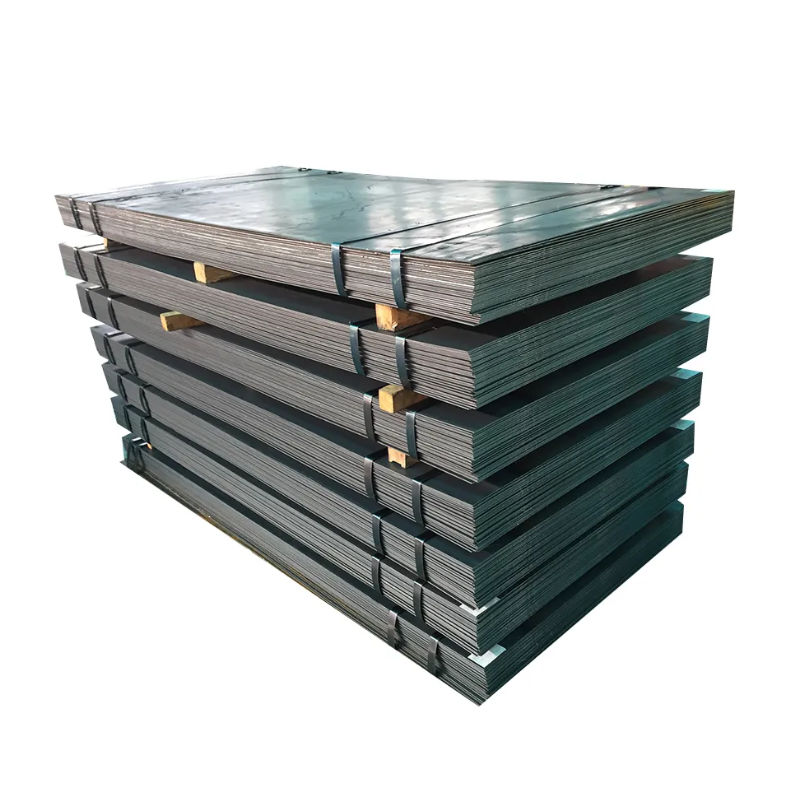
Structural Engineering: High-Strength Steel Plate in Bridges, Skyscrapers, and Infrastructure
Why High-Strength Steel Plate Enables Longer Spans and Taller Structures
High-strength steel plate reduces structural weight while increasing load capacity—enabling longer bridge spans with fewer supports and cutting material costs and construction time. In skyscrapers, it forms the core of column-beam systems, delivering superior resistance to wind and seismic forces. Its high strength-to-weight ratio allows greater heights without overloading foundations, while enhanced fatigue resistance and environmental durability lower long-term maintenance demands. This combination makes it indispensable for infrastructure projects requiring both performance and longevity.
Case Study: Millau Viaduct and Shanghai Tower — Design Impact of Steel Plate Strength-to-Weight Ratio
The Millau Viaduct in France uses high-strength steel plate in its box girders and piers, supporting a 2.5 km deck on just seven slender pillars—its reduced self-weight enabling record pier heights of 343 meters without sacrificing stability. Likewise, the Shanghai Tower relies on high-strength steel plate in its superstructure to resist typhoon-force winds and seismic activity; its high yield strength permits slimmer columns, maximizing rentable floor area. Together, these projects illustrate how high-strength steel plate redefines engineering limits—delivering lighter, taller, and more resilient structures unattainable with conventional materials.
Energy & Pressure Systems: Steel Plate for Pipelines, Reactors, and Storage Vessels
Meeting Extreme Operational Demands: Pressure, Temperature, and Safety Standards
In energy and pressure systems, high-strength steel plate must withstand internal pressure surges, extreme temperatures, and environmental degradation—whether transporting volatile fluids across continents, containing nuclear reactions, or storing hazardous gases under high pressure. Failure is not an option: integrity loss risks catastrophic leaks or system collapse.
To meet these demands, plates are engineered and certified to rigorous international standards—including ASME BPVC Section II and ASTM A516/A387—which mandate verified tensile strength, impact toughness at low temperatures, and weld integrity. These requirements ensure reliable performance across cryogenic, ambient, and high-heat operating conditions—safeguarding people, assets, and continuity of critical energy infrastructure.
Transportation & Heavy Equipment: Steel Plate in Shipbuilding, Rail, and Mining Machinery
Balancing Impact Resistance, Weldability, and Formability in Mobile Structures
Ships, railcars, and mining equipment operate under relentless mechanical stress—requiring steel plate that simultaneously resists impact, welds reliably, and forms efficiently into complex geometries. High-impact grades protect excavator buckets and dump truck bodies from shock loading; controlled carbon and microalloy content ensures crack-free welding—even in thick-section hulls and frame assemblies; and optimized formability enables precise curving for ship bows or hopper chutes.
This balanced performance directly extends service life and lowers total ownership cost. For instance, wear-resistant steel grades in mining haulers increase component lifespan by up to 30% versus standard carbon steel. In rail manufacturing, dent-resistant yet fabricable plates maintain structural fidelity under heavy freight loads—without compromising production speed or safety.
Durability Enhancement: Corrosion, Fire, and Weather Resistance of High-Strength Steel Plate
High-strength steel plate achieves exceptional durability through purpose-built resistance to corrosion, fire, and weather extremes. Alloyed with chromium and other passivating elements, it forms a stable oxide layer that significantly slows rust progression—especially vital in coastal, industrial, or de-icing salt–exposed environments where standard carbon steel would degrade rapidly.
For fire resilience, heat-resistant grades—often combined with intumescent coatings—maintain structural load-bearing capacity for over two hours at temperatures exceeding 1,000°C, preserving evacuation time and structural stability. Meanwhile, weathering steel develops a tightly adherent, self-healing patina when exposed to atmospheric moisture and oxygen, eliminating the need for painting or additional protective systems.
These integrated durability features enable reliable long-term performance in hurricane-prone coastlines, freeze-thaw regions, and arid climates—with properly maintained structures demonstrating service life extensions of 30–50 years (Pebsteel 2024).
Partner with Tianjin Emerson for Your High-Strength Steel Plate Needs
With over 25 years of industry experience serving 10,000+ global clients, Tianjin Emerson is your trusted one-stop supplier of premium steel materials and custom metal fabrication solutions for infrastructure, energy, and industrial OEM projects worldwide. Our ISO 9001 and RoHS certified factory in Tianjin, China, is equipped with state-of-the-art laser cutting, bending, welding, and machining equipment, enabling us to deliver turnkey solutions from raw material supply to finished component delivery.
Why choose Tianjin Emerson as your global steel partner?
- Full-Service Capabilities: From standard steel coils, plates, pipes, and profiles to custom OEM/ODM fabricated parts, we eliminate the need for multiple suppliers and streamline your supply chain.
- Global Standard Compliance: All our products meet ASTM, ASME, EN, JIS, and other international standards, with full material traceability and third-party inspection reports available upon request.
- Flexible Production: We support both small-batch custom orders and large-scale bulk shipments, with fast lead times thanks to our extensive in-stock inventory of over 100 steel grades.
- Dedicated Technical Support: Our team of experienced engineers provides personalized material selection guidance, design optimization, and project-specific technical assistance to ensure your success.
- Reliable Global Delivery: We have established partnerships with major shipping lines, ensuring on-time delivery to ports worldwide and competitive FOB/CIF pricing.
Whether you are an engineering firm undertaking a large-scale infrastructure project, an energy company sourcing certified pressure vessel steel, or an OEM manufacturer requiring custom-fabricated components, we have the expertise and capabilities to meet your exact requirements.
Contact us today to request your free, no-obligation quote or to schedule a virtual factory tour.
FAQs
What is high-strength steel plate?
High-strength steel plate is a specialized type of steel designed for superior performance under extreme load conditions, offering a high strength-to-weight ratio, excellent fatigue resistance, and environmental durability.
How is high-strength steel plate used in bridges and skyscrapers?
In bridges, it allows for longer spans and fewer supports while reducing construction weight and costs. In skyscrapers, it enhances wind and seismic resistance, enables taller structures, and optimizes usable floor space.
Why is high-strength steel plate ideal for energy and pressure systems?
It withstands extreme pressures, temperatures, and environmental degradation, meeting rigorous international standards, ensuring operational safety, and preventing catastrophic failures.
What makes high-strength steel plate suitable for transportation and heavy equipment?
Its impact resistance, weldability, and formability make it ideal for shipbuilding, railcars, and mining machinery, extending service life and reducing ownership costs.
How does high-strength steel plate resist corrosion, fire, and weather elements?
It incorporates alloying elements like chromium for corrosion resistance, heat-resistant grades for fire protection, and self-healing weathering steel for enhanced weather durability.
Table of Contents
- Structural Engineering: High-Strength Steel Plate in Bridges, Skyscrapers, and Infrastructure
- Energy & Pressure Systems: Steel Plate for Pipelines, Reactors, and Storage Vessels
- Transportation & Heavy Equipment: Steel Plate in Shipbuilding, Rail, and Mining Machinery
- Durability Enhancement: Corrosion, Fire, and Weather Resistance of High-Strength Steel Plate
- Partner with Tianjin Emerson for Your High-Strength Steel Plate Needs
- Why choose Tianjin Emerson as your global steel partner?
-
FAQs
- What is high-strength steel plate?
- How is high-strength steel plate used in bridges and skyscrapers?
- Why is high-strength steel plate ideal for energy and pressure systems?
- What makes high-strength steel plate suitable for transportation and heavy equipment?
- How does high-strength steel plate resist corrosion, fire, and weather elements?