
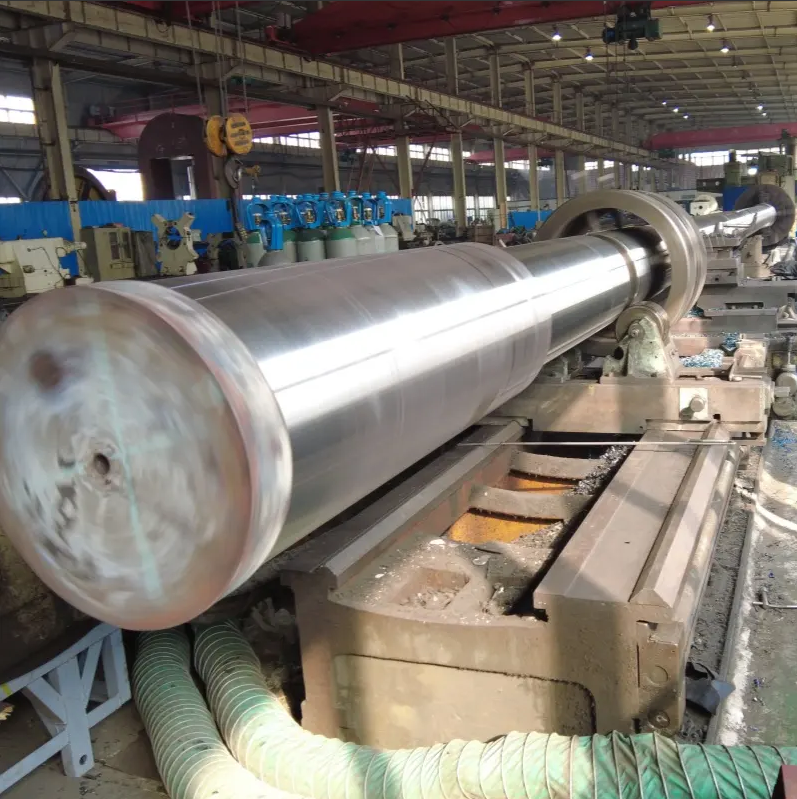
Mechanical Properties Across Common Round Bar Grades
Tensile strength, hardness, and toughness in A36, 1018, 4140, 304, and 316 round bar
Tensile strength, hardness, and toughness vary markedly across common round bar grades—driven by composition and heat treatment. A36 carbon steel delivers a yield strength of 250 MPa and excellent weldability, making it a standard for structural framing. 1018, with its fine-grained, low-carbon structure, offers improved machinability and a tensile strength of ~440 MPa—suited for precision-turned components. In contrast, alloy steel 4140—when quenched and tempered (Q&T)—achieves over 850 MPa tensile strength and ~300 HB hardness, delivering an optimal balance of strength and toughness for high-stress rotating parts like shafts and axles. Austenitic stainless steels prioritize corrosion resistance: 304 achieves ~515 MPa tensile strength and remains non-magnetic and ductile; 316 adds 2–3% molybdenum to match that strength while significantly enhancing resistance to chloride-induced pitting. Hardness trends align accordingly—A36 sits at ~150 HB in the as-rolled condition, while cold-worked 304 or Q&T 4140 can exceed 250 HB.
Microstructure–performance links: ferrite, austenite, martensite, and precipitates in round bar behavior
Microstructure is the fundamental driver of mechanical behavior in round bar. Low-carbon grades like A36 consist primarily of soft, ductile ferrite—ideal for bending and welding but inherently limited in strength. Austenitic stainless steels (304, 316) retain a face-centered cubic (FCC) austenite structure at room temperature, granting non-magnetic properties, excellent formability, and work-hardening capability under deformation. Quenching 4140 transforms its microstructure into hard, brittle martensite; subsequent tempering refines this into tempered martensite—restoring toughness while preserving high strength. Chromium carbides and other secondary phases in stainless steels contribute to corrosion resistance and, in precipitation-hardened alloys like 17-4 PH, directly strengthen the matrix. Heat treatments such as annealing, normalizing, and Q&T are leveraged intentionally to tailor phase distribution—enabling engineers to select grades whose microstructural response matches real-world loading, temperature, and environmental conditions.
Composition–Performance Relationships in Round Bar Alloys
Carbon, chromium, nickel, molybdenum, and nitrogen: how alloying elements tailor round bar strength and corrosion resistance
Round bar performance is engineered at the elemental level. Carbon remains the most influential strengthener in carbon and alloy steels: increasing carbon content promotes martensite formation during heat treatment, raising hardness and tensile strength—but at the cost of reduced ductility and weldability. Chromium is essential for stainless behavior—forming a self-repairing Cr₂O₃ passive layer when present at ≥10.5%. Nickel stabilizes the austenitic phase in grades like 304 and 316, improving toughness, low-temperature impact resistance, and resistance to stress-corrosion cracking. Molybdenum—key to 316’s superiority over 304—enhances the stability and repassivation ability of the oxide film, particularly against chloride pitting and crevice corrosion. Nitrogen, often added in small amounts (0.1–0.2%) to modern austenitic and duplex grades, boosts yield strength without compromising ductility and further improves localized corrosion resistance. Crucially, these elements interact: excessive carbon in low-chromium environments can trigger intergranular corrosion after welding (sensitization), underscoring why balanced composition—and proper processing—is non-negotiable in critical applications.
Environmental Resistance of Round Bar by Grade
Environmental resistance determines service life in aggressive settings—from offshore platforms to chemical reactors. Material selection must align with exposure conditions, including chlorides, acids, elevated temperatures, and cyclic thermal loads.
Corrosion performance: 304 vs. 316 vs. 17-4 PH round bar in marine and chemical environments
Corrosion resistance among stainless round bar grades reflects their alloy design. Type 304 provides reliable general corrosion resistance in mild atmospheres and freshwater but is susceptible to pitting and crevice corrosion in seawater or de-icing salt environments. Type 316’s 2–3% molybdenum content significantly elevates resistance to chloride attack, making it the preferred choice for marine hardware, coastal infrastructure, and pharmaceutical processing equipment. Precipitation-hardened 17-4 PH combines high strength (~1300 MPa tensile when aged) with moderate corrosion resistance—comparable to 304 but inferior to 316 in acidic or highly saline media. It excels where strength and moderate corrosion resistance are jointly required, such as turbine blades or valve stems, but demands careful passivation and environment-specific validation.
High-temperature stability: oxidation and creep resistance in 310S, 253MA, and Inconel 625 round bar
For sustained high-temperature service, oxidation resistance and creep strength become decisive. 310S stainless steel—containing ~25% chromium and ~20% nickel—resists scaling up to 1035°C (1895°F), commonly used in furnace components and exhaust systems. Alloy 253MA builds on this with additions of silicon, nitrogen, and rare earth elements (e.g., cerium), improving scale adhesion and extending usable life beyond 1100°C (2012°F) in radiant tubes and heat-treating fixtures. For extreme thermal and mechanical demands—such as jet engine ducting or nuclear fuel handling—Inconel 625 round bar delivers unmatched performance. Its nickel-chromium-molybdenum-niobium composition provides exceptional creep resistance above 870°C (1600°F) and retains strength under prolonged thermal cycling, validated per ASM International’s Materials Handbook.
Selecting the Right Round Bar Grade for Critical Applications
Matching round bar material grades to functional demands in aerospace, medical, food processing, and offshore industries
Material selection for critical applications must reconcile mechanical, environmental, regulatory, and processing requirements—not just nominal specifications. In aerospace, fatigue-critical components (e.g., landing gear, rotor shafts) rely on ultra-high-strength, vacuum-melted alloys like 4340M or custom variants, certified to AMS or ASTM A646 standards for inclusion control and fracture toughness. Medical device manufacturing mandates biocompatibility and stringent surface finish: 316L stainless steel—low-carbon to prevent sensitization and compliant with ASTM F138/F139—is standard for surgical instruments and orthopedic implants. Food and beverage processing requires non-reactive, easily cleaned surfaces; 316 stainless round bar meets FDA 21 CFR 178.3570 and EHEDG hygiene guidelines for contact with acidic or salty products. Offshore oil & gas applications confront simultaneous challenges of chloride exposure, high pressure, and sour service (H₂S): duplex stainless steels like UNS S32205 (2205) or super duplex S32750 offer superior pitting resistance (PREN >35) and higher yield strength than 316—validated per NORSOK M-001 and ISO 15156 for sour environments. In each case, the right round bar grade is defined not by isolated property values, but by how reliably its full performance envelope aligns with system-level demands.
Frequently Asked Questions
What is the purpose of using A36 round bar?
A36 is primarily used for structural framing due to its yield strength of 250 MPa and excellent weldability. It is ideal when strength and ductility requirements are moderate.
How does the composition of 316 improve corrosion resistance?
316 contains 2–3% molybdenum, which greatly enhances its resistance to chloride-induced pitting and crevice corrosion, making it suitable for marine environments and coastal applications.
What microstructural feature gives 304 stainless steel its non-magnetic property?
304 stainless steel has a face-centered cubic (FCC) austenite structure, which is inherently non-magnetic and offers excellent formability and ductility.
When to choose 4140 alloy steel over 1018?
Choose 4140 for applications requiring high tensile strength (>850 MPa) and hardness (~300 HB), such as shafts and axles, especially when subjected to high stress.
Why are alloys like Inconel 625 used in extreme environments?
Inconel 625 is ideal for extreme thermal and mechanical demands due to its nickel-chromium-molybdenum-niobium composition, offering exceptional creep resistance and oxidation stability above 870°C.