
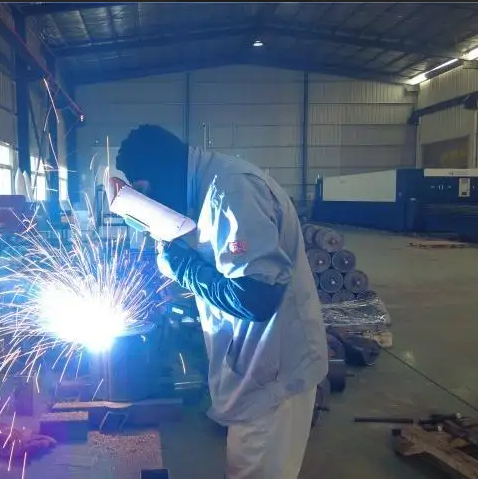
Welding: Ensuring Structural Integrity in Metal Fabrication
Welding is the backbone of modern metal fabrication, creating permanent bonds that allow structures and components to bear heavy loads and resist environmental stress. Without reliable welds, even the best-designed parts would fail under pressure. Three high-precision processes—SMAW, MIG, and TIG welding—dominate industrial-scale production, each suited to different materials, thicknesses, and throughput requirements.
Arc, MIG, and TIG Welding for Industrial-Scale Metal Fabrication
Shielded metal arc welding (SMAW) remains a workhorse for thick steel sections in construction and shipbuilding, offering portability and low setup cost. Gas metal arc welding (MIG) enables continuous wire feed and high deposition rates, making it ideal for long production runs in automotive and appliance fabrication. Gas tungsten arc welding (TIG) delivers unmatched control over thin-gauge metals like aluminum and stainless steel—critical for aerospace and medical devices. By selecting the right method, fabricators balance speed, penetration, and aesthetics to meet exact strength and quality requirements.
Quality Assurance and Real-Time Monitoring in High-Volume Metal Fabrication Lines
To maintain consistency across thousands of joints, high-volume fabrication lines integrate real-time monitoring systems that track weld temperature, travel speed, and wire feed rate—flagging deviations instantly. Non-destructive testing (NDT), including ultrasonic and X-ray inspection, verifies internal soundness without halting production. Automated feedback loops adjust parameters on the fly, reducing rework and preventing weak bonds. This integration of inline sensors and periodic audits ensures every weld meets structural integrity standards—even at output rates exceeding hundreds of parts per shift.
Precision Sheet Metal Fabrication: Stamping and Laser Cutting
High-Speed Progressive Stamping in Electronics and Medical Metal Fabrication
Progressive stamping is a core process for producing high volumes of identical, precision parts at remarkable speeds. A coil of sheet metal feeds continuously through a series of dies in a servo-controlled stamping press; each station performs a specific operation—cutting, bending, or coining—until the finished component is released. This eliminates manual handling and maintains tight dimensional tolerances. Electronics manufacturers rely on it for connectors, shielding cans, and lead frames; medical device producers use it for surgical instruments, implantable components, and instrument housings. Modern presses combine servo drive controls and real-time sensor feedback to ensure consistent force and alignment—reducing scrap rates below 0.5% while sustaining throughput and precision.
Fiber Laser Cutting Advantages for Precision Metal Fabrication
Fiber laser cutting has transformed precision sheet metal fabrication with its speed, accuracy, and flexibility. Unlike traditional die-based methods requiring lengthy tooling changes, fiber lasers switch between designs instantly via CNC programming. Their concentrated beam achieves kerf widths as narrow as 0.1 mm, enabling intricate geometries and tight internal corners. With a minimal heat-affected zone, fiber lasers reduce warping and edge burrs—eliminating the need for secondary finishing on many critical-fit components. They cut reflective metals like copper and aluminum three to four times faster than CO₂ lasers, with lower operating costs due to higher electrical efficiency and reduced maintenance. For job shops serving multiple sectors—from electronics enclosures to structural brackets—this adaptability supports rapid prototyping, low-volume runs, and optimized material usage via intelligent nesting software.
Metal Forming Techniques: From Raw Stock to Functional Components
Metal forming transforms raw sheets, bars, or coils into precise functional components through mechanical deformation—enabling high-volume production of parts with consistent mechanical properties and minimal material waste. Two widely used techniques—cold rolling and deep drawing—offer complementary advantages depending on geometry, strength needs, and industry application.
Cold Rolling and Deep Drawing Applications Across Construction, Energy, and EV Sectors
Cold rolling passes metal stock through rollers below its recrystallization temperature, reducing thickness while enhancing strength, surface finish, and dimensional stability. In construction, cold-rolled steel forms lightweight yet durable framing, roofing panels, and structural beams. The energy sector uses cold-rolled profiles for pipeline supports and wind turbine components—where tight tolerances and corrosion resistance are essential. Deep drawing, by contrast, uses a punch to draw flat sheet metal into a die cavity, producing seamless, hollow shapes with uniform wall thickness. Electric vehicle manufacturers apply deep drawing to battery enclosures and motor housings, where dimensional accuracy and structural integrity directly impact safety and performance. The energy industry uses it for pressure vessels and hydraulic cylinders. Both processes support scalable, cost-efficient metal fabrication—reducing post-processing needs and material waste across rapidly evolving sectors.
FAQ Section
What are the primary welding methods used in metal fabrication?
The primary methods are Shielded Metal Arc Welding (SMAW), Gas Metal Arc Welding (MIG), and Gas Tungsten Arc Welding (TIG). Each is suited to specific materials, thicknesses, and production requirements.
How does fiber laser cutting improve precision in metal fabrication?
Fiber laser cutting achieves narrow kerf widths, reduces warping with minimal heat-affected zones, and eliminates secondary finishing. It supports rapid changes between designs via CNC programming, making it highly flexible.
What industries benefit from cold rolling and deep drawing techniques?
Construction, energy, and electric vehicle sectors benefit from these techniques due to their ability to produce durable, precise components with minimal waste.
Why is quality assurance important in welding?
Quality assurance ensures welds meet structural integrity standards. Real-time monitoring and non-destructive testing prevent deviations and weak bonds, sustaining the production's reliability.