Chemical Composition: The Metallurgical Foundation of 304 Stainless Steel
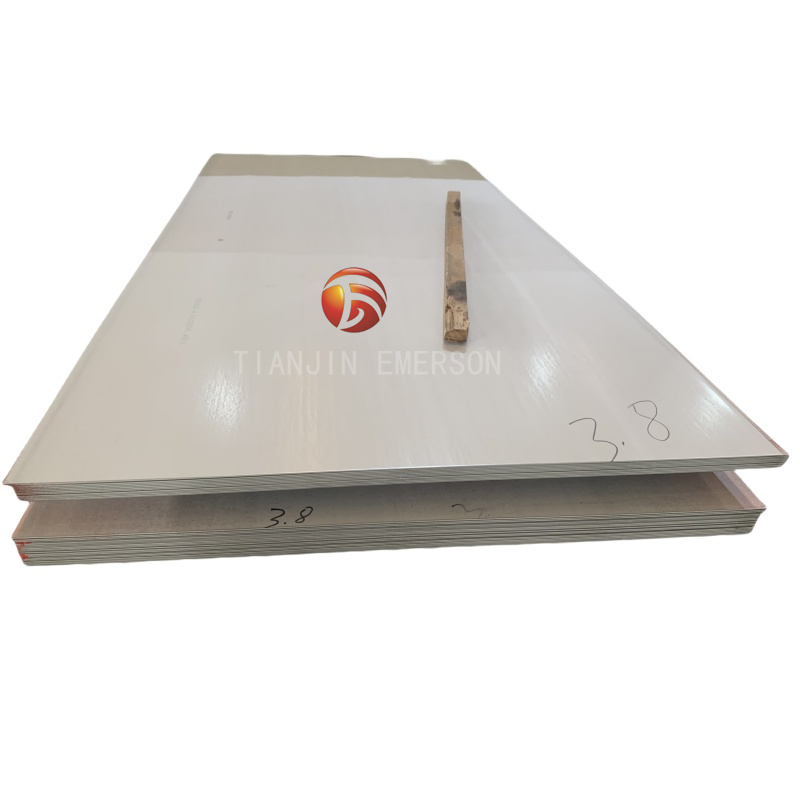
The exceptional performance of 304 stainless steel plate originates from its precisely balanced chemical composition, which places it within the austenitic family of chromium-nickel stainless steels. Under the ASTM A240 specification, Type 304 (UNS S30400) contains chromium in the range of 17.5% to 19.5%, which forms the passive chromium oxide layer responsible for the material's outstanding corrosion resistance. Nickel, present at 8.0% to 10.5%, stabilizes the austenitic structure, enhancing ductility, toughness, and formability while contributing to the alloy's non-magnetic properties. Carbon is maintained at a maximum of 0.08% (typically 0.07% in practice), which helps prevent chromium carbide precipitation during welding—a phenomenon that can lead to intergranular corrosion. Manganese is limited to 2.0% maximum, silicon to 0.75% maximum, phosphorus to 0.045% maximum, and sulfur to 0.030% maximum. The balance of the composition is iron, which serves as the base matrix. This combination of elements—particularly the synergy between chromium and nickel—creates a robust, corrosion-resistant alloy that has become the most widely used stainless steel grade across virtually every industrial sector.
Mechanical Properties: Strength, Ductility, and Formability
The mechanical properties of 304 stainless steel plate reflect its exceptional balance of strength and ductility, making it suitable for demanding engineering applications. In the annealed condition, the material exhibits a minimum tensile strength of 515 MPa (75 ksi) and a minimum yield strength of 205 MPa (30 ksi). Elongation at break is a minimum of 40% in 2 inches, demonstrating outstanding ductility that enables complex forming operations such as deep drawing, bending, and spinning without cracking. The hardness of annealed 304 stainless steel typically ranges up to 92 HRB (Rockwell B), with a Brinell hardness of approximately 187. The material's modulus of elasticity is approximately 193–195 GPa, providing excellent stiffness under load. At elevated temperatures, 304 maintains good mechanical properties up to approximately 425°C for intermittent service and 870°C for continuous service. The yield strength decreases continuously when the temperature exceeds 500°C, with a maximum reduction of approximately 18%. At cryogenic temperatures, 304 stainless steel exhibits exceptional toughness and ductility, with no ductile-to-brittle transition, making it suitable for low-temperature applications such as cryogenic vessels and liquefied gas storage. The material's capacity for work hardening through cold deformation provides additional strength for components requiring increased mechanical performance without heat treatment.
Physical Properties: Density, Thermal Conductivity, and Magnetic Behavior
The physical properties of 304 stainless steel plate contribute to its versatility across diverse operating environments. The density of 304 stainless steel is approximately 7.9 to 8.0 g/cm³, providing a favorable strength-to-weight ratio for structural and equipment applications. Thermal conductivity at room temperature is approximately 16.2 to 16.3 W/m·K, which is lower than carbon steel but adequate for heat transfer applications such as heat exchangers and cooling coils. The coefficient of thermal expansion is approximately 17.2 × 10⁻⁶/K between 0°C and 100°C, which must be considered in designs involving thermal cycling or dissimilar metal joints. The specific heat capacity is approximately 500 J/kg·K. The melting point of 304 stainless steel is approximately 1,400–1,450°C, providing excellent high-temperature stability. In the annealed condition, 304 is essentially non-magnetic, though it may become slightly magnetic when cold worked due to the formation of martensite. This magnetic response is typically mild and does not significantly affect performance in most applications. The material's electrical resistivity is approximately 72 μΩ·cm at 20°C, contributing to its suitability for certain electrical and electronic applications.
Corrosion Resistance: The Passive Layer and Environmental Performance
The corrosion resistance of 304 stainless steel plate is its defining characteristic, derived from the chromium content that forms a thin, adherent, and self-repairing chromium oxide passive film on the surface. This passive layer provides excellent resistance to a wide range of corrosive environments, including most oxidizing acids, organic acids, and atmospheric conditions. In atmospheric environments, 304 demonstrates excellent resistance to rust and staining, making it suitable for architectural applications, building facades, and exterior trim. The material exhibits outstanding resistance to corrosion in food processing environments, dairy equipment, brewing, and beverage handling, where its cleanability and non-reactive surface prevent product contamination. In chemical processing applications, 304 resists corrosion from a variety of organic and inorganic chemicals, though it is not recommended for strong reducing acids or chloride-rich environments where pitting or crevice corrosion may occur. The low carbon content of standard 304 (0.08% max) and particularly of 304L (0.03% max) minimizes the risk of sensitization—the precipitation of chromium carbides at grain boundaries during welding—which can lead to intergranular corrosion. For this reason, 304L is often specified for welded structures where post-weld annealing is impractical. The addition of molybdenum in grade 316 provides superior chloride resistance, but for the vast majority of applications, 304 offers an excellent balance of corrosion resistance and cost-effectiveness.
Fabrication and Processing Characteristics
The fabrication characteristics of 304 stainless steel plate make it a preferred material for manufacturing across diverse industries. The material exhibits excellent weldability using all standard fusion welding processes, including gas tungsten arc welding (GTAW/TIG), gas metal arc welding (GMAW/MIG), and shielded metal arc welding (SMAW). Post-weld annealing is not normally required to restore corrosion resistance, though proper cleaning and passivation are recommended to remove weld heat tint and restore the passive layer. The low carbon content minimizes carbide precipitation in the heat-affected zone, reducing the risk of intergranular corrosion. In terms of formability, 304 stainless steel exhibits high ductility and excellent drawing, forming, and spinning properties, enabling the production of complex shapes through deep drawing, stretch forming, and bending. The material's work hardening rate is relatively high, which can be advantageous for strengthening through cold working but requires consideration in forming operations to avoid cracking. Machinability is good, with a machinability rating of approximately 45–50% compared to free-machining steel, though the use of appropriate cutting tools, coolants, and speeds is recommended to manage work hardening and achieve optimal surface finish.
Diverse Applications Across Major Industries
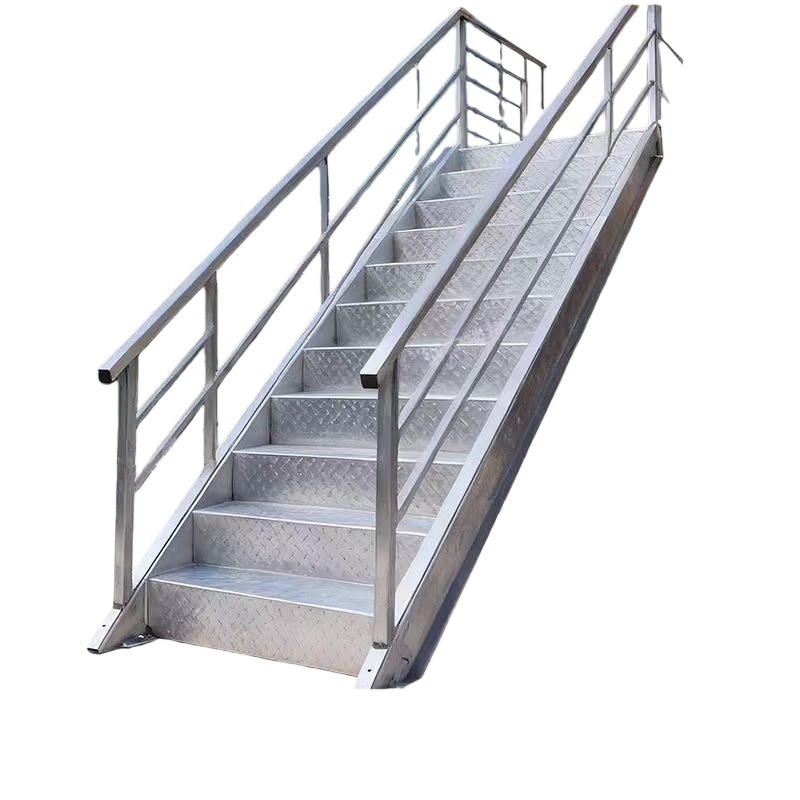
The combination of corrosion resistance, mechanical properties, and fabricability makes 304 stainless steel plate indispensable across virtually every industrial sector. In the food and beverage industry, 304 is the standard material for processing equipment, storage tanks, conveyors, brewing vessels, dairy equipment, and kitchen appliances. The chemical and petrochemical sectors rely on 304 for pressure vessels, heat exchangers, reactors, piping, and storage tanks. In pharmaceutical and medical applications, 304 is used for surgical instruments, hospital equipment, sanitary fittings, and cleanroom components. The construction and architectural industry employs 304 for building facades, roofing, siding, handrails, and structural components. In automotive and transportation, 304 finds application in exhaust systems, trim, and structural components. The energy and power generation sectors use 304 in nuclear vessels, heat exchangers, and feedwater tubing. Additional applications span marine equipment, paper industry, textile dyeing equipment, refrigeration, and cryogenic vessels. This extraordinary versatility, combined with its proven performance and cost-effectiveness, establishes 304 stainless steel plate as the most widely used stainless steel grade in the world.