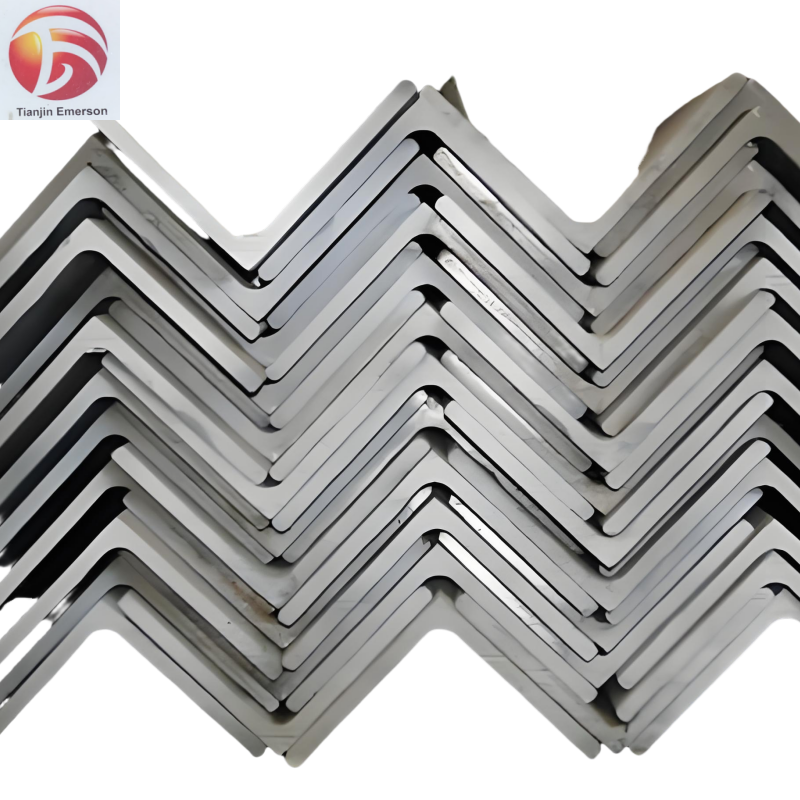
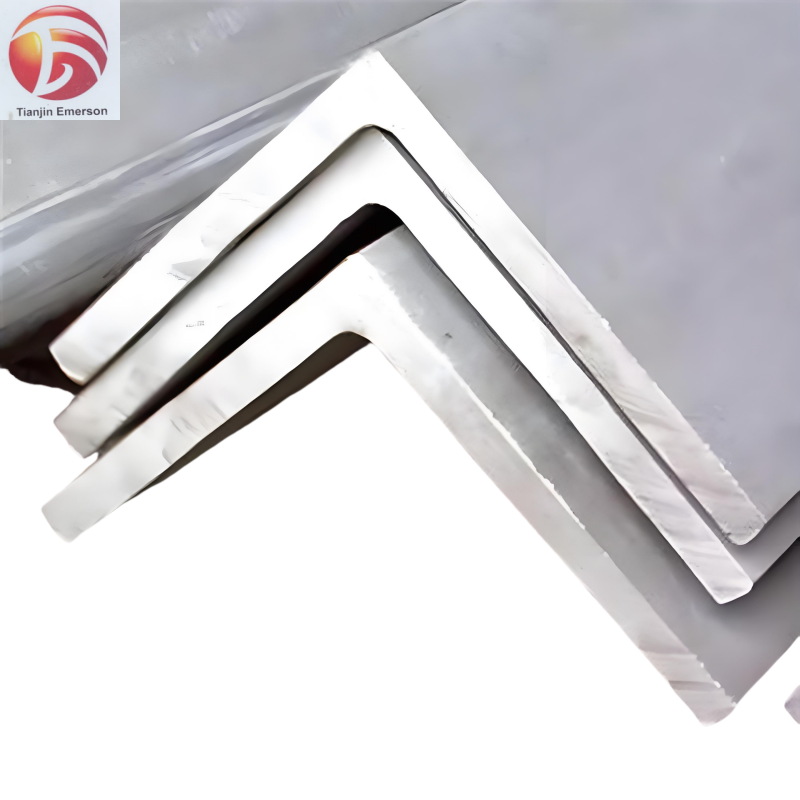
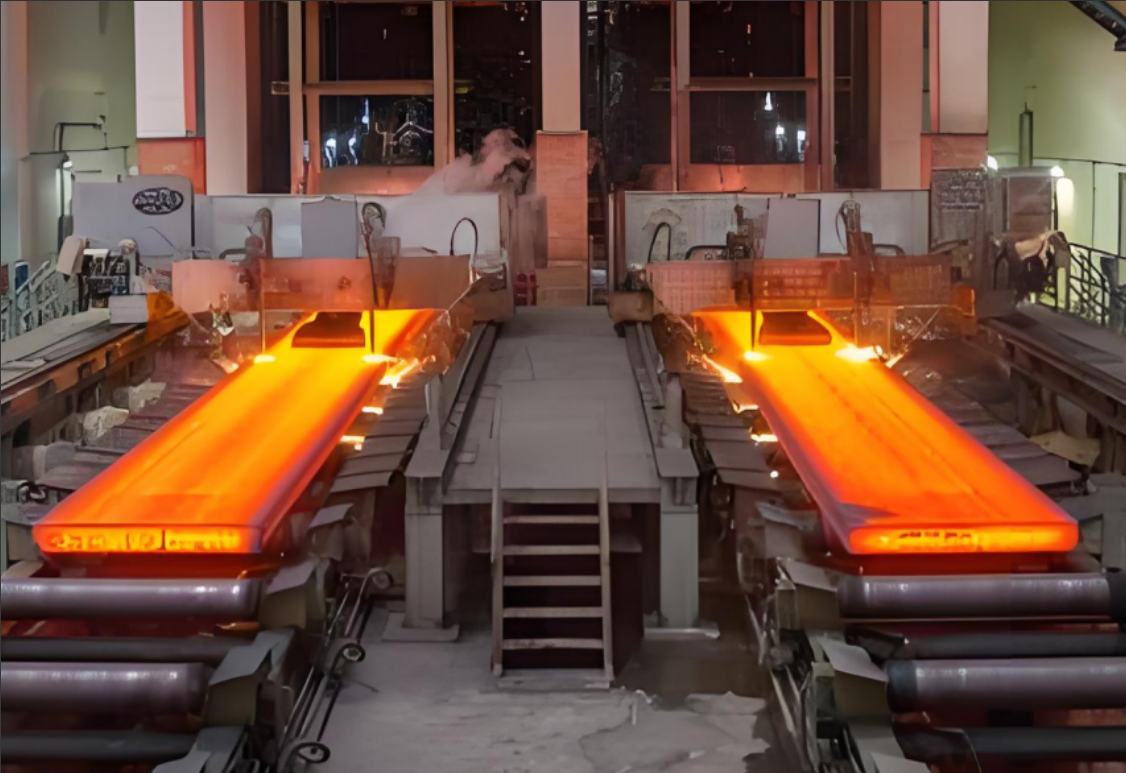
Angle steel is characterized by its basic L-shaped cross-section and is produced primarily through two distinct industrial methods as a widely used structural component: hot rolling and cold forming. The main production method for standard structural angles is hot rolling, where continuously cast blooms are reheated at high temperatures (typically above 1100°C) before passing through a series of progressively shaping rolls within a rolling mill. The rolls progressively reduce the billet cross-section, forming the characteristic 90-degree flange profile. This hot-working process refines the steel's grain structure, enhancing mechanical properties while producing angle steel that meets dimensional stability and surface roughness standards. An alternative method for manufacturing special angle steel is cold bending or roll forming, where flat strip steel (either hot-rolled or cold-rolled) is gradually bent at room temperature through a series of forming rolls to achieve the desired angle steel shape. This method is suitable for producing angle steel with tighter tolerances and smoother surfaces, and can utilize thinner gauge materials or specific materials (e.g., aluminum). However, it induces work hardening, necessitating subsequent annealing treatment for some applications. After initial forming, angle steel can undergo various precision finishing processes. Examples include straightening to remove bending or twisting from rolling, and precision dimensional cutting using high-speed saws or advanced laser systems.
To meet specific stringent mechanical requirements, angle steel typically requires secondary heat treatment, with the heat treatment process being the most prominent. For carbon steel and alloy steel angle steel, this may include annealing (reheating and natural cooling), which refines the grain structure and relieves internal stresses from rolling, resulting in a more uniform and ductile material. For applications demanding significantly high strength and hardness, such as wear plates or critical crane components, specific grades (e.g., 4140) undergo quenching and tempering (Q&T) treatment. This process consists of three stages: austenitizing, forming high-hardness martensite structure through oil/water quenching, and achieving an optimal balance of hardness, strength, and toughness via tempering in a temperature-controlled environment. A particularly important consideration is that the asymmetric cross-section of angle steel is prone to deformation during heat treatment due to uneven cooling rates or stress relief. Therefore, the use of dedicated jigs, control of the furnace atmosphere, and precise adjustment of the quenching medium and agitation method are critically important for maintaining straightness and dimensional stability. Our manufacturing expertise ensures that this complex heat treatment process is managed to enhance material performance without compromising the geometric integrity of the components.
The versatility of angle steel enables its widespread application across nearly all heavy industrial sectors, whether in rolled, cold-formed, or heat-treated states. In construction and civil engineering, it forms the backbone of steel structural frameworks, building trusses, and reinforcement components for concrete and masonry. Within industrial manufacturing and machinery, it is fabricated into robust equipment frames, machine guards, support brackets, and conveyor system structures. The transportation sector utilizes it for vehicle chassis, trailer frames, and container reinforcement components. Furthermore, in infrastructure development, it serves as an essential material for power transmission towers, bridge guardrails, and signage support structures. Our facility possesses the capability to transform standard angle steel into critical custom components. We offer machining processes including laser cutting, sawing, drilling, and punching to create connection holes and intricate profiles. For bending and welding requirements, CNC press brakes enable secondary leg bends to create offset or flanged custom brackets, followed by professional welding. Finally, durable surface treatments—including abrasive blasting, industrial spraying, hot-dip galvanizing, and powder coating—ensure long-term corrosion resistance in specific application environments.Simply provide us with your specifications or drawings, and we will produce samples for your selection. We support factory inspections and third-party verification to ensure delivery of high-quality finished products.