Introduction: Why Surface Finishing Determines Service Life
Steel plates and pipes are essential materials in construction, energy, chemical processing, and infrastructure, but unprotected carbon steel is vulnerable to corrosion, abrasion, and environmental degradation. Surface finishing is therefore not a cosmetic afterthought but a critical engineering decision that directly influences durability, maintenance cost, and safety. The three most widely specified finishing routes—galvanizing, painting, and polishing—each provide distinct protection mechanisms and are suited to different service environments. Galvanizing offers sacrificial cathodic protection; painting provides a barrier and decorative finish; polishing enhances corrosion resistance and cleanability, particularly for stainless steel. Selecting the correct finish requires an understanding of the base material, exposure conditions, fabrication sequence, and lifecycle expectations. This article provides a professional overview of these three finishing options for steel plates and pipes, explaining their processes, advantages, limitations, and typical applications.
Hot-Dip Galvanizing: Metallurgical Protection for Carbon Steel
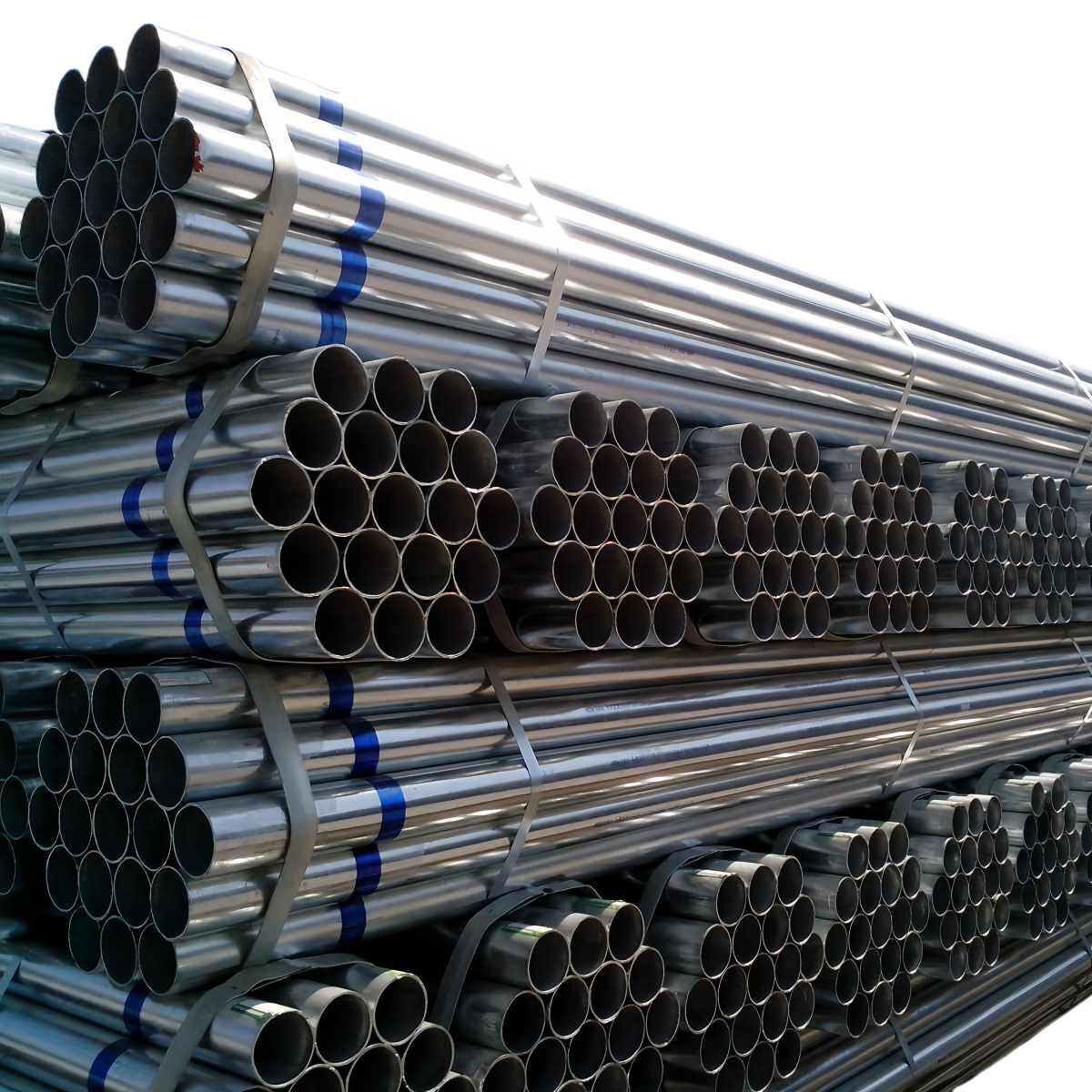
Hot-dip galvanizing is the most robust and widely used corrosion protection for carbon steel plates and pipes exposed to outdoor, industrial, or marine environments. The process involves cleaning the steel through degreasing, pickling, and fluxing, followed by immersion in molten zinc at approximately 450°C. The molten zinc reacts with the steel to form a series of zinc-iron alloy layers metallurgically bonded to the surface, topped with a pure zinc layer. This coating provides dual protection: it acts as a physical barrier and, more importantly, provides sacrificial cathodic protection—if the coating is scratched, the surrounding zinc corrodes preferentially, protecting the exposed steel. Typical coating thickness ranges from 45 to 200 microns, delivering maintenance-free service lives of 20 to 50 years depending on the environment. Hot-dip galvanizing is particularly suitable for structural steel plates, pipe supports, guardrails, transmission towers, and outdoor piping. A key consideration is that fabrication—cutting, welding, and bending—should generally be completed before galvanizing to ensure complete coverage and avoid coating damage. For welded assemblies, vent and drain holes must be designed to allow zinc to flow and air to escape.
Painting and Powder Coating: Barrier Protection and Aesthetic Control
Painting and powder coating are versatile finishing options that provide barrier protection and allow precise color and appearance control. Liquid paint systems typically consist of a primer, intermediate coat, and topcoat, each formulated for adhesion, corrosion inhibition, and UV resistance. For steel plates and pipes, epoxy primers are commonly used for chemical resistance, while polyurethane topcoats provide color retention and weathering resistance. Powder coating applies dry, electrostatically charged polymer particles to a cleaned and pretreated steel surface, followed by oven curing to form a continuous, cross-linked film. Powder coating offers excellent impact resistance, edge coverage, and environmental advantages because it contains no solvents and emits negligible volatile organic compounds. Both painting and powder coating require proper surface preparation—abrasive blasting to SA 2.5 or chemical pretreatment—to achieve adhesion. These finishes are widely used for architectural steelwork, machinery enclosures, pipe racks, and indoor equipment. For corrosive environments, coating systems can be combined with galvanizing in a duplex system, where the zinc provides sacrificial protection and the paint adds barrier protection and color. However, painted steel requires periodic inspection and maintenance, and coating damage can lead to localized corrosion if not repaired.
Polishing and Electropolishing: Enhanced Corrosion Resistance and Cleanability
Polishing is primarily applied to stainless steel plates and pipes to improve surface finish, corrosion resistance, and hygiene. Mechanical polishing uses abrasive belts, wheels, or compounds to remove surface defects, scratches, and oxide layers, producing finishes ranging from brushed to mirror-like. Electropolishing is an electrochemical process that removes a microscopic layer of metal, smoothing the surface at the atomic level and enhancing the passive chromium oxide layer. Electropolished surfaces are bright, smooth, and easy to clean, with reduced crevices where bacteria or contaminants could accumulate. This makes polishing indispensable for food and beverage processing, pharmaceutical manufacturing, medical devices, and semiconductor equipment. For stainless steel pipes used in hygienic process lines, electropolishing also improves corrosion resistance by removing embedded iron and surface inclusions. Polishing is not a substitute for galvanizing on carbon steel; it is a specialized finish for stainless and certain alloy steels. Key considerations include maintaining consistent surface roughness (Ra values), avoiding overheating during mechanical polishing, and ensuring proper passivation after fabrication.
Selecting the Right Finish: Application and Lifecycle Considerations
The choice between galvanizing, painting, and polishing depends on several factors. For carbon steel exposed to outdoor or corrosive environments, hot-dip galvanizing offers the most durable and maintenance-free protection. For applications requiring color, branding, or additional barrier protection, painting or powder coating is appropriate, often in combination with galvanizing as a duplex system. For stainless steel components in hygienic or high-purity service, polishing or electropolishing provides the required surface quality and cleanability. Fabrication sequence is also critical: galvanizing should follow cutting and welding; painting should follow complete fabrication and surface preparation; polishing should be performed after forming and welding, with passivation as a final step. Lifecycle cost analysis should consider initial application cost, maintenance intervals, downtime, and replacement frequency. In many industrial projects, the lowest total cost is achieved by matching the finish to the actual exposure rather than over-specifying a premium coating.
Conclusion: Matching Finish to Function
Surface finishing of steel plates and pipes is a strategic engineering decision that protects assets, extends service life, and ensures compliance with hygiene and safety standards. Hot-dip galvanizing provides metallurgical, sacrificial protection for carbon steel in aggressive environments. Painting and powder coating deliver barrier protection and aesthetic control for architectural and industrial applications. Polishing and electropolishing enhance the corrosion resistance and cleanability of stainless steel for critical hygienic applications. By evaluating the service environment, base material, fabrication sequence, and lifecycle cost, engineers and procurement specialists can select the optimal finish for each project. Partnering with a qualified finishing and fabrication supplier ensures that surface preparation, application, and inspection meet the required standards, delivering durable and reliable steel components for demanding industrial applications.