Steel fabrication quotations rarely look alike, even when the drawing is identical. The reason is that a steel fabrication cost is not a single number but a structure of assumptions—material basis, machine hour rates, weld volume, finishing scope, and trade terms. For buyers and project managers, the ability to deconstruct that structure is the difference between comparing prices and comparing value. This breakdown maps the cost layers so you can read a quotation line by line, isolate the real drivers, and negotiate from a position of technical clarity.
The Cost Structure: What a Steel Fabrication Quote Actually Contains
A transparent steel fabrication cost breakdown follows a predictable architecture. Main material—steel plate, structural sections, and tube—typically accounts for 40% to 60% of the total, with fabrication labor and welding taking another 15% to 25%. Surface treatment and coating add 5% to 12%, inspection and documentation 2% to 5%, and packing, inland transport, and freight the remainder. Consumables such as welding wire, flux, and paint sit separately at 5% to 8%, while overhead and profit commonly absorb 8% to 10%. Any quotation that presents a single per-ton figure without stating which of these layers are included is not comparable—it is an opening position, not a cost.
Material Costs: The Largest and Most Volatile Line Item
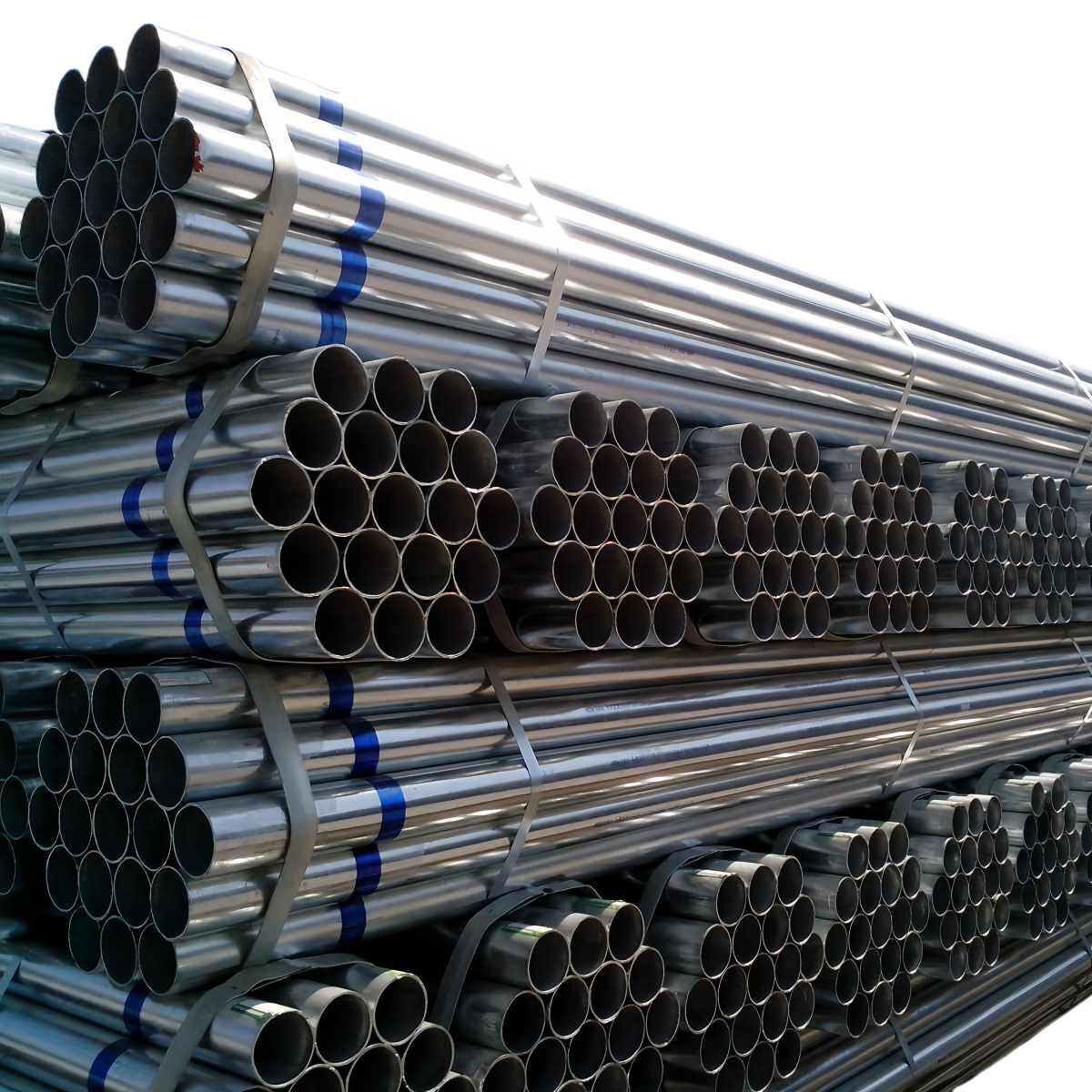
Material is the anchor of steel fabrication pricing, and it behaves differently from labor. Steel plate, coil, and tube prices move with mill cycles and grade availability, which is why serious contracts often include material escalation clauses. Grade selection compounds the effect: stainless steel can cost 2.5 to 3 times more than mild steel per kilogram for material alone, before the downstream impact on bending radii, tooling, and finishing. For common carbon steel members, the combined material and fabrication rate in 2026 sits roughly between US$700 and US$960 per tonne, but that range only holds when grade, thickness, and cut sizes align. A supplier with its own mill sourcing for steel coil, plate, and tube removes a layer of distributor margin and, more importantly, can fix the material basis early in the quotation cycle.
Laser Cutting Costs: Machine Hour Rates and Nesting Efficiency
Laser cutting cost is not billed by the cut alone. It is a function of machine hour rate, cut length, material thickness, piercing count, and nesting yield. Fiber laser cutting rates vary by region and power: Chinese suppliers typically operate at €20 to €42 per machine hour, while European shops run €70 to €135 per hour for comparable work. On a per-part basis, standard sheet thicknesses between 1 mm and 6 mm commonly fall between US$0.40 and US$8.50, driven by hourly rates of US$60 to US$150 and how efficiently parts nest on the sheet. Nesting efficiency is the quiet cost multiplier: raising material utilization from 78% to 93% cuts the material consumed per part far more than a marginal negotiation on the hourly rate.
Bending and Welding Costs: Labor, Fixturing, and Weld Volume
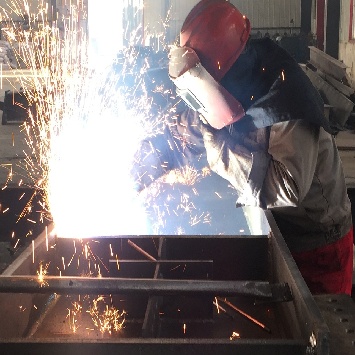
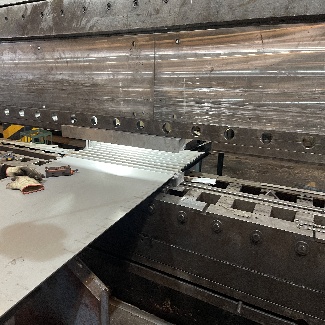
Steel plate bending and welding are labor-intensive operations, and their cost behaviour differs sharply from cutting. A few press-brake bends may add only 30% to 100% over the cut price, but bend count, tooling, and tolerance requirements push the number upward quickly. Welding is the larger variable: weld length, joint access, distortion control, and code requirements determine whether a weldment consumes two hours or ten. Welding cost in 2026 is commonly embedded in shop rates of US$50 to US$130 per hour, which cover the welder’s time, equipment depreciation, facility overhead, and margin. In export-oriented Chinese factories, fully loaded fabrication labor is often quoted at US$8 to US$18 per hour against US$70 to US$110 for European shops, a structural gap that persists through bending and welding operations.
Consumables, Surface Treatment, and Inspection: The Costs Buyers Overlook
Consumables and finishing rarely dominate a custom steel fabrication quotation, but they are where scope disputes begin. Welding wire, shielding gas, and cutting nozzles are usage-based; painting and galvanizing are area-based and specification-driven. Hot-dip galvanizing costs more than a standard shop primer, and a three-coat system costs more than one. Inspection is proportionally small—2% to 5% of total cost—but carries disproportionate project risk: non-destructive testing, dimensional verification, and third-party inspection reports are often the first items excluded from a low headline price. A supplier that performs cutting, bending, and welding under one roof can keep consumable and finishing scope visible, rather than passing parts between vendors where inclusions and exclusions blur.
Logistics, Packing, and Trade Terms: From Ex-Works to Landed Cost
The same fabricated tonne can carry very different steel fabrication cost depending on the Incoterm. CIF pricing bundles ocean freight and marine insurance, while FOB shifts freight responsibility to the buyer; packing for sea transit, marking, and export documentation add line items that domestic orders never see. Buyers should always compare landed cost—ex-works price plus freight, insurance, duties, and inspection—rather than factory-gate numbers. A vertically integrated supplier that controls material input and fabrication processes can often reduce the coordination cost between these layers, but the buyer still needs the packing and freight lines stated explicitly.
Hidden Cost Drivers: Complexity, Tolerances, and Batch Size
Three variables move steel fabrication cost more than most buyers expect. First, drawing depth: complete shop drawings improve nesting and workflow, while unclear drawings generate rework and scrap allowances of 5% to 15%. Second, tolerance tier: non-critical features held to unnecessarily tight tolerances add machine time without adding function. Third, batch size: well-batched orders with similar member types amortize setup across continuous production, whereas scattered mixed orders carry higher per-ton cost. These are design and scheduling decisions, not supplier pricing decisions—and they are where project managers can influence cost before the first cut is made.
Conclusion: Use the Breakdown to Compare Like with Like
Calculating steel fabrication costs is not about finding a universal rate—it is about making assumptions visible. A quotation becomes negotiable only when material grade, cutting method, weld volume, finishing scope, inspection level, and Incoterm are stated in the same line items across suppliers. Buyers who demand that transparency, and who work with a supplier that controls material sourcing and laser cutting, bending, and welding under one factory roof, can separate genuine cost efficiency from omitted scope. The lowest number is rarely the lowest landed cost; the clearest breakdown usually is.