The Fundamental Manufacturing Divide: Piercing vs. Forming and Welding
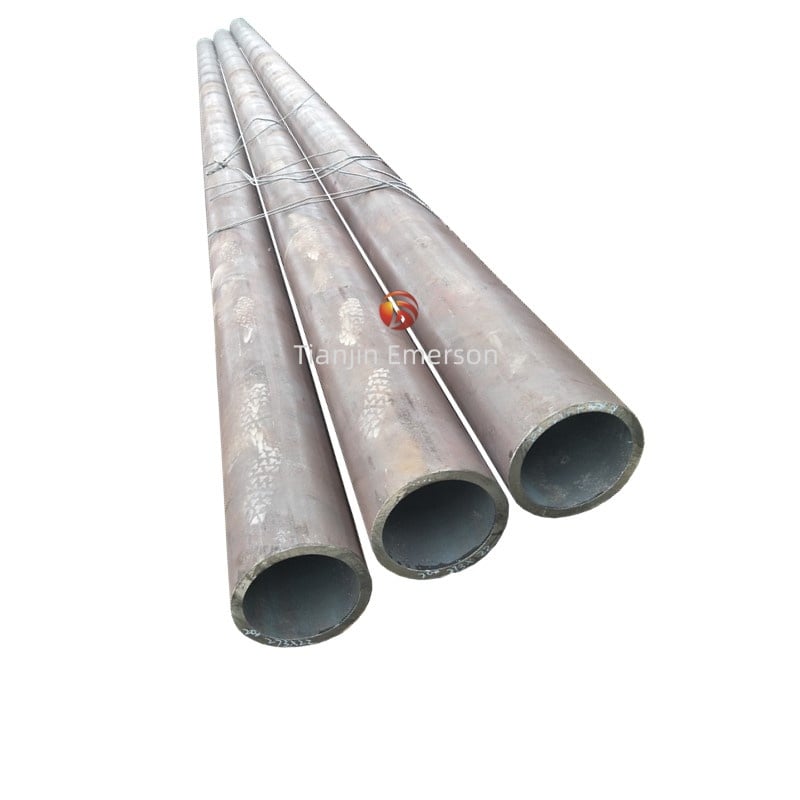
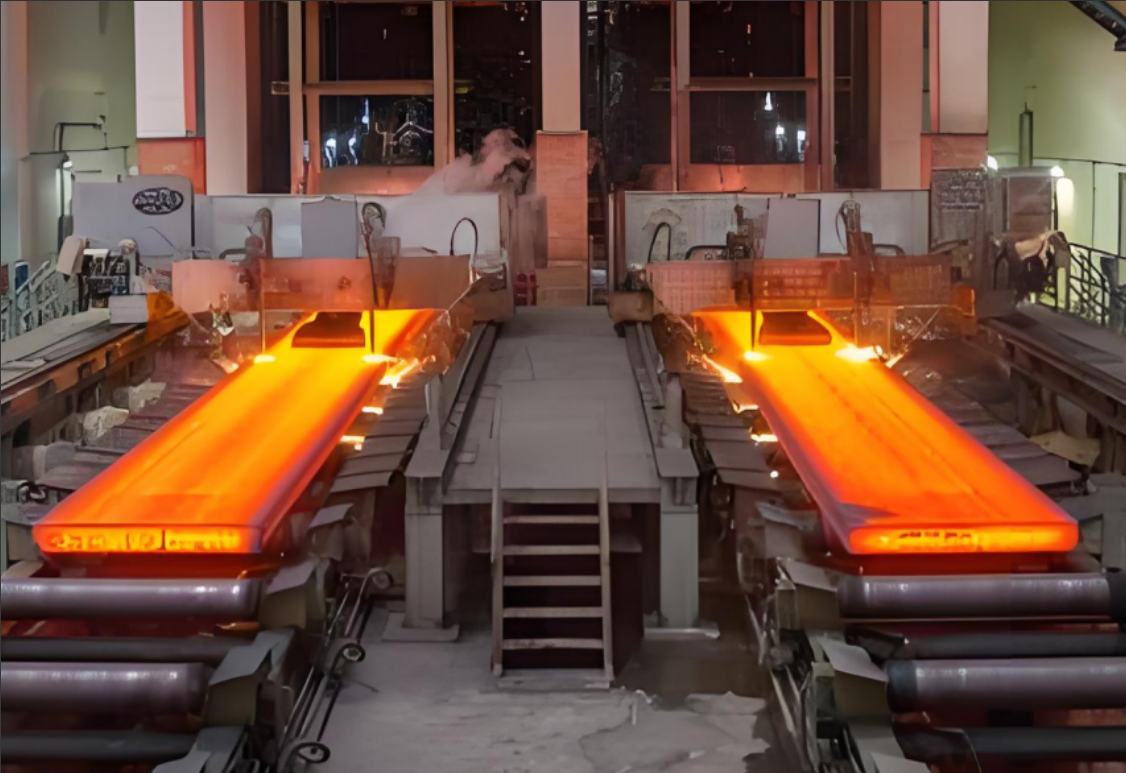
The most fundamental distinction between seamless and welded steel pipes lies in their respective manufacturing approaches. Seamless pipes are formed from a solid round steel billet with no longitudinal or spiral weld seam. The production process begins by heating a solid billet to approximately 1,250°C and forcing it over a piercing rod to create a hollow shell. This hot, hollowed billet is then passed through successive sets of concave rollers that form a pipe of the appropriate external diameter and wall thickness. The result is a pipe with a continuous, homogeneous structure—there are no weak points like those found in welded pipes. In contrast, welded pipes are made by forming steel plate or coil into a tubular shape and welding the edges together. The weld seam is the fundamental differentiator, as it introduces a heat-affected zone (HAZ) that may have different mechanical properties from the base metal.
Seamless Pipe Production: Hot Rolling and Cold Drawing
Seamless pipe production is primarily divided into two categories: hot rolling and cold rolling (cold drawing), each suitable for pipes of different specifications and applications. The hot rolling method accounts for approximately 80–90% of seamless pipe production and is typically used for larger diameters and thicker walls. The process involves: billet preparation—selecting high-quality round steel billets and heating them to the appropriate temperature; piercing—using a piercing machine to punch the heated billet into a hollow shell; rolling—using a tube mill to roll the shell into a steel pipe of the desired size; sizing and straightening—to ensure dimensional accuracy; heat treatment—such as normalizing and annealing to improve mechanical properties; and final inspection and packaging. Hot-rolled seamless pipes offer high production efficiency and low cost, though their surface quality and dimensional accuracy are relatively less refined. For applications requiring higher precision, cold drawing is employed. This process begins with a hot-rolled shell as a billet, which is pickled to remove surface oxide scale. The rough steel pipe is then processed to desired dimensions through a cold rolling or cold drawing mill, significantly improving dimensional accuracy and surface quality. Cold-processed steel pipes typically undergo annealing to eliminate internal stresses and restore plasticity, followed by finishing treatments such as straightening, cutting, and polishing. Cold-rolled seamless pipes are characterized by high dimensional accuracy and a smooth surface finish, making them suitable for precision machinery and hydraulic systems.
Welded Pipe Production: ERW, LSAW, and SSAW
Welded steel pipes are manufactured through three primary processes: electric resistance welding (ERW), longitudinal submerged arc welding (LSAW), and spiral submerged arc welding (SSAW), each with distinct raw materials, forming methods, and application positioning. ERW pipes are produced from hot-rolled wide coils that undergo pre-bending, forming, welding, heat treatment, sizing, straightening, and cutting. High-frequency induction heating locally melts the mating surfaces, and pressure causes them to weld together without the use of welding electrodes. ERW pipes offer high dimensional precision, uniform wall thickness, good surface quality, and the ability to withstand high pressure, though they are limited to smaller diameters and thinner walls. They are widely used in urban gas, crude oil, and finished oil transportation. LSAW pipes are formed from single steel plates that are pressed in molds or forming machines, using double-sided submerged arc welding and expansion. The UOE method presses the steel plate into a U-shape, then into an O-shape, seam-welds it inside and outside, and mechanically expands it. The JCOE process incrementally forms the plate through a series of presses. LSAW pipes offer a wide product specification range with good toughness, plasticity, uniformity, and weld density, excelling in large diameters, thick walls, high pressure resistance, and low temperature resistance. SSAW pipes are formed by continuously feeding strip steel coil at an angle, creating a spiral weld seam through automatic double-wire double-sided submerged arc welding. This method allows the production of large-diameter pipes (Ф1016–3200mm) using narrower, lower-cost coils. The spiral welding process enables the production of large diameter pipes suitable for transporting large quantities of oil and gas. SSAW pipes are widely used in oil, natural gas, and water transmission, as well as in piling and structural applications.
Performance and Cost Differences
The different manufacturing processes lead to distinct performance, cost, and dimensional profiles. Seamless pipes, lacking a weld seam, are perceived to be stronger and more reliable. They offer outstanding homogeneity in the circumferential direction and are thus highly resistant to internal pressure and torsion. However, modern processes and quality assurance tests have minimized the difference in robustness between the two types. In practice, modern welding techniques—especially ERW/HFW—produce joints with strength equal to or greater than the base metal. Welded pipes are smoother, more uniform, and cheaper to manufacture than seamless pipes. Seamless pipes typically cost 20–40% more than welded pipes and have longer lead times for large sizes. The inherent strength of welded pipe is formally taken as being around 20% less than the equivalent seamless pipe (as required by standards). Wall uniformity also differs: welded pipes typically achieve ±10% or better, while seamless pipes have ±12.5% eccentricity typical.
Application Domains: When to Choose Each Type
The selection between seamless and welded pipe depends on pressure requirements, pipe size, budget, and lead time. Seamless pipes are mandated or strongly preferred for high-pressure applications—including hydrocarbon industries, refineries, oil and gas exploration and drilling, and hydraulic cylinders—as well as for high-temperature service above 400°C, low-temperature service below -46°C, and sour service where HAZ cracking risk must be minimized. They are also preferred for small-bore piping (NPS 2 and below) where seamless is standard practice. Common seamless pipe specifications include ASTM A106, A335, and API 5L. Welded pipes are typically acceptable—and often preferred—for large-diameter pipelines (NPS 24+) where seamless is unavailable or prohibitively expensive, for structural applications per ASTM A500 or EN 10219, and for water transmission and low-pressure utilities. Welded pipes are commonly used in building services applications for non-potable water such as low-pressure water, heating, cooling, and gas. Common welded pipe specifications include ASTM A53 Type E, API 5L, and ASTM A671/A672. The weld joint efficiency factor (E) in ASME B31.3 determines whether welded pipe meets design pressure requirements: for ERW pipe examined per the applicable standard, E = 0.85 to 1.0; for seamless, E = 1.0 always. By understanding these fundamental process differences, engineers and procurement professionals can select the pipe type that optimally balances technical requirements with economic considerations for each specific application.