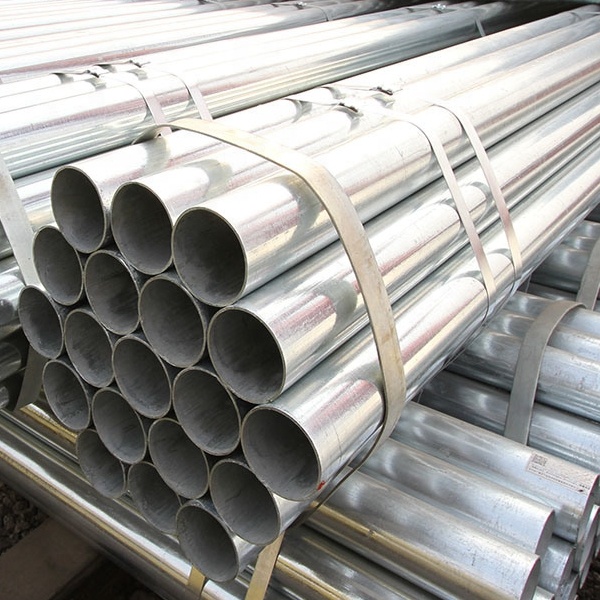
Professional pipe cutting services require a thorough understanding of material selection, encompassing material grade verification (carbon steel, stainless steel, alloy steel, aluminum), dimensional requirements (diameter, wall thickness, final length), end face condition specifications (flat cut, bevel cut, threaded, grooved), and tolerance requirements. Once specifications are confirmed, selected pipes—including electric resistance welded (ERW), seamless, spiral submerged arc welded (SSAW), or longitudinal submerged arc welded (LSAW) pipes—range from small-diameter tubing to giant pipes exceeding 1500 millimeters in diameter. These are retrieved from inventory and batch-processed on corresponding equipment.
Pipe cutting techniques are selected based on material properties, dimensional requirements, production volume, and end-use applications. Sawing processes utilize high-speed circular cold saws or heavy-duty band saws. Cold saws equipped with carbide-tipped blades deliver exceptional cutting quality with minimal burrs, making them particularly suitable for precision fixed-length cuts requiring dimensional accuracy of ±0.5 millimeters or higher. For high-volume production, automated sawing systems with magazine feeders and CNC length positioning minimize manual intervention while delivering consistent repeatability.Plasma cutting is suitable for large-diameter thick-walled pipes, achieving narrow kerf widths and clean cuts with minimal slag residue. For applications demanding ultimate precision and edge quality, laser cutting can process pipes up to 6 meters or longer, delivering smooth, burr-free edges that require no secondary finishing. Laser processing eliminates tool wear issues and enables distortion-free cutting of thin-walled pipes. Its narrow kerf width minimizes material waste. Laser cutting offers particular advantages for stainless steel and aluminum pipes—the clean, oxidation-free cut surfaces it produces are crucial for enhancing corrosion resistance and aesthetic appeal.Beyond basic cutting, comprehensive pipe cutting services encompass a range of secondary processing operations. Beveling creates angled cuts at pipe ends—typically 30-degree or 37.5-degree bevels with a flat root face—which are critical for achieving full penetration welds in key piping systems. Dedicated beveling machines produce uniform, machine-grade bevels that significantly enhance weld quality and reduce welding time compared to manually ground edges.
The application scope of customized pipe cutting services spans the entire industrial infrastructure and manufacturing sectors. In construction and structural engineering, precision-cut pipes serve as columns, trusses, handrails, and building components. The oil and gas industry heavily relies on cut and beveled pipes for pipeline construction, facility piping systems, and pressure vessel connections, with each cut meeting stringent quality requirements. Water and wastewater infrastructure requires precision-cut pipes for water transmission lines, treatment plant piping, and distribution networks. Accurate lengths enhance installation efficiency and minimize on-site adjustments. The automotive and transportation sectors utilize cut tubing for exhaust systems, chassis components, roll cages, and fluid lines.The manufacturing of industrial machinery relies on precision-cut pipes for hydraulic and pneumatic systems, conveyor rollers, structural frames, and process piping, where dimensional accuracy directly impacts system performance and reliability. Additionally, HVAC and refrigeration applications require precisely cut copper and steel tubes for refrigerant lines, condenser coils, and ductwork systems, where clean, burr-free cut surfaces are critical to preventing system contamination.