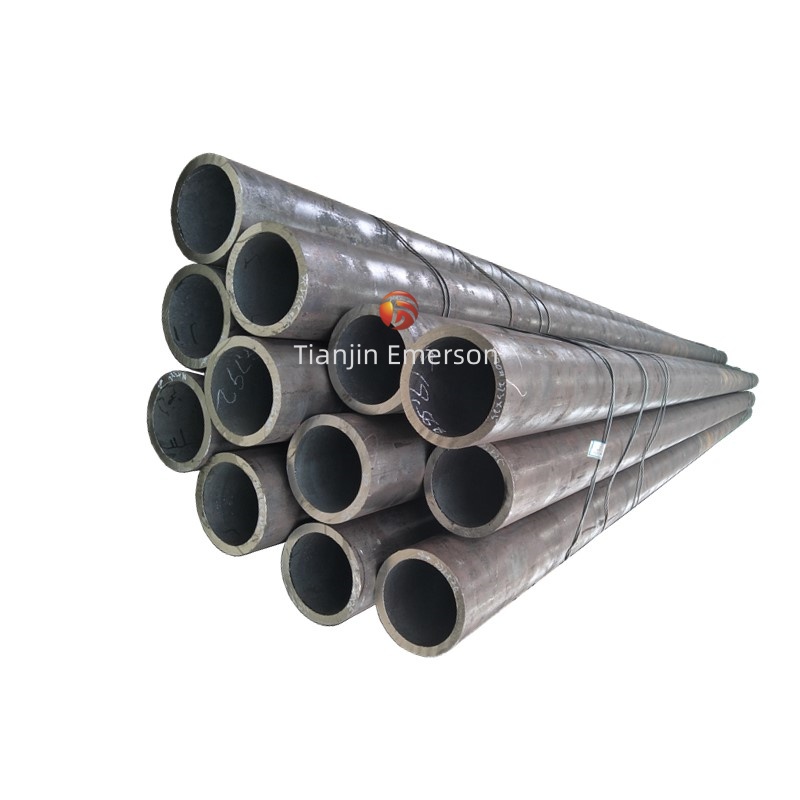
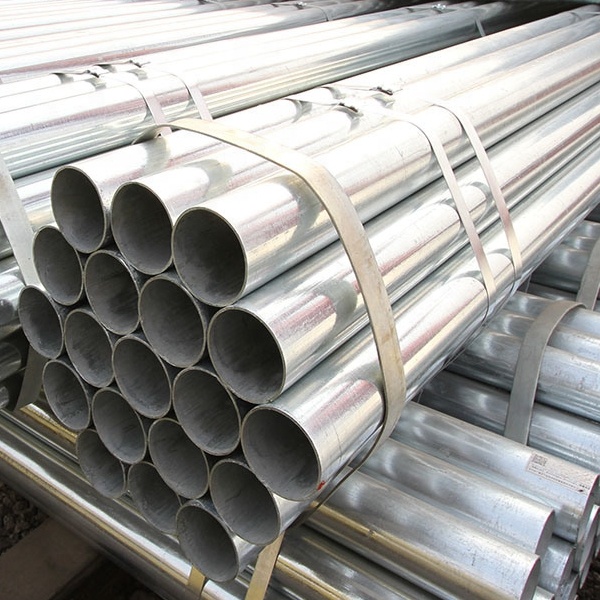
Carbon steel welded pipes, as a fundamental product category for global industrial infrastructure, are primarily classified based on welding processes and weld orientation. They encompass three dominant technologies: electric resistance welding (ERW), longitudinal submerged arc welding (LSAW), and spiral submerged arc welding (SSAW). Each process is specifically engineered for distinct diameter ranges, wall thickness requirements, pressure ratings, and application environments.
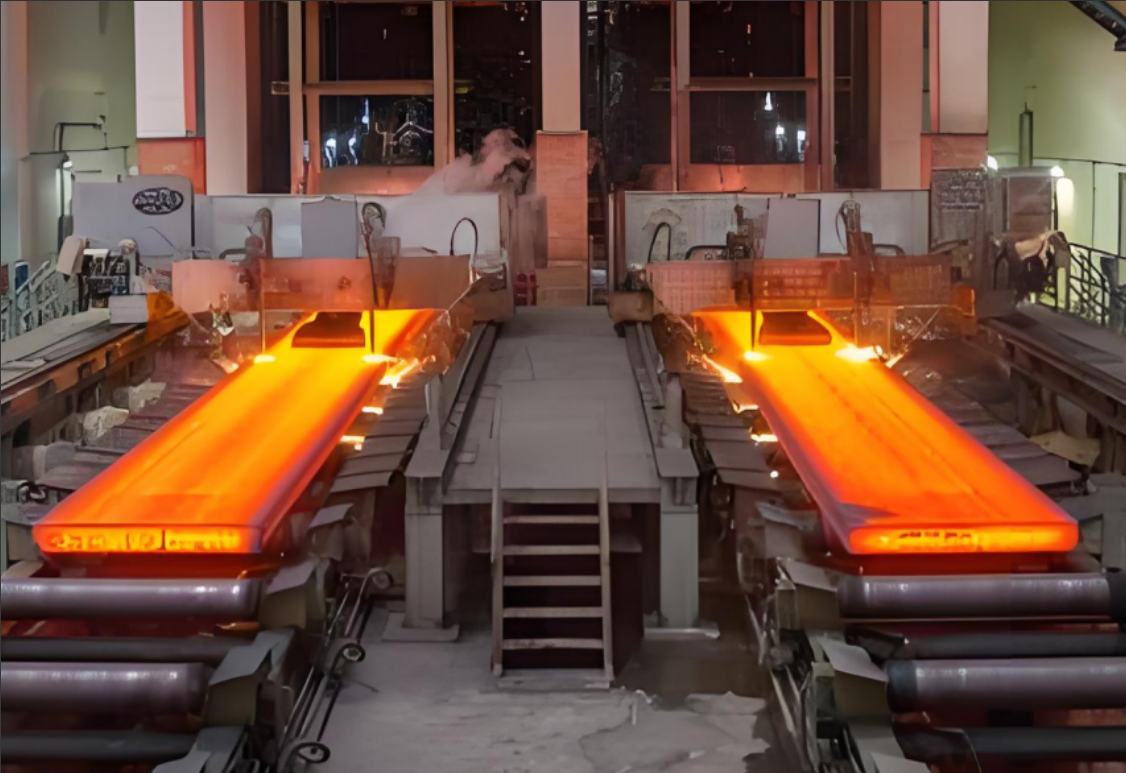
The base material for carbon steel welded pipes typically includes hot-rolled or cold-rolled carbon steel coils for ERW and SSAW processes, or discrete plates for LSAW and EFW manufacturing. Common grades cover API 5L X42/X52/X60 for pipeline applications, ASTM A53 Gr.B for general service, and ASTM A106 Gr.B for high-temperature service. For ERW pipes, steel coils undergo continuous forming through a series of rollers, progressively shaping the flat strip into an open cylindrical profile. Subsequently, high-frequency induction or resistance welding technology heats the butt edges to plastic temperatures while mechanical extrusion rollers forge the weld seam, forming a fusion weld without filler metal. This process features narrow welds, smooth surfaces, and high production efficiency (up to 610 mm/24 inches in diameter).Special production processes are required for high-carbon steel grades with more than 0.30% carbon; Advanced technology enables precise control over billet splitting, in which the strip edge is heated to 800–1000 °C and then the weld zone is linearly heat-treated. In LSAW pipes, an open-ended pipe blank is formed by rolling a single steel plate using the JCOE or UOE method, then the longitudinal seam is joined by submerged arc welding (typically on both sides to ensure full penetration). Pipes produced by this method offer dimensional stability, good low-temperature resistance, and wall thicknesses up to 80 mm, making them suitable for high-pressure applications. making them the primary choice for large-diameter transmission applications. Spiral-welded pipe uses a unique spiral forming method: A steel coil is continuously rolled at a fixed angle to form a cylindrical shell, and then welded on both sides by submerged arc welding for full penetration of the spiral seam. By varying the forming angle, this process achieves non-uniform ductility across the diameter. By varying the forming angle, the process achieves non-uniform ductility across the diameter. This process enables the production of large-diameter (D1016–3200 mm) and relatively thin-walled pipes from narrow, cost-optimized coil material, which are suitable for water pipes and construction.
The application fields of carbon steel welded pipes are intertwined with modern industrial civilization itself, spanning multiple sectors including energy, construction, infrastructure, and heavy manufacturing. This encompasses oil and gas transportation, automotive structural components, hollow drive shafts, hydraulic cylinder manufacturing, as well as building and civil engineering. As a raw material and processing manufacturing facility, we maintain substantial inventory of steel pipes including welded pipes, seamless pipes, stainless steel pipes, and carbon steel pipes. We can further process these pipes according to customer specifications through cutting, bending, welding, and machining. These pipes can be fabricated into structures such as frames and coat hangers.