Introduction: The Role of Structural Steel Plates in Modern Fabrication
Structural steel plates are fundamental materials in the sheet metal processing industry, serving as the backbone for countless fabricated components across construction, machinery, automotive, and industrial equipment sectors. Unlike thin-gauge sheet metal used for enclosures and decorative panels, structural steel plates typically range in thickness from 3mm to over 150mm and are engineered to carry significant loads, resist impact, and provide long-term durability in demanding environments. In sheet metal processing, these plates undergo a comprehensive sequence of operations—including cutting, bending, drilling, welding, and surface treatment—to be transformed into structural brackets, base plates, machine frames, connection nodes, and load-bearing assemblies. The strategic selection and processing of structural steel plates directly influence the strength, safety, and service life of the final fabricated product, making them indispensable in both heavy industry and precision engineering.
Material Selection: Choosing the Right Structural Steel Grade
The selection of an appropriate structural steel grade is the first critical step in sheet metal processing. The most commonly used grades include ASTM A36, a low-carbon steel offering excellent weldability and formability with a minimum yield strength of 250 MPa; ASTM A572 Grade 50, a high-strength low-alloy (HSLA) steel providing 345 MPa yield strength for heavier load applications; and ASTM A992, the standard for wide-flange beams and structural framing in building construction. For pressure vessel and boiler applications, ASTM A516 grades 55 through 70 are specified for their superior notch toughness. In corrosive environments, weathering steel (ASTM A588) or stainless steel plates (304, 316) are selected. The choice of grade depends on the required yield strength, weldability, toughness at service temperatures, corrosion resistance, and cost-effectiveness. Our facility maintains extensive inventories of these grades in various thicknesses to meet diverse project requirements.
Laser Cutting and Plasma Cutting of Structural Steel Plates
Cutting is often the first fabrication operation performed on structural steel plates. Fiber laser cutting has become the preferred method for thin to medium plates (up to 25mm), delivering exceptional precision with tolerances within ±0.1mm, narrow kerf widths, and clean, burr-free edges. The minimal heat-affected zone preserves the material's mechanical properties, and the process is highly efficient for complex geometries. For thicker plates (25mm to 80mm and beyond), high-definition plasma cutting provides a cost-effective and fast alternative, achieving good edge quality suitable for subsequent welding. Oxy-fuel cutting remains the standard for extra-thick plates (exceeding 80mm), offering deep penetration and low operating costs. CNC-controlled cutting systems ensure repeatability and accuracy across production runs, enabling precise nesting that maximizes material utilization and minimizes waste.
CNC Bending and Forming of Structural Steel Plates
Bending transforms flat structural steel plates into three-dimensional components such as brackets, channels, and formed sections. CNC press brakes equipped with precision tooling and springback compensation are used to achieve accurate bend angles and radii. For thick plates, large-tonnage press brakes (up to 1,000 tons or more) are required, and the minimum bend radius must be carefully calculated to prevent cracking—typically 1.5 to 2.5 times the plate thickness for carbon steel. Roll bending is employed for cylindrical or curved components such as tank shells and pipe sections. The high yield strength of structural steels demands robust equipment and careful process control to achieve the desired geometry without compromising material integrity. Our facility utilizes advanced CNC press brakes and plate rolling machines to handle a wide range of thicknesses and bend configurations.
Welding and Assembly of Structural Steel Components
Welding is the primary joining method for structural steel plate assemblies. Gas Metal Arc Welding (GMAW/MIG) is widely used for its high deposition rates and efficiency on carbon and HSLA steels. Flux-Cored Arc Welding (FCAW) offers deep penetration and is suitable for thicker sections and field welding. Submerged Arc Welding (SAW) is employed for long, straight seams on heavy plate fabrications, delivering high-quality welds with excellent penetration. For stainless steel and critical applications, Gas Tungsten Arc Welding (TIG) provides superior control and cleanliness. Preheating may be required for thicker plates or higher-carbon grades to prevent hydrogen-induced cracking. Post-weld heat treatment (PWHT) may be specified to relieve residual stresses and restore toughness. All welding is performed by certified welders following qualified Welding Procedure Specifications (WPS) to ensure structural integrity.
Drilling, Punching, and Machining of Structural Steel Plates
Structural steel plates often require holes for bolted connections, slots for adjustment, or machined surfaces for mating components. CNC drilling and punching systems provide accurate hole placement and consistent quality. For large plates with multiple holes, beam lines and gantry drilling machines enable efficient processing. CNC milling and boring operations are performed when precise dimensional tolerances or surface finishes are required, such as for bearing seats or machined edges. These secondary operations ensure that fabricated components fit together properly during assembly and meet the exacting requirements of the final application.
Surface Treatment and Corrosion Protection
Surface treatment is essential to protect structural steel plates from corrosion and to extend their service life. Abrasive blasting (shot blasting or sandblasting) removes mill scale, rust, and contaminants, creating a clean surface profile for coating adhesion. Hot-dip galvanizing provides superior corrosion protection by forming a metallurgically bonded zinc coating that offers both barrier and sacrificial protection. Powder coating and industrial painting systems deliver durable, aesthetically pleasing finishes for indoor and outdoor applications. For stainless steel plates, passivation restores the passive oxide layer after fabrication. The choice of surface treatment depends on the service environment, required service life, and aesthetic requirements. Our facility offers comprehensive finishing services to meet diverse project specifications.
Quality Control and Inspection
Quality control is integrated throughout the sheet metal processing of structural steel plates. Dimensional inspection using coordinate measuring machines (CMMs), calipers, and gauges verifies that cut, bent, and drilled components meet drawing tolerances. Weld inspection includes visual examination, dye penetrant testing, magnetic particle inspection, and ultrasonic testing to detect surface and internal defects. Material traceability is maintained through mill test reports (MTRs) and heat number tracking, ensuring that every component can be traced back to its original steel source. Load testing may be performed on critical assemblies to verify structural performance. Compliance with international standards such as ASTM, AWS D1.1, and ISO 9001 ensures that fabricated components meet the highest quality and safety requirements.
Applications Across Industries
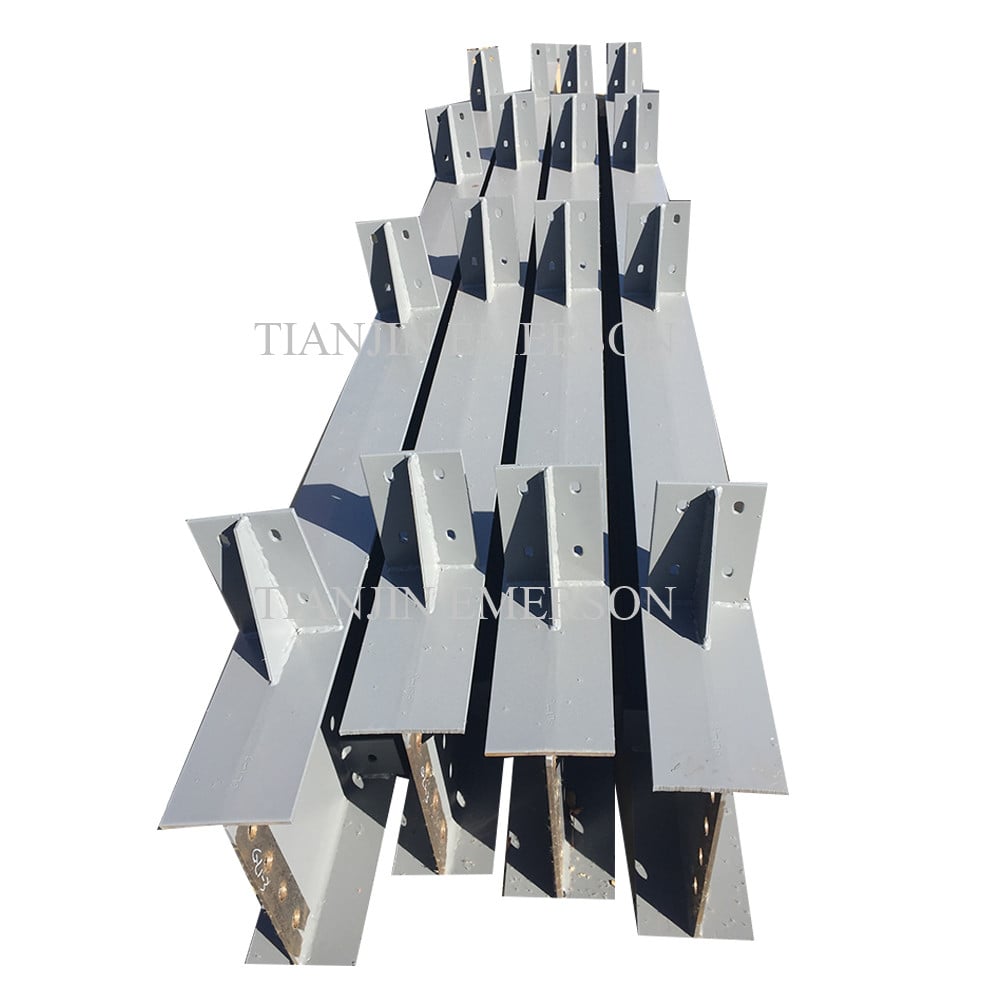
Structural steel plates processed through sheet metal fabrication techniques are used in a vast array of applications. In construction, they form base plates, connection brackets, gusset plates, and embedments for steel frames and bridges. In industrial machinery, they become machine bases, frames, supports, and guards. The automotive and transportation sectors utilize them for chassis components, trailer frames, and heavy-duty brackets. Energy and power generation facilities rely on structural steel plates for equipment supports, platforms, and pressure vessel components. Material handling systems use them for conveyor supports, racking, and storage structures. From heavy construction to precision equipment, structural steel plates processed with advanced sheet metal techniques provide the strength, durability, and reliability that modern industry demands.