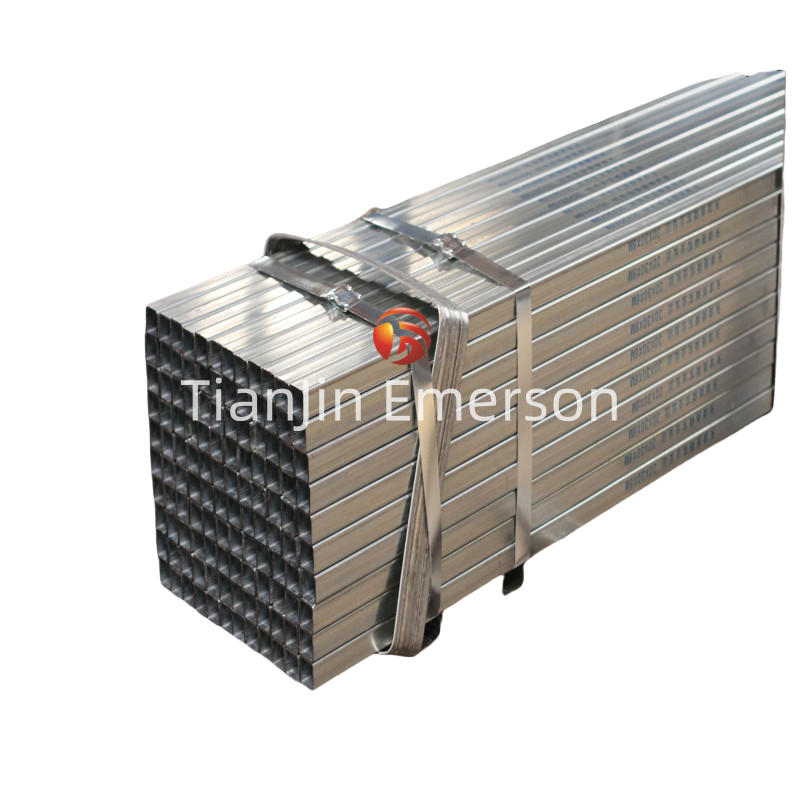
Square tubing, with its hollow, enclosed cross-section and four equal-length sides, stands as one of the most versatile and efficient structural profiles in modern engineering manufacturing. As a specialized metal fabrication company, we supply a wide range of stock square tubing in standard and custom specifications, along with tubing processing services, empowering industries to build robust yet lightweight structural systems. Square tubing dimensions are primarily defined by outer diameter (O.D.) and wall thickness (W.T.). Common specifications cover a wide range of needs: from small sections like 20x20mm (approx. 0.75“ x 0.75”) used in furniture and lightweight framing, to large sections such as 300x300mm (approx. 12“ x 12”) or even 400x400mm employed in heavy-duty construction and industrial columns. Corresponding wall thickness ranges extend from lightweight 0.8 mm for decorative applications to 12 mm and above for load-bearing structural components.
The performance of square tubing is fundamentally determined by its base material. The most widely used materials are carbon steels such as ASTM A500 Grade B (cold-formed structural tubing grade) or S235JR/S355JR grades, offering a high cost-performance ratio suitable for general structural frameworks, machine guards, and industrial furniture. For applications requiring enhanced atmospheric corrosion resistance—such as exposed building structures or outdoor equipment—hot-dip galvanized square tubes or weathering steel square tubes are recommended. In environments demanding superior corrosion resistance, sanitary standards, or specific aesthetic effects, stainless steel square tubes (primarily grades 304 and 316) are specified for food processing, chemical plants, shipbuilding, and high-end architectural components. Additionally, aluminum square tubes (such as 6061-T6 or 6063-T5) offer high corrosion resistance and machinability, making them ideal for transportation equipment, aerospace frames, and lightweight structural components.
The process of transforming raw square tubes into finished components requires multi-stage precision manufacturing. The initial step involves precision cutting: laser cutting machines achieve unparalleled accuracy when creating beveled edges, notches, and complex hole patterns on tube walls, ensuring subsequent welding quality. For bending operations, our CNC tube bending machines shape square tubes into intricate three-dimensional forms with precise curvature without causing wall collapse. Joining and assembly rely primarily on specialized welding techniques, which are adjusted according to material properties. Final components undergo surface finishing processes including sandblasting for rust removal and deburring, followed by protective or decorative coatings—such as powder coating or paint application. Stainless steel components receive electrolytic polishing or passivation treatment.
The applications of custom square tubing span virtually every field. In construction, it serves as framing for mezzanines, handrails, ceilings, glass curtain wall systems, and distinctive structural elements in modern architecture. Industrial manufacturing relies on it for machine bases, safety guarding, workstations, conveyor frames, and material handling equipment. Within transportation, it is used for roll cages, trailer frames, and vehicle chassis structures. Additionally, they serve as foundational components for consumer and commercial products, including retail display racks, shelving systems, fitness equipment, and agricultural machinery. By integrating specialized material selection, precision cutting and forming, high-accuracy welding, and professional surface finishing techniques, our custom square tube solutions not only enable assembly but also ensure exceptional performance, enduring durability, and aesthetic integration in end-use applications through meticulous engineering design.