
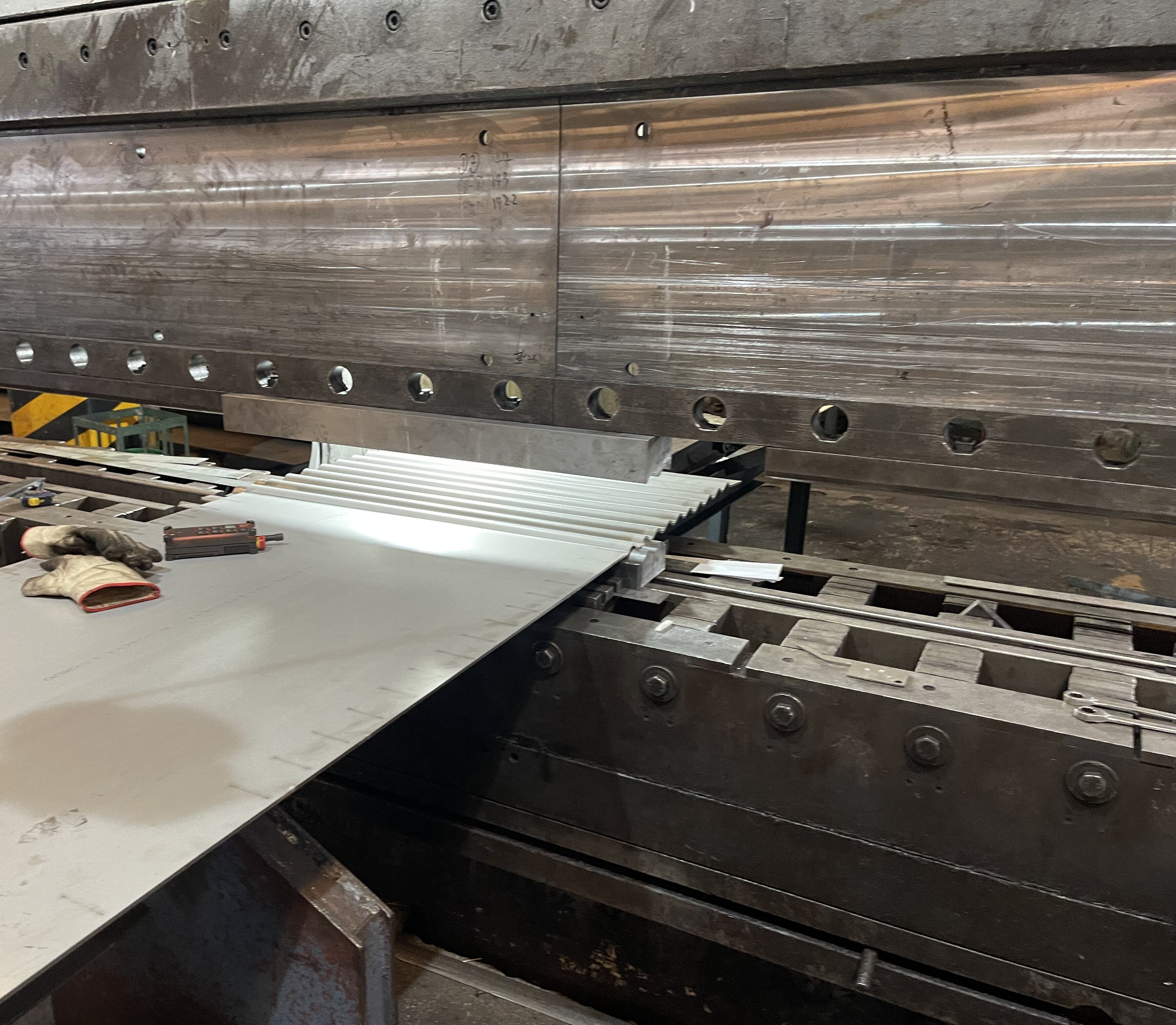
Dimensional Accuracy: The Foundation of Consistent Steel Coil Processing
Thickness and width uniformity — preventing misfeeds, scrap, and tooling damage in roll forming and stamping
Getting the right thickness and width for steel coils matters a lot when it comes to keeping production running smoothly. When there's variation beyond about 0.005 inches thick (that's roughly 0.13 millimeters), things start going wrong on those fast moving roll forming lines. The machinery gets jammed and stops working altogether. Problems with width create even bigger headaches. We've seen scrap rates climb as high as 15% during progressive stamping operations because tools aren't lining up properly. This misalignment doesn't just waste material either. Dies wear out faster too, which means maintenance bills jump around 40% according to research from the Fabrication Technology Institute. Following ASTM A568 standards closely helps prevent all these issues from happening in the first place.
| Deviation Impact | Consequence | Prevention Standard |
|---|---|---|
| Thickness variation > ±0.005" | Roll forming misfeeds | ±0.003" tolerance |
| Width tolerance breach | Stamping misalignment scrap | ±1/16" per 12" width |
Cut-to-size steel coil with certified dimensional stability improves feed consistency and reduces unplanned downtime by 30%.
Flatness, coil set, and edge wave — how geometric deviations disrupt laser cutting alignment and press brake repeatability
Geometric distortions compound errors across fabrication processes. Edge wave exceeding 3 mm/m skews laser cutting trajectories by up to 1.5°, while residual coil set forces press brakes to apply 20% higher tonnage—raising fracture risk. These deviations directly affect cut-to-length coil performance in automated systems:
- Laser cutting: 0.5° angular distortion from poor flatness causes 2 mm dimensional drift per meter
- Press brake forming: Coil set requires 12% overbending to achieve target angles, accelerating tool wear
- Weld assembly: Edge wave creates 0.8 mm gaps in seam welds, triggering rework in 22% of assemblies
Material certified to EN 10131 Class A flatness maintains ±0.1 mm/m straightness—ensuring dimensional integrity through fabrication stages. This consistency is critical for high-precision applications such as automotive chassis or building envelope systems.
Mechanical Properties: Matching Steel Coil Strength and Ductility to Fabrication Demands
Yield strength, tensile strength, and elongation — defining safe bend radii and crack-free deep drawing limits
The yield strength marks when metal starts to deform permanently during bending operations. If this limit gets exceeded, we see springback happen which really messes with how accurate press brakes can be. Moving on to tensile strength, this property basically tells us how well materials hold up against breaking when subjected to moving forces something absolutely critical for parts that need structural integrity. When talking about elongation rates in mild steel coils usually around 15 to 30 percent this becomes super important for deep drawing processes. Materials with poor ductility tend to crack along edges especially problematic in those complicated shapes seen in car body panels. Most manufacturers aim for material elongation that beats the die's strain demands by roughly 20% to avoid these kinds of cracks forming during production runs.
Cold-rolled, hot-rolled, and galvanized steel coil performance trade-offs in welding, laser cutting, and forming
Each steel coil variant presents distinct mechanical and surface behaviors affecting fabrication outcomes:
| Process | Cold-Rolled Advantage | Hot-Rolled Consideration | Galvanized Limitation |
|---|---|---|---|
| Laser Cutting | Tight tolerances (±0.1 mm) | Slag adhesion risks | Zinc vaporization compromises edge quality |
| Welding | Low carbon equivalence reduces HAZ cracking | Mill scale removal required | Toxic fumes necessitate ventilation |
| Forming | Consistent springback control | Lower yield strength variability | Coating flaking at sharp bends |
Hot rolled steel coils tend to be cheaper for making basic structural parts where exact dimensions aren't so important, though they do need some surface work before use. The cold rolled versions are better when we need those tight tolerances for stamping operations. Galvanized steel offers good protection against rust but makes bending harder since it can only handle bends about three times the material thickness. Getting the right material choice sorted out matters a lot because mismatched materials lead to problems down the line like holes in welds, cut quality issues, and tools wearing out faster than expected during production runs.
Surface Integrity: Why Steel Coil Finish Dictates Coating Adhesion, Weld Quality, and Final Part Aesthetics
Surface roughness, oil residue, and oxide layer control per ASTM A109/EN 10131 — impact on paint adhesion, zinc bonding, and weld spatter
The condition of a part's surface plays a major role in how well it functions and looks after fabrication. When surface roughness stays within the 0.5 to 1.5 micrometer range according to ASTM A109 standards, it actually helps coatings stick better because those tiny irregularities act as anchors for paints and other finishes. Parts that are too smooth tend to lose their grip on coatings, which can cut paint adhesion by around two thirds compared to properly textured surfaces. Leftover oils on metal surfaces exceeding 50 milligrams per square meter create problems when galvanizing since they interfere with proper zinc bonding. This often leads to coatings peeling off in harsh environments where corrosion is a concern. Thick oxide layers over three micrometers also cause issues during welding operations. They mess with electrical conductivity, resulting in about thirty five percent more spatter and creating weaker spots where the metal fuses together. Fabrication shops need to check both chemical composition and surface features against EN 10131 guidelines. Poor surface preparation explains why roughly a quarter of all coating failures happen and accounts for nearly one fifth of welding defects seen in car manufacturing plants. Getting these details right ultimately affects how resistant parts are to rust, how strong they remain structurally, and whether they meet appearance requirements for end customers.
Supplier Quality Assurance: Certifying Steel Coil Consistency for High-Volume Fabrication
For manufacturers running high-volume production lines, consistent steel coil quality isn't optional—it's foundational to operational efficiency. Rigorous supplier certification prevents costly disruptions like unplanned downtime or scrap rates above industry benchmarks. Key verification steps include:
- ISO 9001 certification audits confirming process control adherence
- Mill Test Certificates (MTCs) validating chemical composition and mechanical properties per ASTM A568 and EN 10130
- Non-destructive testing for internal defects and surface integrity checks
- Dimensional tolerance monitoring via laser scanning to ±0.05 mm
Automated inspection systems now track thickness uniformity and yield strength across entire coils, with leading mills reporting 99.8% consistency in critical parameters. This level of assurance enables fabricators to maintain press brake repeatability within 0.1° and laser cutting alignment tolerances under 0.05 mm—directly supporting higher throughput and lower rework.
FAQ
Why is dimensional accuracy important in steel coil processing?
Dimensional accuracy is crucial because even minor thickness or width deviations can lead to machinery jams, increased scrap rates, and faster die wear. Maintaining these dimensions within specified tolerances ensures smooth production and reduced maintenance costs.
What are the consequences of poor geometric deviations in steel coils?
Poor geometric deviations such as edge wave or coil set can result in laser cutting misalignments and increased press brake tonnage, leading to higher fracture risks and tool wear. Precise flatness and straightness ensure dimensional integrity throughout fabrication.
How do different steel coil types compare in fabrication?
Cold-rolled steel offers tight tolerances and consistent springback control, whereas hot-rolled steel is more cost-effective for basic structures but requires surface work. Galvanized steel provides rust protection but can be challenging for bending operations. Choosing the right type affects weld quality, cut precision, and tool lifespan.
What role does surface integrity play in welding and coating?
Surface integrity, including roughness and cleanliness, dictates coating adhesion, weld quality, and aesthetics. Proper surface preparation and adherence to standards prevent common issues like poor paint adhesion and weld defects.
Why is supplier quality assurance critical for steel coil processing?
Ensuring consistent steel coil quality is essential for operational efficiency in high-volume production. Supplier quality assurance through certifications, inspections, and testing prevents costly production disruptions and maintains product quality.
Table of Contents
- Dimensional Accuracy: The Foundation of Consistent Steel Coil Processing
- Mechanical Properties: Matching Steel Coil Strength and Ductility to Fabrication Demands
- Surface Integrity: Why Steel Coil Finish Dictates Coating Adhesion, Weld Quality, and Final Part Aesthetics
- Supplier Quality Assurance: Certifying Steel Coil Consistency for High-Volume Fabrication
-
FAQ
- Why is dimensional accuracy important in steel coil processing?
- What are the consequences of poor geometric deviations in steel coils?
- How do different steel coil types compare in fabrication?
- What role does surface integrity play in welding and coating?
- Why is supplier quality assurance critical for steel coil processing?