
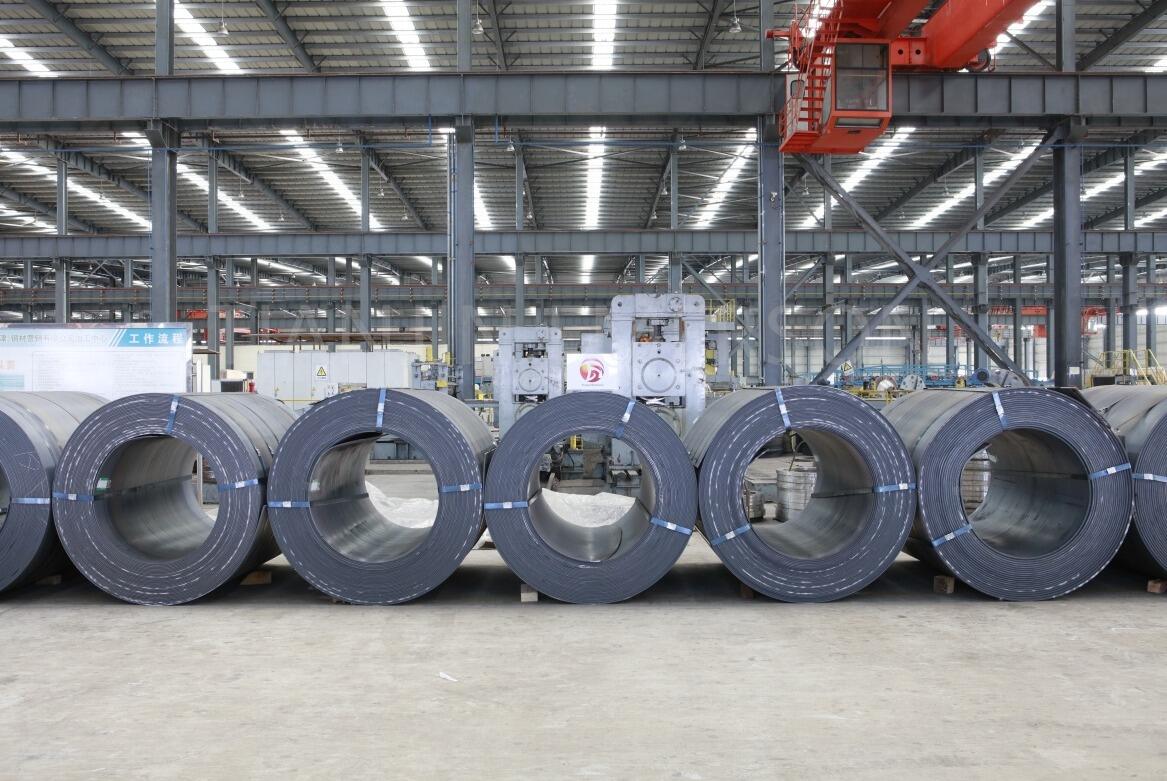
Why Steel Coil Remains Critical for Automotive Structural Integrity
Advanced High-Strength Steel (AHSS) constitutes over 60% of modern vehicle body structures, delivering the optimal strength-to-weight ratio required for crash safety and durability. This dominance stems from steel coil's unique capacity to be engineered into specialized grades meeting precise mechanical specifications—while remaining cost-effective for mass production.
Cold Rolled vs. Hot Rolled Steel Coil: Matching Mechanical Properties to Component Function
Cold rolled steel coil gives much tighter dimensions (around plus or minus 0.1mm) and has a better surface quality, which is why it works so well for those outer car parts like doors and hoods where looks are important. Hot rolled steel is different though. It can be formed into more complex shapes because it's more flexible, and the material holds up under stress too since it has at least 550 MPa yield strength to resist damage when something hits it. When picking between these options, engineers usually look at three main factors that determine what kind of steel makes sense for each application.
- Strength requirements: Chassis components demand hot-rolled's impact resistance
- Forming complexity: Deep-drawn parts use cold-rolled's uniform elongation
- Corrosion exposure: Zinc-coated coils protect underbody systems
Balancing Lightweighting Goals with Crash Energy Absorption Requirements
Automakers achieve 15–25% weight reduction using AHSS coils without sacrificing safety. Grades like DP980 absorb four times more crash energy per kilogram than conventional steel while enabling thinner gauges. This balance is critical:
- High-strength coils (≥780 MPa tensile strength) reinforce door beams and pillars
- Ductile grades (18–25% elongation) crumple predictably in crash zones
- Tailored blanks combine thicknesses within a single coil-stamped part
Strategic placement of different steel coil grades allows vehicles to pass stringent side-impact tests while improving fuel efficiency—a necessity as global emissions standards tighten.
Steel Coil Processing Techniques for High-Precision Automotive Parts
Stamping and Deep Drawing: Enabling Complex Body Panel Geometries
The stamping process takes regular steel coil and turns it into those complicated body parts we see on cars today. High pressure dies do all the work, creating those detailed shapes with pretty much pinpoint accuracy down to microns. Then there's deep drawing which basically stretches the metal out into full three dimensional parts like doors and fenders without needing any seams or welds at all. Getting good results really depends on picking the right type of steel coil though. Grades that can handle more forming, like what they call DDQ for deep drawing quality, help avoid cracks when the metal gets stretched beyond normal limits. These days, modern stamping machines can push up around 2,500 tons of force, making panels at about 12 per minute while keeping dimensions within half a millimeter tolerance. The whole thing actually cuts down on part weight by roughly 19 percent compared to older methods, yet still meets all the crash test requirements because manufacturers carefully control how thin different areas get during production.
Laser Cutting and Precision Shearing in High-Volume Production Lines
Modern laser systems can cut through steel coils with incredible accuracy down to 0.1mm while moving at over 100 meters per minute. This speed makes it possible to sequence parts right when they're needed on assembly lines without delays. Fiber lasers really shine here because they adjust to new designs almost immediately. No need for expensive tooling anymore and setup times drop dramatically around 85% faster than traditional methods. Precision shearing works hand in hand with these lasers to give clean edges on things like brackets and reinforcement pieces which matters a lot for robotic welding operations. What makes all this work so well is that steel coils maintain their dimensions throughout production runs. Manufacturers report getting about 98% material usage from coils compared to only 82% when using blanked sheets. And even with super strong steels rated at 1,500 MPa meant for critical safety parts, the cuts stay consistent along the entire length of the coil thanks to how evenly distributed the material properties are.
Coated Steel Coil: Enhancing Corrosion Resistance and Surface Quality
Automotive components require advanced protection strategies to withstand harsh environmental conditions while maintaining structural integrity. Coated steel coil solutions bridge this gap by combining core material strength with surface enhancements.
Galvanized and E-Coated Steel Coil for Chassis, Suspension, and Underbody Systems
Coatings made from zinc form a protective layer that stops around 80 to 95 percent of things that cause rust, including water and those harsh road salts we all know too well. The newer stuff on the market these days, like zinc aluminum magnesium alloys, lasts anywhere from double to triple what old fashioned galvanized coatings used to manage. Makes all the difference for parts underneath vehicles that get beat up every day by dirt, salt spray, and whatever else roads throw at them. There's also something called electrocoat technology where they engineer tiny pores into the coating itself. These little holes actually help stop corrosive substances from getting through those tiny cracks and gaps between welded joints or metal edges. Pretty smart stuff when it comes to keeping car frames intact in places where humidity hangs around like Florida coastlines or Pacific Northwest winters.
Primer and Topcoat Compatibility for Visible Exterior Panels
Polyester and fluoropolymer coatings give good UV protection against fading and resist chemicals too, which helps car designers get those deep colors and interesting textures they want. Tests show these topcoats still reflect light at over 85% even after going through weathering equivalent to about a decade out on the road. What makes them work so well is how their molecules bend and stretch, sticking nicely to primer layers when heated between around 140 to 220 degrees Celsius. This means no peeling off from body panels during production. The way these coatings bond with underlying materials keeps cars looking sharp on all those curves and bends, something customers really appreciate as they increasingly ask for unique finishes that stand out from standard factory options.
Frequently Asked Questions (FAQs)
What is the main advantage of using advanced high-strength steel (AHSS) in vehicles?
AHSS offers the optimal strength-to-weight ratio required for crash safety and durability, making it a critical component in modern vehicle body structures.
How do cold rolled and hot rolled steel coils differ?
Cold rolled steel coils provide improved surface quality and tighter dimensions, ideal for visible car parts, while hot rolled steel coils offer flexibility and high impact resistance suitable for complex shapes and structural components.
Why is laser cutting preferred in high-volume production lines?
Laser cutting offers precision and speed, achieving accurate cuts down to 0.1mm, and enables efficient sequencing of parts as needed on assembly lines without delays.
How does coated steel coil enhance automotive component durability?
Coated steel coils provide corrosion resistance and surface quality improvement, utilizing advanced coatings like zinc and electrocoat technology to protect against environmental factors while maintaining structural integrity.